Namida's tears are a weapon that hits friend and foe alike, so she sets out to learn a jutsu she can control. Hanabi's harsh training reshapes not a new technique but the old one, and a second run-in with the Garakuta Gang lets her prove the difference.
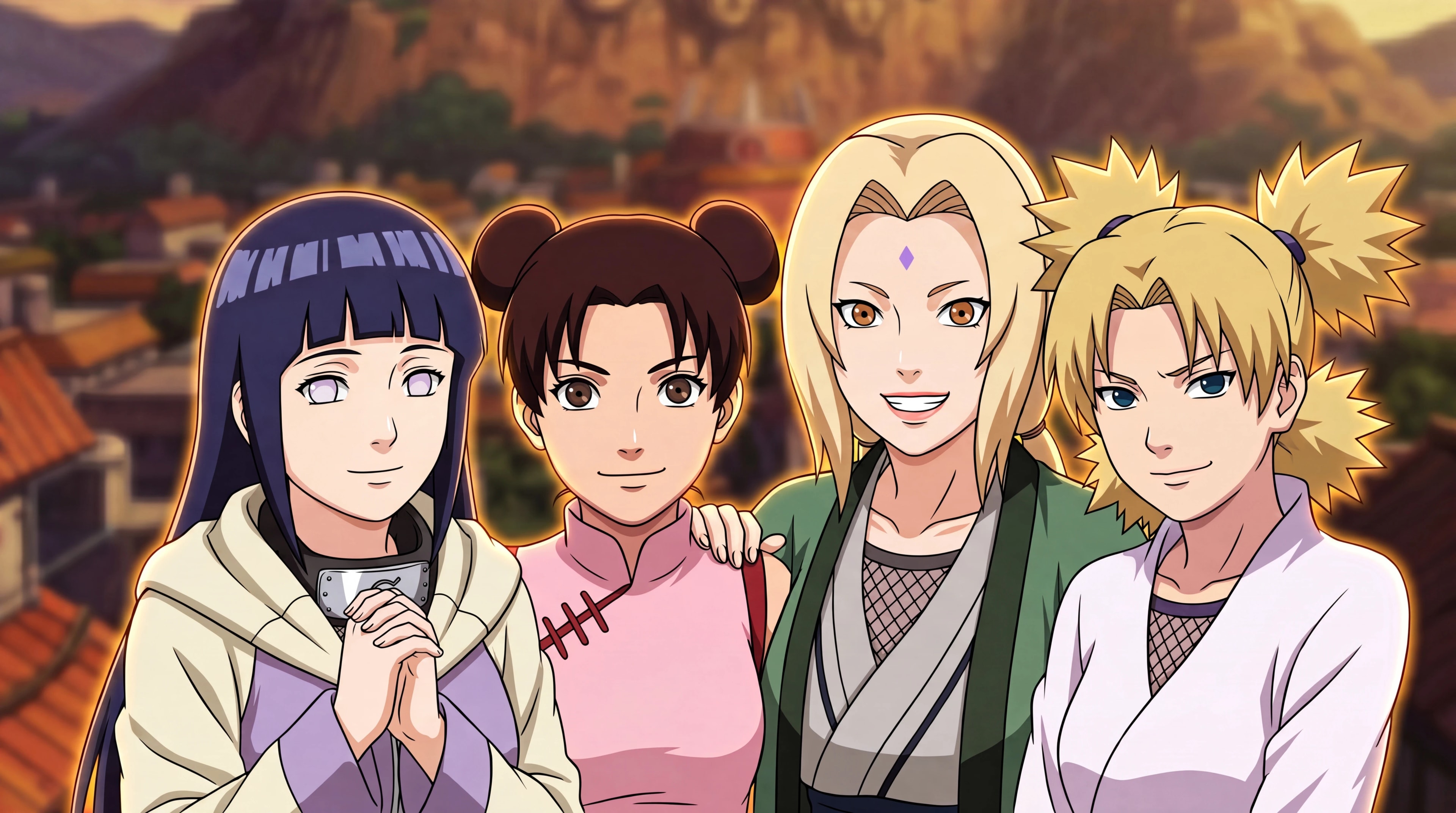
Main Characters (4)
Summary
On a guard mission, a stray shuriken nicks Namida, and her rising tears trigger the wail that flattens every enemy along with the merchants the team was hired to protect. Back at the Information and Receiving Centre, she learns her cry has also cost Wasabi and Sumire their hearing, and Mitsuki bluntly warns that at this rate she could get her teammates killed. Determined to change, Namida turns to Water Release, only to find her attempts far too weak to matter. When Sumire suggests refining her Calling on Tears instead, Namida refuses and asks Hanabi to train her.

Key Events
Hanabi diagnoses the real trouble as poor chakra control, demonstrating with Sumire that the same jutsu works when focus holds steady. She explains that once Namida's emotions surge and the tears come, her concentration shatters. The lessons are grueling: molding chakra while dodging attacks under the Byakugan's watch, stretching the reach of her strikes, and driving power into a heavy log. Moved by her effort, Wasabi and Sumire push their own training harder in solidarity, and day by day Namida sparring against them shows steady gains.
Related Reading
See all
Naruto vs Luffy: Does the Fight Change if Luffy Tickles Hinata?
Naruto vs Luffy with the twist nobody asked for: Luffy tickled Hinata on date night, and she kind of liked it. We break down the whole fight and commit to a winner....
Who Is Naruko? What Naruto's Transformation Jutsu Does to the Whole Hidden Leaf
Naruto built the transformation jutsu himself, and the Hidden Leaf has been quietly not talking about it ever since. The story behind our 90s R&B record about the Naruko question everybody dodges....
Notes
A second contract guarding the same merchants, now carrying a document penned by the First Hokage, brings the Garakuta Gang back. When the leader traps the girls in the earth and seizes the scroll, Namida finally weeps on purpose, folding everything Hanabi taught her into her Calling on Tears to sharpen its aim and strike him precisely. With her chakra spent she still knocks everyone flat, and Hanabi judges she has room to grow. The title nods to Winston Churchill's famous speech, and the episode first aired in Japan on 3 March 2019.
Frequently Asked Questions
What happens in the Boruto episode Blood, Sweat, and Namida?
After her uncontrolled Calling on Tears jutsu injures her own teammates, Namida asks Hanabi Hyuga to train her, and grueling lessons in chakra control let her finally use the technique on purpose.
Why is Namida's Calling on Tears jutsu dangerous?
Namida's tears trigger a wail that flattens every enemy nearby, but it also strikes her own teammates and even cost Wasabi and Sumire their hearing in a prior mission.
What does Hanabi identify as Namida's real problem?
Hanabi diagnoses Namida's real trouble as poor chakra control, since her concentration shatters the moment her emotions surge and the tears come.
How does Namida finally control her jutsu?
During a second ambush by the Garakuta Gang, Namida deliberately weeps and folds everything Hanabi taught her into her Calling on Tears, sharpening its aim to strike the gang leader precisely.
What does the episode title Blood, Sweat, and Namida reference?
The title nods to Winston Churchill's famous speech, swapping the word tears for Namida's name.
Sources & Information
Looking for more on Blood, Sweat, and Namida? The Naruto Wiki on Fandom has a dedicated page with community notes.
View on FandomThis content is original writing by Daddy Jim Headquarters based on the Naruto anime series, manga, and official materials. Episode and chapter references are cited where applicable.
Rights holders
- Created byMasashi Kishimoto
- Published byShueisha
- Animated byStudio Pierrot
All rights belong to their respective owners.
Character and scene imagery on this site is original artwork by Daddy Jim Headquarters, not screenshots or licensed imagery. Official cover art is used on three types of pages for editorial commentary:
- Movie pages: theatrical posters and key visuals, credited to Studio Pierrot and Toho.
- Game pages: official box art for the Naruto: Ultimate Ninja Storm games, credited to Bandai Namco.
- Manga chapter pages: Jump Comics volume covers, credited to Shueisha and Masashi Kishimoto.
Official resources:
Help Us Keep This Wiki Accurate
Daddy Jim Headquarters maintains this encyclopedia. If you spot an error, a translation issue, or something that doesn't look right, let us know.
