Hebi Hebi no Mi, Model: Yamata no Orochi
CharacterA Mythical Zoan fruit that turns its eater into the eight-headed serpent of Japanese legend. Eaten by Kurozumi Orochi, it sprouts up to eight long-necked heads and lets him cheat death until every head is severed.
Overview
This Mythical Zoan grants the body of the Yamata no Orochi, the eight-headed, eight-tailed snake-dragon of Japanese mythology, in both hybrid and full forms. Kurozumi Orochi consumed it, having received the fruit decades earlier from Kurozumi Higurashi in exchange for following her scheme to seize the role of shogun. With Orochi's eventual death the fruit returned to circulation. The name pairs hebi, snake, with the legendary eight-branched serpent.

Mechanics
The fruit produces as many as eight separate heads, each on an extremely long neck and each able to speak independently; the user can choose how many sprout at once. Curiously only one head carries Orochi's human features like his crown and mustache, while the rest look generic. Beyond the standard Zoan strength boost, the multiple necks let the user attack many directions at once, reach distant targets, and clamp foes in powerful jaws, and the transformed body is hugely durable, shrugging off a collapsing ceiling and a Zeus-charged lightning strike. The signature trait is survival of decapitation: the user must be beheaded once for each head, so eight times in total, to truly die. Lost heads do not grow back, and attacks that lop off several at once drain this safety net far faster. The bulk and many heads also leave the user clumsy and exposed to nimble opponents, on top of the usual Devil Fruit weaknesses.
Related Reading
See all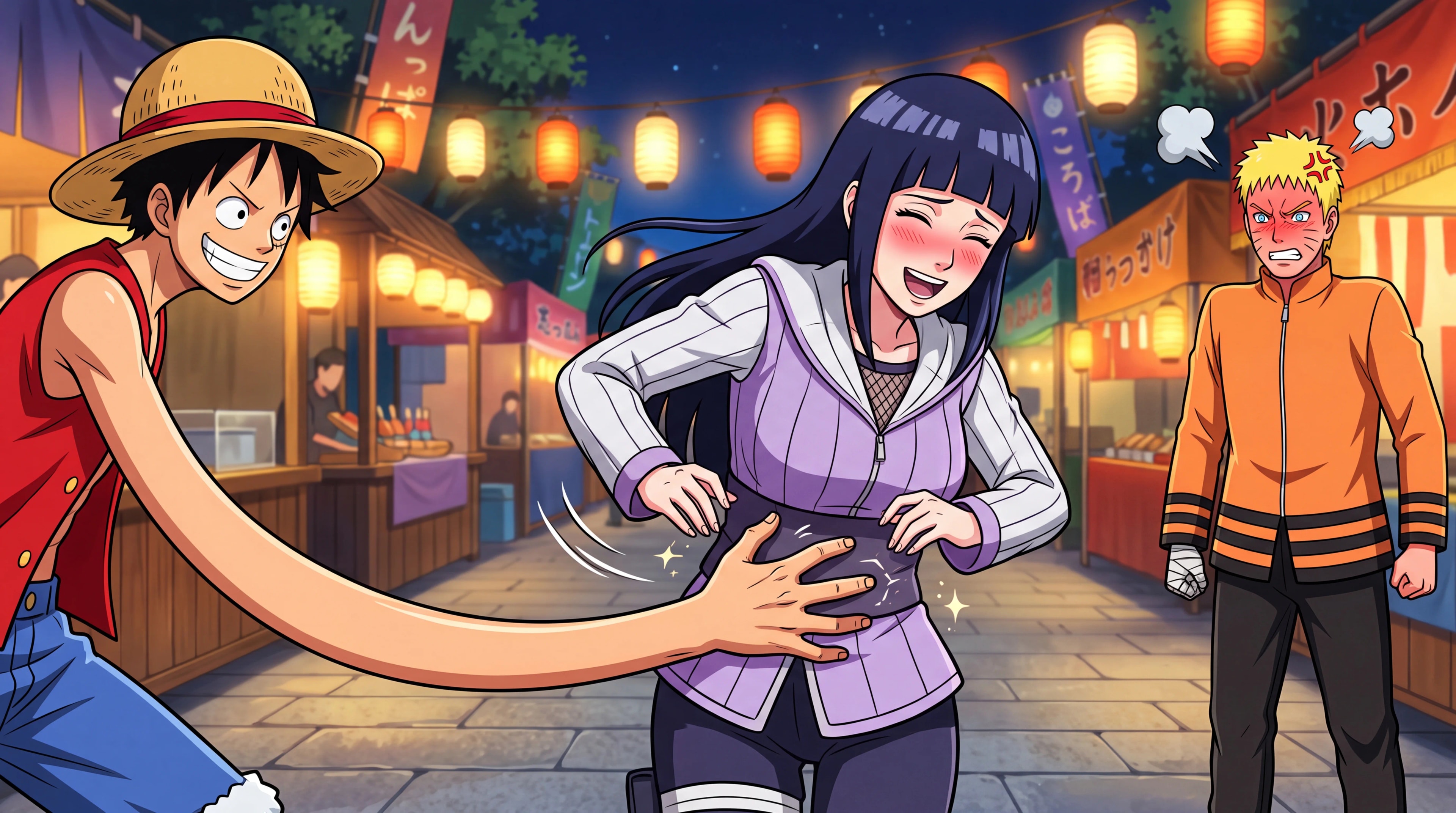
Naruto vs Luffy: Does the Fight Change if Luffy Tickles Hinata?
Naruto vs Luffy with the twist nobody asked for: Luffy tickled Hinata on date night, and she kind of liked it. We break down the whole fight and commit to a winner....

The Most Popular Women of One Piece: A Fan's Journey Through Anime's Greatest Female Characters...
When I first decided to commit to watching One Piece seriously, I knew I was embarking on one of anime's longest and most beloved series. With over 100...
Notable Users
Kurozumi Orochi is the only known user. He leaned on the form mostly to intimidate, displaying it before CP0 and when threatening Komurasaki, and even chomping his own subordinates, but his feeble combat skill meant he relied on others to fight for him. His decapitation-survival worked as a hidden-counterattack trick, yet his lack of fighting ability led to repeated beheadings in a single day during the Raid on Onigashima. Kaido took his human head, the Nine Red Scabbards severed six more at once, and Denjiro finally claimed the eighth and last head to kill him, sending the fruit back into the world.
Frequently Asked Questions
Who has eaten the Hebi Hebi no Mi, Model: Yamata no Orochi?
Kurozumi Orochi ate the Hebi Hebi no Mi, Model: Yamata no Orochi, having received it decades earlier from Kurozumi Higurashi in exchange for helping her scheme to seize the role of shogun.
What does "Hebi Hebi no Mi" translate to?
"Hebi Hebi no Mi" translates from Japanese as the Snake-Snake Fruit, and this variant is officially named the Snake-Snake Fruit, Model: Yamata-no-Orochi.
Is Yamata no Orochi a real myth?
Yes, Yamata no Orochi is drawn from Japanese mythology, where it is described as an eight-headed, eight-tailed snake-dragon, and the Hebi Hebi no Mi, Model: Yamata no Orochi grants its user that same legendary form.
What special ability does the Hebi Hebi no Mi, Model: Yamata no Orochi grant?
The Hebi Hebi no Mi, Model: Yamata no Orochi lets its user sprout up to eight independently speaking heads and survive decapitation, since the user must be beheaded once for each head, eight times total, to truly die.
How did Kurozumi Orochi die?
Kurozumi Orochi was beheaded multiple times during the Raid on Onigashima: Kaido took his human head, the Nine Red Scabbards severed six more at once, and Denjiro finally claimed the eighth and last head, killing him and returning the fruit to the world.
Sources & Information
Looking for more on Hebi Hebi no Mi, Model: Yamata no Orochi? The One Piece Wiki on Fandom has a dedicated page with community notes.
View on FandomThis content is original writing by Daddy Jim Headquarters based on the One Piece anime series, manga, and official materials. Episode and chapter references are cited where applicable.
Rights holders
- Created byEiichiro Oda
- Published byShueisha
- Animated byToei Animation
All rights belong to their respective owners.
Character and scene imagery on this site is original artwork by Daddy Jim Headquarters, not screenshots or licensed imagery. Official cover art is used on three types of pages for editorial commentary:
- Movie pages: theatrical posters and key visuals, credited to Toei Animation and Toei Company.
- Game pages: official box art for the One Piece console and mobile games, credited to Bandai Namco.
- Manga chapter pages: Jump Comics volume covers, credited to Shueisha and Eiichiro Oda.
Official resources:
Help Us Keep This Wiki Accurate
Daddy Jim Headquarters maintains this encyclopedia. If you spot an error, a translation issue, or something that doesn't look right, let us know.