Mini Mini no Mi
CharacterA non-canon Paramecia fruit that lets its eater shrink far below their natural stature. Two characters across different media have held it: Blyue in a video game and the giantess Lily Enstomach in the anime, both using the power to move among smaller folk.
Overview
This Paramecia power, which sits outside the canon, grants the ability to become smaller than one's real proportions. It debuted in the game One Piece: Round the Land through Blyue, then later appeared in the Z's Ambition Arc when Lily Enstomach demonstrated it. The Funimation releases render the name as the Mini-Mini Fruit. Both of its holders happen to be giants.

Mechanics
A user may compress down to roughly five millimeters tall while keeping their full strength intact, and they can settle at their original height or anywhere in between the two extremes. Clothing and carried gear, including weapons, scale along with the body, as shown when Blyue's axe and shield and Lily's fork enlarge when each returns to giant form, though this trait is not exclusive to this fruit. The catch is steep: the power permanently resets the eater's baseline size to about the span of two human hands, so if the ability is canceled, say by submersion in seawater, they revert to that small default rather than their birth size. Appetite is unaffected by shrinking, so the user still needs as much food as their original frame demanded. Extreme excitement can throw the body out of proportion, as when Lily's head ballooned past her body upon recalling she had to save her father from the Marines.
Related Reading
See all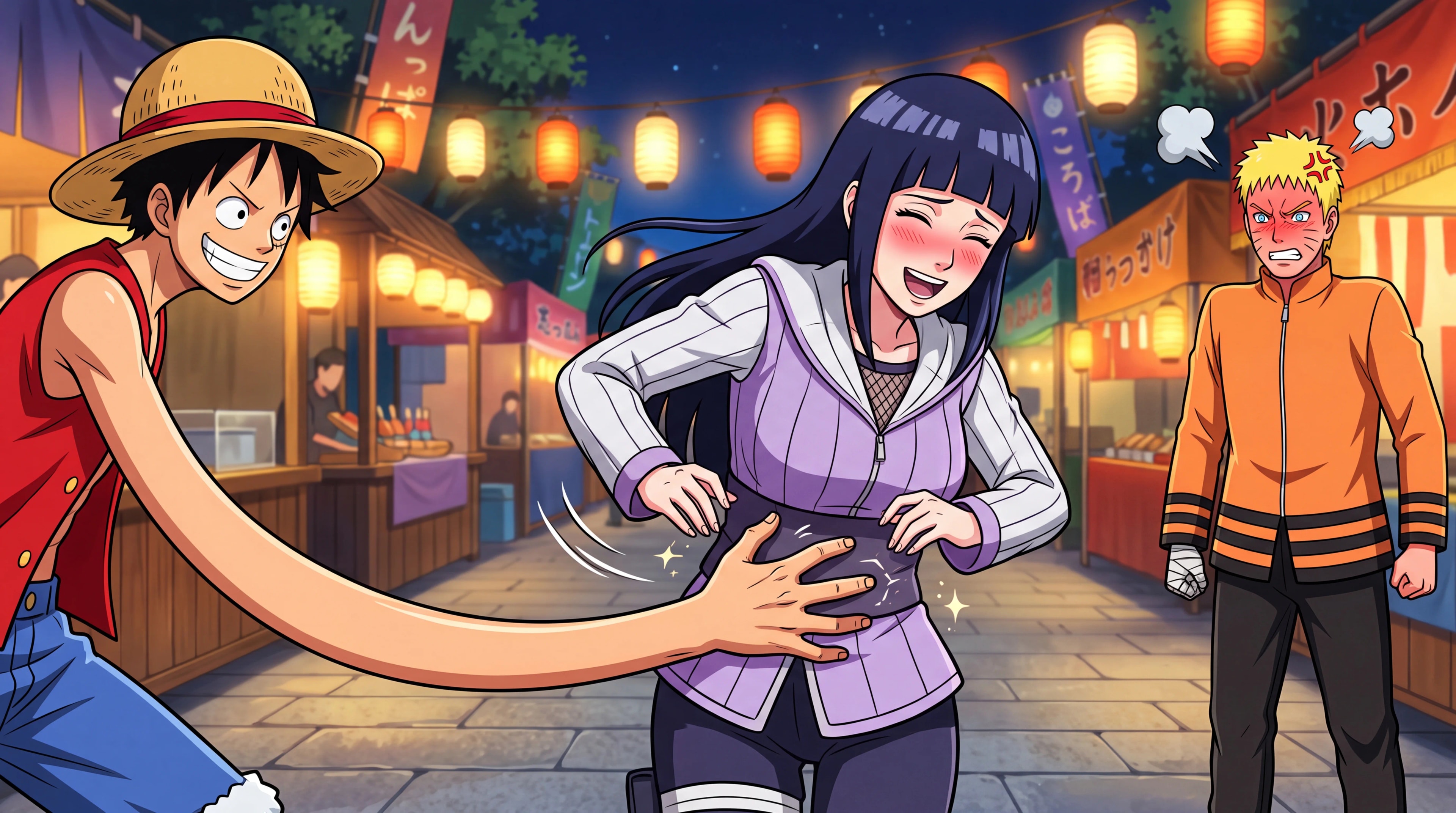
Naruto vs Luffy: Does the Fight Change if Luffy Tickles Hinata?
Naruto vs Luffy with the twist nobody asked for: Luffy tickled Hinata on date night, and she kind of liked it. We break down the whole fight and commit to a winner....

The Most Popular Women of One Piece: A Fan's Journey Through Anime's Greatest Female Characters...
When I first decided to commit to watching One Piece seriously, I knew I was embarking on one of anime's longest and most beloved series. With over 100...
Notable Users
Blyue used it in the game, while Lily Enstomach showcased it in the anime. For giants, shrinking eases interaction with humans and smaller beings, boosts stealth, and helps dodge attacks, with the bonus that food looks enormous to someone who loves to eat. Lily claimed she could wriggle inside an enemy's body and then expand to rupture them; aiming this at Shuzo, she had Usopp fire her, but she landed in Luffy's mouth instead. She turned the mishap around by growing inside Luffy, whose rubber body stretched to her giant scale, granting him matching strength to finish Shuzo in a single blow. Her move Mini Mini no Full Rebound snaps her back to her full giant height. The Deka Deka no Mi serves as this fruit's opposite, enlarging its user instead.
Frequently Asked Questions
Who has the Mini Mini no Mi?
Two characters have used the Mini Mini no Mi across different media: Blyue in the video game One Piece: Round the Land, and the giantess Lily Enstomach in the anime's Z's Ambition Arc.
What does the Mini Mini no Mi do?
The Mini Mini no Mi is a non-canon Paramecia Devil Fruit that lets its user shrink to roughly five millimeters tall while keeping their full strength, settling anywhere between that size and their original height. Clothing and carried gear, including weapons, scale along with the body.
What is the drawback of the Mini Mini no Mi?
The Mini Mini no Mi permanently resets its user's baseline size to about the span of two human hands, so if the power is canceled, such as by seawater, the user reverts to that small default rather than their original birth size.
Is the Mini Mini no Mi canon?
No, the Mini Mini no Mi is not canon. It debuted in the video game One Piece: Round the Land through Blyue and later appeared in the anime through Lily Enstomach.
What is the opposite of the Mini Mini no Mi?
The Deka Deka no Mi serves as the opposite of the Mini Mini no Mi, enlarging its user instead of shrinking them.
Sources & Information
Looking for more on Mini Mini no Mi? The One Piece Wiki on Fandom has a dedicated page with community notes.
View on FandomThis content is original writing by Daddy Jim Headquarters based on the One Piece anime series, manga, and official materials. Episode and chapter references are cited where applicable.
Rights holders
- Created byEiichiro Oda
- Published byShueisha
- Animated byToei Animation
All rights belong to their respective owners.
Character and scene imagery on this site is original artwork by Daddy Jim Headquarters, not screenshots or licensed imagery. Official cover art is used on three types of pages for editorial commentary:
- Movie pages: theatrical posters and key visuals, credited to Toei Animation and Toei Company.
- Game pages: official box art for the One Piece console and mobile games, credited to Bandai Namco.
- Manga chapter pages: Jump Comics volume covers, credited to Shueisha and Eiichiro Oda.
Official resources:
Help Us Keep This Wiki Accurate
Daddy Jim Headquarters maintains this encyclopedia. If you spot an error, a translation issue, or something that doesn't look right, let us know.