Noko Noko no Mi
CharacterA movie-exclusive Paramecia that hands its holder command over toxic mushroom spores, naming them a Poison Spore Human. Musshuru wielded it in the ninth film before his brother Wapol swallowed him whole and claimed the power.
Overview
Standing apart from the manga's canon and grouped among the Paramecia, this fruit places poisonous mushroom spores under its holder's command, a trait that names them a Poison Spore Human. The first to eat it was Musshuru, elder sibling to Wapol, and Wapol went on to take the ability into himself through his own devouring fruit. Overseas releases label it either the Shroom-Shroom Fruit or the Noko Noko Fruit, with the name rooted in kinoko, the Japanese word for a mushroom. For all its spore work it is no Logia, since its user cannot dissolve his own body into the spores.

Mechanics
At its core the power spins lethal spores out of the holder's body and steers them, and these are toxic enough that a victim caught in them must reach an antidote right away. The spores can be flung as tight bursts or spread as broad clouds, and they can even be sculpted into decoy clones or reshaped limbs. Two quirks set the fruit apart from most: flame wipes the spores out the moment it reaches them, whether the drifting cloud is torched or the user himself is lit, and the holder is compelled to purge a vast batch of spores once every decade to keep the reserve within him in check, an oddity no other Devil Fruit shares. Layered on top of those are the usual weaknesses.
Related Reading
See all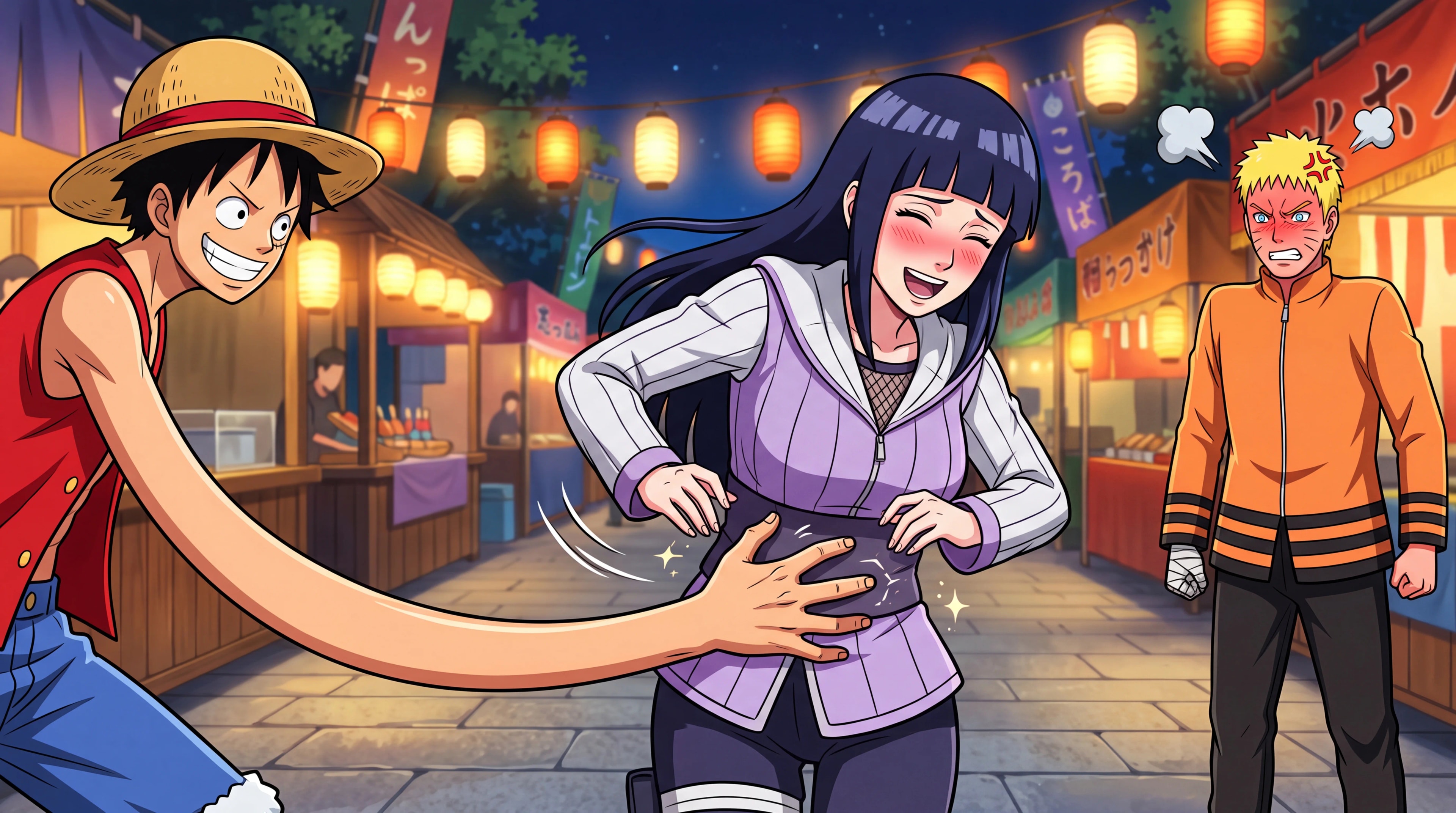
Naruto vs Luffy: Does the Fight Change if Luffy Tickles Hinata?
Naruto vs Luffy with the twist nobody asked for: Luffy tickled Hinata on date night, and she kind of liked it. We break down the whole fight and commit to a winner....

The Most Popular Women of One Piece: A Fan's Journey Through Anime's Greatest Female Characters...
When I first decided to commit to watching One Piece seriously, I knew I was embarking on one of anime's longest and most beloved series. With over 100...
Notable Users
Musshuru leaned on the fruit chiefly for battle, working out a full slate of techniques: Spin Drill reshapes a hand into a boring tool that may drive spores into a wound; Shade Dance pelts a target with dense spore rounds fired from his hair; Lot Stiffen conjures six clones to serve as decoys; Run Hypha threads spores beneath the ground so fungi erupt to pin an enemy; Snow Spore looses a sweeping paralytic wave that proves fatal without a cure; Cross Shade fires several spore streams together; and Fatal Bomb is the once-a-decade release of spores sealed in a sphere that can be shot like a cannonball, freighted with enough venom to blot out an island. After Wapol devoured and merged with him, the combined Wapol-Musshuru shape wielded these abilities in tandem with the Bliking Cannon under the name Musshuru Wapol Cannon in a plot to reclaim Drum Island. Where poison handling and a shared dread of fire are concerned, the fruit lines up with two canon powers, namely the Gasu Gasu no Mi as well as Magellan's Doku Doku no Mi.
Frequently Asked Questions
What is the Noko Noko no Mi?
The Noko Noko no Mi is a non-canon Paramecia-type Devil Fruit that lets its user command poisonous mushroom spores. It debuted in Episode of Chopper Plus: Bloom in Winter, Miracle Sakura, and its user is called a Poison Spore Human.
Who ate the Noko Noko no Mi?
Musshuru, the elder brother of Wapol, was the first to eat the Noko Noko no Mi. He used it in battle before Wapol later devoured him and absorbed the power himself.
What is the Noko Noko no Mi's weakness?
The Noko Noko no Mi has a clear weakness to fire, which wipes out its spores the instant it reaches them, whether the spore cloud is torched or the user is lit on fire directly.
What techniques does the Noko Noko no Mi grant?
Techniques granted by the Noko Noko no Mi include Spin Drill, which drives spores into a wound, Shade Dance, a barrage of spore rounds, Lot Stiffen, which conjures decoy clones, and Fatal Bomb, a once-a-decade release of concentrated spores powerful enough to blot out an island.
How did Wapol gain the Noko Noko no Mi's power?
Wapol gained the Noko Noko no Mi's power by devouring and merging with his brother Musshuru, after which the combined Wapol-Musshuru form used the spore techniques alongside the Bliking Cannon.
Sources & Information
Looking for more on Noko Noko no Mi? The One Piece Wiki on Fandom has a dedicated page with community notes.
View on FandomThis content is original writing by Daddy Jim Headquarters based on the One Piece anime series, manga, and official materials. Episode and chapter references are cited where applicable.
Rights holders
- Created byEiichiro Oda
- Published byShueisha
- Animated byToei Animation
All rights belong to their respective owners.
Character and scene imagery on this site is original artwork by Daddy Jim Headquarters, not screenshots or licensed imagery. Official cover art is used on three types of pages for editorial commentary:
- Movie pages: theatrical posters and key visuals, credited to Toei Animation and Toei Company.
- Game pages: official box art for the One Piece console and mobile games, credited to Bandai Namco.
- Manga chapter pages: Jump Comics volume covers, credited to Shueisha and Eiichiro Oda.
Official resources:
Help Us Keep This Wiki Accurate
Daddy Jim Headquarters maintains this encyclopedia. If you spot an error, a translation issue, or something that doesn't look right, let us know.
