Polearm
ItemA polearm mounts its business end on a long shaft, most often wood, so the wielder gains reach and heavier swing force. The family runs from the staff and spear to the halberd, the maul, and the scythe, and a broad cast throughout One Piece each favor a variety.
Overview
Whenever a weapon fixes its working head to a lengthy pole, it qualifies as a polearm, sometimes just called a pole weapon. Setting the point or blade well away from the grip stretches a fighter's effective range and, on a swing, lets the arc build extra force. Glaives, poleaxes, halberds, spears, and bardiches all sit within this wide grouping.
Every example gets sorted under five headers keyed to whatever tops the shaft. Those groups are the staff, which may carry no tip whatsoever, the spear, the halberd, the maul, and the scythe. Forms run from a bare fighting stick up to a halberd's intricate head, and each subtype answers a different need in a fight.

Function
Since the edge or point rides at the pole's far end, a wielder usually presses forward, hoping to fell an enemy before that enemy can close in. That forward bias doubles as the weapon's flaw, because switching stance grows awkward in tight spaces, and only the staff branch dodges that limitation. Set against a shorter arm like the sword, though, the added reach proves decisive.
The subtypes look nothing alike. A bo is just a long staff, whereas a jitte adds a disarming side prong and a khakkhara ends in a cluster of metal rings. Spears fan out into harpoons, lances, tridents, partisans, pikes, and the long-tipped trishula. Halberds branch toward the heavy bisento, the curved naginata, and the broader-bladed guandao. A scythe swings a side-set curved blade meant only to cut, while mauls and warhammers smash armor with a weighted head.
Related Reading
See all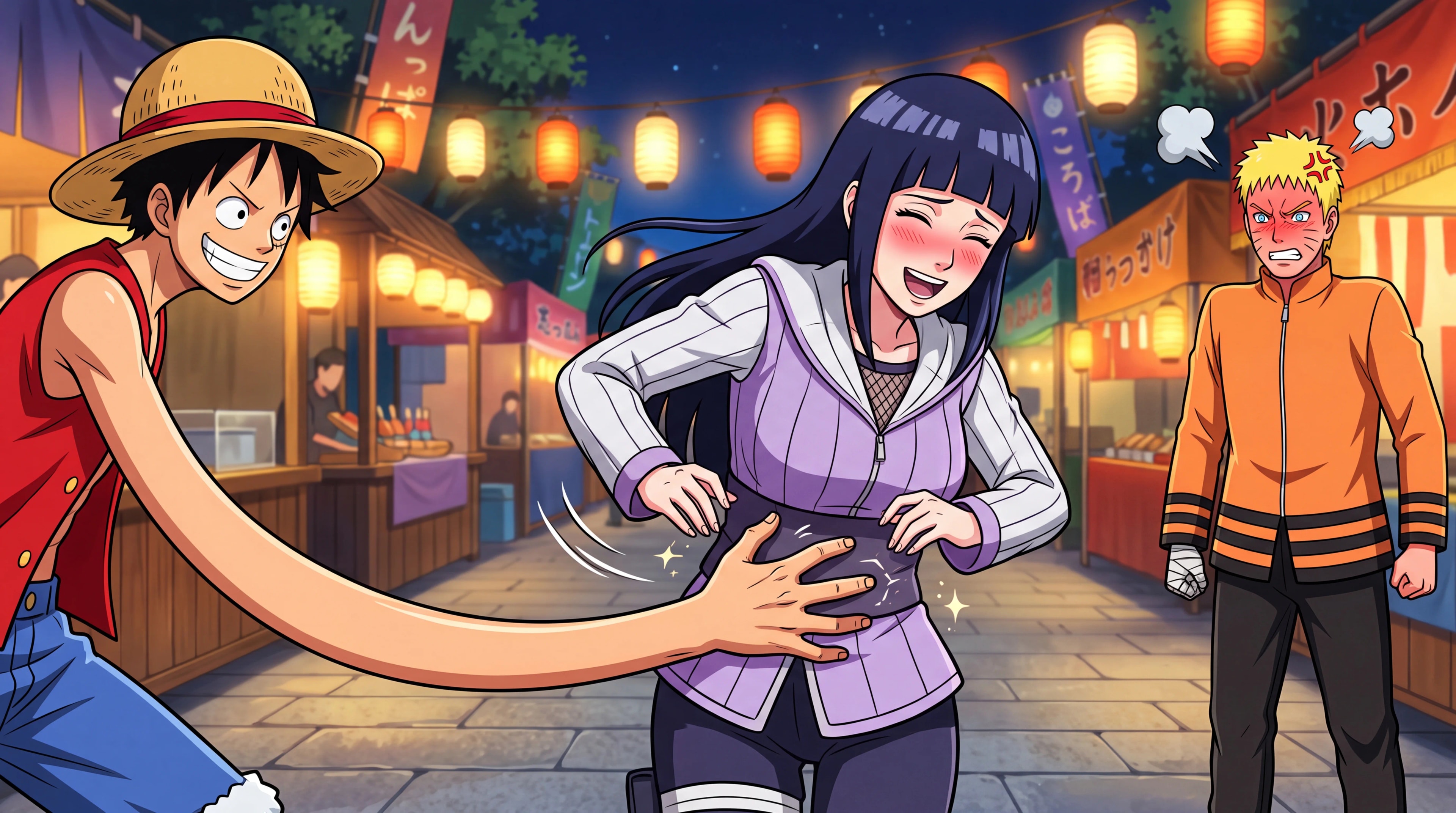
Naruto vs Luffy: Does the Fight Change if Luffy Tickles Hinata?
Naruto vs Luffy with the twist nobody asked for: Luffy tickled Hinata on date night, and she kind of liked it. We break down the whole fight and commit to a winner....

The Most Popular Women of One Piece: A Fan's Journey Through Anime's Greatest Female Characters...
When I first decided to commit to watching One Piece seriously, I knew I was embarking on one of anime's longest and most beloved series. With over 100...
Notable Users
Nami originally fought with a bo before switching to her Clima-Tact, which still counts as one by classification. Enel carried the golden Nonosama Bo and, drawing on the Goro Goro no Mi, could reshape it as a trident, while Smoker's seastone jitte and Kumadori's ringed khakkhara round out the staff line. Spear and trident users are many, including Kamakiri, a bomb-tipped Daisenso in Krieg's hands, Neptune, Hody Jones, Katakuri, and the Impel Down guards.
Whitebeard's Murakumogiri, one of the Supreme Grade blades, is a naginata whose legacy passed to Edward Weevil. Sai prefers a guandao, Doc Q a twin-bladed scythe, and Loki the warhammer Ragnir. Within the Straw Hats, confirmation has come for Luffy, Nami, and Jinbe as polearm fighters, yet only Nami still leans on one today.
Frequently Asked Questions
What is a Japanese-style polearm featured in One Piece?
One Piece features several Japanese-style polearms, including the curved-blade naginata and the broader-bladed guandao, both classified under the halberd branch of polearms.
Who uses a spear in One Piece?
Notable spear and trident users in One Piece include Kamakiri, Neptune, Hody Jones, Charlotte Katakuri, and the guards of Impel Down.
What are the five main types of polearms in One Piece?
One Piece groups polearms into five categories: the staff, spear, halberd, maul, and scythe, each named for whatever tops the weapon's shaft.
Which Straw Hat Pirates have used a polearm?
Confirmed polearm users among the Straw Hat Pirates are Monkey D. Luffy, Nami, and Jinbe, though only Nami still relies on one today.
What weapon did Nami use before her Clima-Tact?
Nami originally fought with a simple bo staff before switching to her Clima-Tact, a weapon that still counts as a polearm by classification.
Sources & Information
Looking for more on Polearm? The One Piece Wiki on Fandom has a dedicated page with community notes.
View on FandomThis content is original writing by Daddy Jim Headquarters based on the One Piece anime series, manga, and official materials. Episode and chapter references are cited where applicable.
Rights holders
- Created byEiichiro Oda
- Published byShueisha
- Animated byToei Animation
All rights belong to their respective owners.
Character and scene imagery on this site is original artwork by Daddy Jim Headquarters, not screenshots or licensed imagery. Official cover art is used on three types of pages for editorial commentary:
- Movie pages: theatrical posters and key visuals, credited to Toei Animation and Toei Company.
- Game pages: official box art for the One Piece console and mobile games, credited to Bandai Namco.
- Manga chapter pages: Jump Comics volume covers, credited to Shueisha and Eiichiro Oda.
Official resources:
Help Us Keep This Wiki Accurate
Daddy Jim Headquarters maintains this encyclopedia. If you spot an error, a translation issue, or something that doesn't look right, let us know.