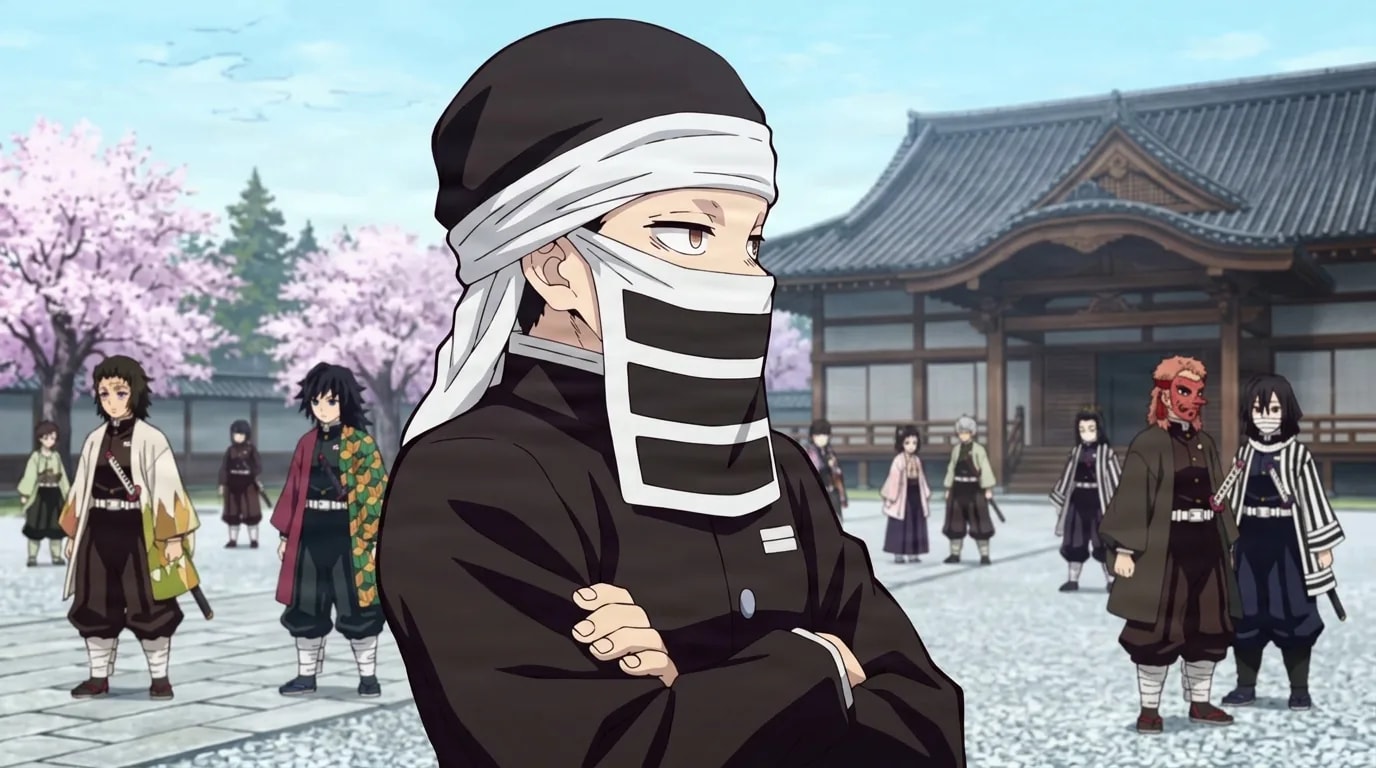
Goto
CharacterGoto is a recurring supporting figure in Demon Slayer who serves with the Kakushi, the Corps' clean-up brigade. He is the one who recovers Tanjiro, Inosuke, and Zenitsu after the Yoshiwara battle and later grows into a familiar acquaintance of Tanjiro.
Appearance
Goto is a young man of typical height with a notably fit frame, strong enough to hoist Tanjiro over his shoulder and carry him to Corps headquarters when ordered. Most of his face stays hidden behind the hood and mask that every member of the Kakushi wears. What can be seen are broad, half-moon eyes with brown irises and no pupils, and short black hair poking out at the sides of his head covering.



Personality
Goto's defining trait is his dry, sardonic wit. He habitually makes blunt or sarcastic observations about the odd behavior of Corps members, sometimes aloud and sometimes only in his own head. Frequent targets include the loud, hot-tempered antics of Zenitsu, Inosuke, and Hotaru Haganezuka, along with the inhuman appetites of Tanjiro and Mitsuri Kanroji and the astonishing speed of Tanjiro's recovery.
Despite his usual composure, Goto is capable of real anger, scolding Tanjiro for disrupting a Hashira meeting and demanding apologies. Beneath the sarcasm he is caring and thoughtful, bringing castella to the comatose Tanjiro and asking after his sister's wellbeing. When it truly counts he proves brave, even driving an automobile during the final clash to keep an infant-like Muzan from escaping the daylight.

History
At some point Goto was deemed worthy of becoming a Demon Slayer, yet for reasons left unexplained he chose the path of the Kakushi instead. He arrived after the clash between Sanemi Shinazugawa, Masachika Kumeno, and Lower Rank One had ended, and when Sanemi furiously waved off any help, Goto honored that wish and persuaded his colleagues to do likewise.
He later carries Tanjiro before the Hashira during the rehabilitation period, brings him castella while he sleeps in a coma, and visits him repeatedly through the Swordsmith Village and Hashira Training stretches. During the assault on Muzan, Goto and his fellow Kakushi evacuate civilians and he rushes to protect Kanao before Tanjiro arrives. After Muzan is destroyed, Goto appears unmasked in the survivors' group photograph, and he later marries and has children, since a near-identical descendant of the same name lives in modern Japan.
Related Reading
See all
Demon Slayer Infinity Castle Is the Biggest Anime Movie Ever but It Still Lost in Japan
Demon Slayer: Infinity Castle earned $778 million globally and nearly 40 billion yen in Japan, but it still couldn't top Mugen Train's domestic record. Here's why that barely matters....
Super Saiyan Pubes: The Song About Where Super Saiyan Hair Actually Goes
The transformation everyone knows, the follow-up question nobody would touch. Why we made a smooth R&B track about the golden glow Dragon Ball never talks about....

Frequently Asked Questions
Who is Goto in Demon Slayer?
Goto is a recurring supporting character in Demon Slayer who serves with the Kakushi, the Demon Slayer Corps' clean-up brigade. He recovers Tanjiro, Inosuke, and Zenitsu after the battle in Yoshiwara and later becomes a familiar acquaintance of Tanjiro.
What does Goto do in the Demon Slayer Corps?
Goto is a member of the Kakushi, the clean-up brigade of the Demon Slayer Corps. He carries wounded slayers, evacuates civilians, and during the final battle drives an automobile to keep an infant-like Muzan from escaping into the daylight.
How old is Goto in Demon Slayer?
Goto is 23 years old in Demon Slayer. He is a young man with a notably fit frame, strong enough to hoist Tanjiro over his shoulder and carry him to Corps headquarters.
Why did Goto become a Kakushi instead of a Demon Slayer?
Goto was deemed worthy of becoming a Demon Slayer, but for reasons the story leaves unexplained he chose to join the Kakushi clean-up brigade instead.
Does Goto survive in Demon Slayer?
Goto survives the final battle against Muzan and appears unmasked in the survivors' group photograph. He later marries and has children, since a near-identical descendant of the same name lives in modern Japan.
Sources & Information
Looking for more on Goto? The Demon Slayer Wiki on Fandom has a dedicated page with community notes.
View on FandomThis content is original writing by Daddy Jim Headquarters based on the Demon Slayer anime series, manga, and official materials. Episode and chapter references are cited where applicable.
Character and scene imagery on this site is original artwork by Daddy Jim Headquarters, not screenshots or licensed imagery. Official cover art is used on three types of pages for editorial commentary:
- Movie pages: theatrical posters and key visuals, credited to ufotable and Aniplex.
- Game pages: official box art, credited to Sega, Aniplex, and other publishers.
- Manga chapter pages: Jump Comics volume covers, credited to Shueisha and Koyoharu Gotouge.
Official resources:
Help Us Keep This Wiki Accurate
Daddy Jim Headquarters maintains this encyclopedia. If you spot an error, a translation issue, or something that doesn't look right, let us know.