Ato Ato no Mi
CharacterEaten by Giolla of the Donquixote Pirates, this Paramecia power reshapes both people and objects into works of abstract art that lose every ordinary use. Its bearer earns the title Art Human, wielding distortion as both weapon and cage.
Overview
Sorted into the Paramecia class, this fruit makes whoever swallows it into the being the story calls an Art Human. Its only demonstrated eater is Giolla, an officer among the Donquixote crew, who unveiled the ability during the Dressrosa events by twisting a handful of Straw Hats and their vessel into bizarre artwork. The label borrows the Japanese pronunciation of the English word art, and official English editions have printed it as the Art-Art Fruit.
Mechanics
Setting the power in motion, the wielder shapes a drifting cloud of thought and flings it toward a chosen mark, which then buckles in both form and purpose. A sword, a cart, or even a creature's antlers and hooves quit functioning after being twisted like this, and a whole ship can be wrecked to strip foes of a getaway. That very same motion reverses the effect and returns a warped thing to how it was. One notable weakness lies beyond the standard Devil Fruit limits: knock the user unconscious and each distortion she made springs back to its true shape by itself. Her named attacks include Broken-Fu Art, a forward blast of cloud that deforms whatever it strikes, and Dying Art, which entombs its victims within a mural at the price of their lives. A non-canon move, Heaven's Do Art, opens a concealed pocket realm in which she can rework anything not pulled inside the piece.
Notable Users
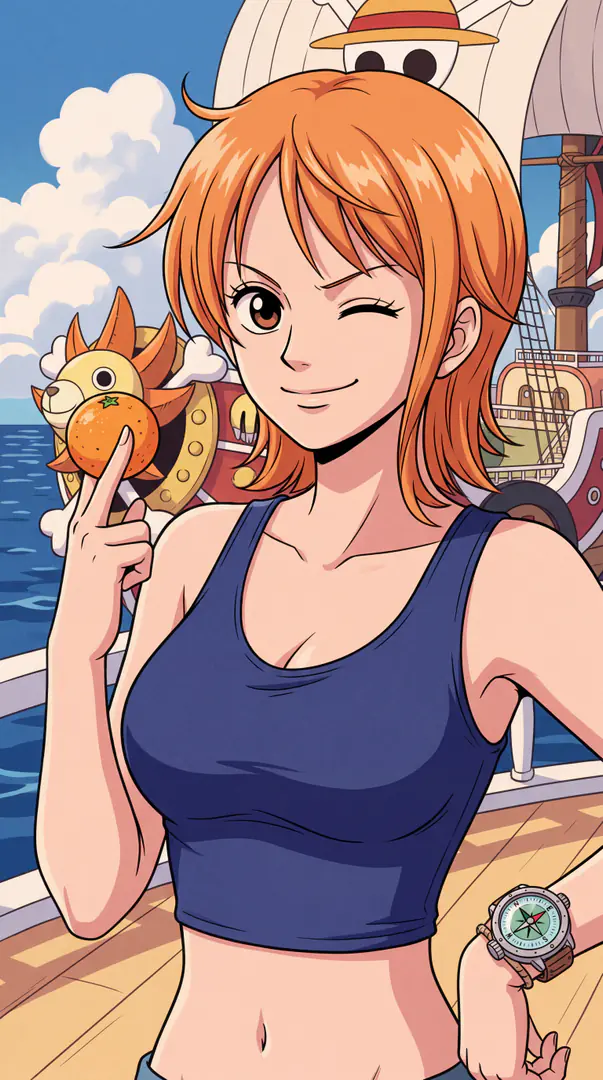
Serving as an officer of the Donquixote Pirates, Giolla stands as the sole holder of the ability. Her makeovers of Nami, Brook, Chopper, and Momonosuke famously nodded to real painters and styles, ranging from a Picasso-flavored figure to cubist shapes and a wink at Dalí's drooping clocks. The fruit draws parallels with other art-themed or flat-prison powers found in the series, among them the Fude Fude no Mi that Kanjuro carries and the Buku Buku no Mi belonging to Mont-d'Or, even though each runs on its own separate rules.
Related Reading
See all
The Most Popular Women of One Piece: A Fan's Journey Through Anime's Greatest Female Characters...
When I first decided to commit to watching One Piece seriously, I knew I was embarking on one of anime's longest and most beloved series. With over 100...
Super Saiyan Pubes: The Song About Where Super Saiyan Hair Actually Goes
The transformation everyone knows, the follow-up question nobody would touch. Why we made a smooth R&B track about the golden glow Dragon Ball never talks about....
Frequently Asked Questions
What is the Ato Ato no Mi fruit?
The Ato Ato no Mi is a Paramecia Devil Fruit that reshapes people and objects into works of abstract art, stripping them of their ordinary function. Its holder is called an Art Human, and the fruit is known in English as the Art-Art Fruit.
Who eats the Ato Ato no Mi?
The Ato Ato no Mi is eaten by Giolla, an officer of the Donquixote Pirates. She is the only character shown to hold this Devil Fruit, first using it during the Dressrosa arc.
What does the Ato Ato no Mi do?
The Ato Ato no Mi lets its user shape a drifting cloud of thought and fling it at a target, which then buckles in both form and purpose so it can no longer function normally. The same motion also reverses the effect, returning a warped person or object back to its original shape.
What is the weakness of the Ato Ato no Mi?
The key weakness of the Ato Ato no Mi is that if Giolla is knocked unconscious, every distortion she created springs back to its true shape on its own. This lies outside the standard Devil Fruit vulnerabilities that also apply to her.
What are Giolla's named attacks with the Ato Ato no Mi?
Giolla's named attacks with the Ato Ato no Mi include Broken-Fu Art, a forward blast of cloud that deforms whatever it strikes, and Dying Art, which entombs victims within a mural at the cost of their lives. A non-canon move called Heaven's Do Art opens a hidden pocket realm where she can rework anything pulled inside.
Sources & Information
Looking for more on Ato Ato no Mi? The One Piece Wiki on Fandom has a dedicated page with community notes.
View on FandomThis content is original writing by Daddy Jim Headquarters based on the One Piece anime series, manga, and official materials. Episode and chapter references are cited where applicable.
Character and scene imagery on this site is original artwork by Daddy Jim Headquarters, not screenshots or licensed imagery. Official cover art is used on three types of pages for editorial commentary:
- Movie pages: theatrical posters and key visuals, credited to Toei Animation and Toei Company.
- Game pages: official box art for the One Piece console and mobile games, credited to Bandai Namco.
- Manga chapter pages: Jump Comics volume covers, credited to Shueisha and Eiichiro Oda.
Official resources:
Help Us Keep This Wiki Accurate
Daddy Jim Headquarters maintains this encyclopedia. If you spot an error, a translation issue, or something that doesn't look right, let us know.