Shut Down Remote
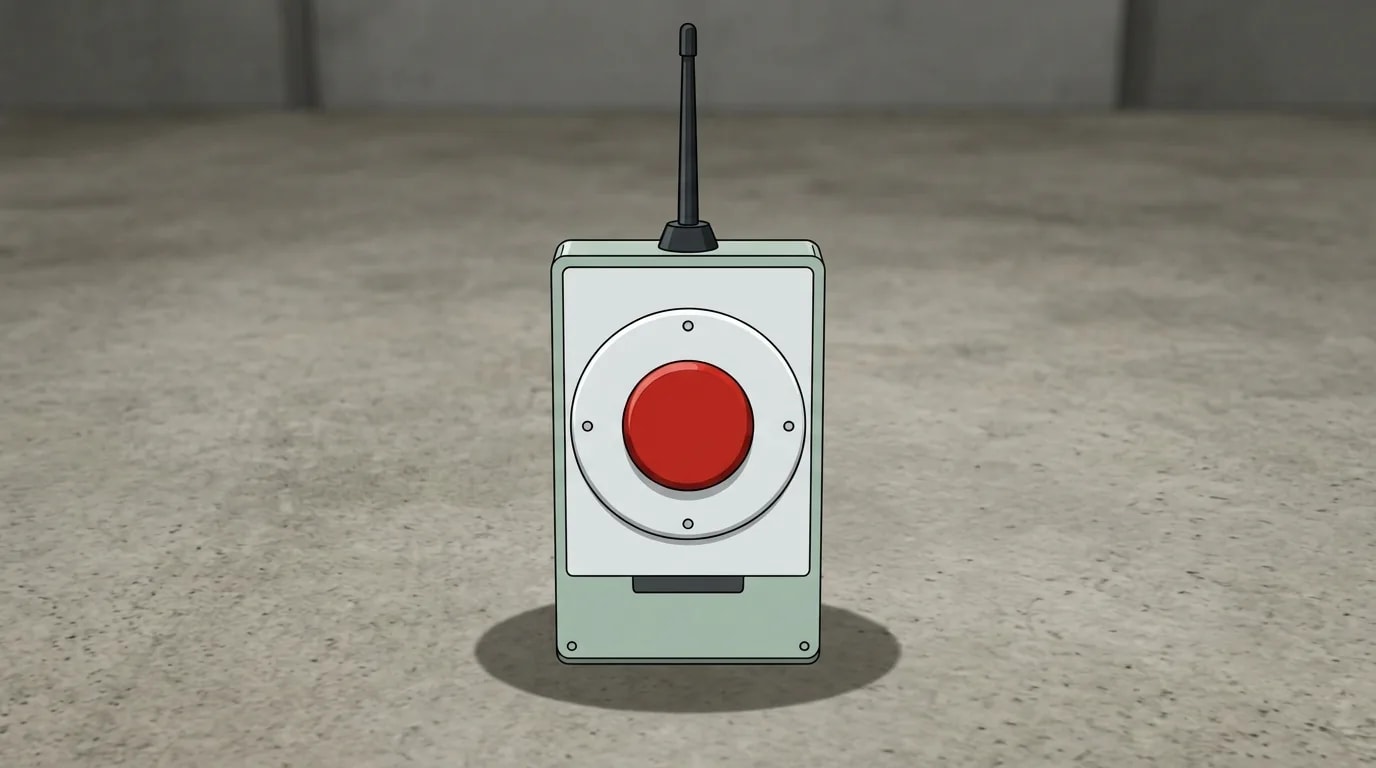
ItemA remote control device designed by Dr. Gero to deactivate Androids 17 and 18. Its destruction and eventual reconstruction became a pivotal element of the Android and Cell Sagas.
History and Impact
Dr. Gero created the Shut Down Remote as a failsafe in case his Android creations ever turned against him. The device was kept near the main gate of his laboratory, doubling as a light switch to conceal its true purpose. Unfortunately for Gero, this precaution proved insufficient. After Androids 17 and 18 were reactivated, they feigned obedience long enough for 17 to snatch the remote from the doctor's hand and crush it. Gero claimed he could simply build another, but he never got the chance.
Using schematics retrieved by Future Trunks and Krillin from the ruins of Gero's laboratory, Bulma and Dr. Brief constructed a replacement remote. Bulma revealed an important limitation: the device only worked within ten meters of the target Android. Krillin was given the remote with the mission to shut down Android 18 before Cell could absorb her and achieve his Perfect Form.
In one of the series' most emotionally significant moments, Krillin found himself unable to use the remote. His growing feelings for Android 18 made him unwilling to strip away her autonomy, and he chose to destroy the remote instead, giving her a chance to escape. This decision, while disastrous for the immediate situation (it allowed Cell to become Perfect), ultimately led to Krillin and 18's future marriage. In Cell's original timeline, Future Trunks successfully used the remote to deactivate the Androids before destroying them.



Frequently Asked Questions
What is the Shut Down Remote?
A remote control device designed by Dr. Gero to deactivate Androids 17 and 18. Its destruction and eventual reconstruction became a pivotal element of the Android and Cell Sagas.
What does the Shut Down Remote do?
A remote control device designed by Dr. Gero to deactivate Androids 17 and 18. Its destruction and eventual reconstruction became a pivotal element of the Android and Cell Sagas. Dr. Gero created the Shut Down Remote as a failsafe in case his Android creations ever turned against him.
Who created the Shut Down Remote?
The Shut Down Remote was created by Dr. Gero. Dr. Gero created the Shut Down Remote as a failsafe in case his Android creations ever turned against him.
When did the Shut Down Remote first appear?
The Shut Down Remote first appeared in the Dragon Ball Z anime episode "Nightmare Comes True." In the manga, it debuted in the chapter "The Androids Awake!." A remote control device designed by Dr. Gero to deactivate Androids 17 and 18. Dr. Gero created the Shut Down Remote as a failsafe in case his Android creations ever turned against him.
Who uses the Shut Down Remote?
In one of the series' most emotionally significant moments, Krillin found himself unable to use the remote. In Cell's original timeline, Future Trunks successfully used the remote to deactivate the Androids before destroying them.
Sources & Information
Looking for more on Shut Down Remote? The Dragon Ball Wiki on Fandom has a dedicated page with community notes.
View on FandomThis content is original writing by Daddy Jim Headquarters based on the Dragon Ball anime series, manga, and official materials. Episode and chapter references are cited where applicable.
Character and scene imagery on this site is original artwork by Daddy Jim Headquarters, not screenshots or licensed imagery. Official cover art is used on three types of pages for editorial commentary:
- Movie pages: theatrical posters and key visuals, credited to Toei Animation and Shueisha.
- Game pages: official box art, credited to Bandai Namco, Atari, and other publishers.
- Manga chapter pages: Jump Comics volume covers, credited to Shueisha and Akira Toriyama.
Browse our episode guides:
Official resources:
Help Us Keep This Wiki Accurate
Daddy Jim Headquarters maintains this encyclopedia. If you spot an error, a translation issue, or something that doesn't look right, let us know.