Cursed Womb: Death Painting
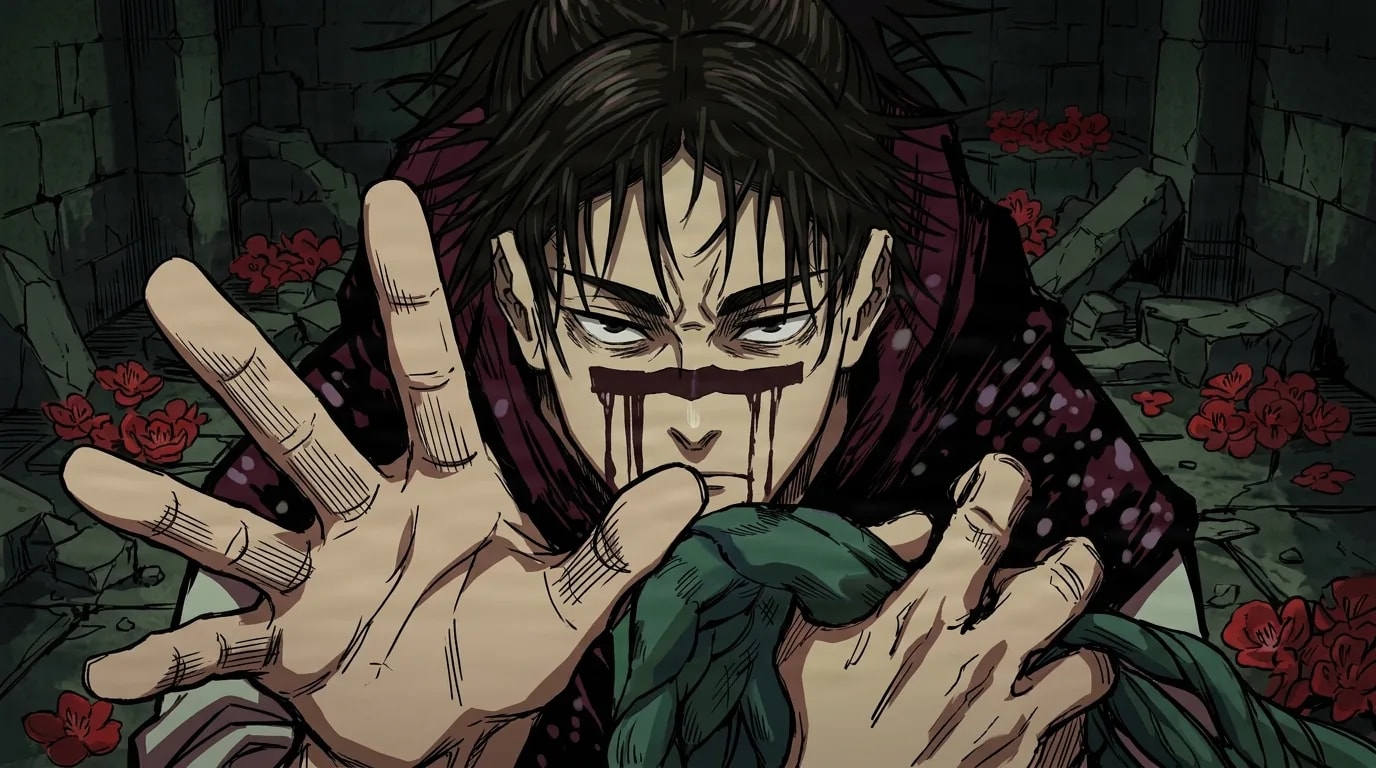
CharacterThe Cursed Womb: Death Paintings are nine cursed objects made from the blended blood of a human and a cursed spirit. The first three carry a special grade rank, and any of the nine, once swallowed by a host, can take flesh as a half-curse, half-human fighter.
Personality
Dormant in their object form, the Death Painting Wombs look like tiny human-shaped fetuses with no power to act alone. Once a human swallows one, it takes flesh as a being that is half human and half cursed spirit, fully able to wield jujutsu, and that host may be absolutely anyone, even a person lacking innate talent or any chance of becoming a sorcerer. Their flesh-and-blood bodies leave them visible to ordinary people, and even sorcerers can find it hard to judge whether they face a curse or a curse user. They part ways with true cursed spirits in one respect: their bodies do not crumble once they die.
Blood-based jujutsu belongs to the first three, Choso, Eso, and Kechizu, and Choso can further command Blood Manipulation, the Kamo Clan's prized inherited technique, thanks to their link to the wicked Kamo ancestor. Bound together across 150 years, they clung to survival on barely more than the knowledge that the others existed. Not one remembers their mother or harbors any particular hatred for humans or sorcerers, for they live solely for one another.


History
Early in the Meiji era, a woman of rare genetic makeup delivered a half-human, half-curse child, a baffling pregnancy that made her family shun her. She fled with the baby to a temple run by jujutsu sorcerers, only to be seized by Noritoshi Kamo, history's most evil sorcerer, who caged mother and child alike to feed his curiosity. Nine pregnancies and nine abortions followed, and in time every record of her and the ordeal was destroyed. Sorcerers eventually rounded up all nine Death Painting Wombs, sealing them with binding vows that kept them in existence on the terms that they neither live nor harm anyone, and the objects went into the cursed warehouse at Tokyo Jujutsu High, kept behind Tengen's concealing barrier.
Mahito exploited the turmoil of the school's Goodwill Event invasion as cover to reach the warehouse, followed the special grade objects' presence so that Tengen's barrier no longer stopped him, killed the sorcerers on guard, and made off with Wombs No. 1 through 3. Soon after, he and Kenjaku incarnated the three as Eso, Kechizu, and Choso. Choso, once allied with Yuji Itadori, confirmed his other six brothers still rested in the warehouse, and through his blood tie he steered Yuji's allies safely past Tengen's barrier on the way to the Tombs of the Star. Named Noranso, Sho-oso, Tanso, Sanso, Kotsuso, and Shoso, the remaining six were later all ingested by Yuji, who thereby gained Blood Manipulation and the same physiology the brothers share.
Abilities
Every Death Painting Womb is defined by incarnation, the power to root itself in a swallowing host and rise as a jujutsu-capable hybrid no matter the vessel's talent. Their partial curse nature makes their blood toxic to humans when mixed in, and the recoil can drop even strong special first grades such as Naoya Zenin, a backlash that strikes Simurians too. From the brains of the humans they incarnated within, the Death Painting brothers absorbed their common sense, just as Sukuna took his from Yuji. The more a vessel resists the object, the less its shape shifts, though the brothers were forever fetuses, so changes in their hosts came out arbitrary.
The series' namesake, Kusozu, is a Buddhist set of nine paintings tracing a corpse's decay, paralleling the nine wombs. They are said to claim three parents altogether: their mother, the cursed spirit responsible for the pregnancy, and Noritoshi Kamo, who is really Kenjaku and who folded his own blood into them across the pregnancies. Since Kenjaku has lasted into the present by switching bodies and once wore Yuji's mother Kaori Itadori, Choso reckons Yuji among his own siblings.
Related Reading
See all
Super Saiyan Pubes: The Song About Where Super Saiyan Hair Actually Goes
The transformation everyone knows, the follow-up question nobody would touch. Why we made a smooth R&B track about the golden glow Dragon Ball never talks about....
The Bleach Female Characters Nobody Can Agree On, Settled
Five Bleach female characters, ranked and settled. Yoruichi sits at number five, the spot nobody expects, and our number one is an Arrancar with a soft heart....
Frequently Asked Questions
What is a Cursed Womb: Death Painting?
The Cursed Womb: Death Paintings are nine cursed objects made from the blended blood of a human and a cursed spirit. Dormant in object form they look like tiny human-shaped fetuses, but once a human swallows one it takes flesh as a being that is half human and half cursed spirit and fully able to wield jujutsu.
Why is Choso called a Death Painting Womb?
Choso is one of the Cursed Womb: Death Paintings, ranking among the first three alongside Eso and Kechizu, all carrying a special grade rank. Because of their link to the wicked Kamo ancestor, Choso can further command Blood Manipulation, the Kamo Clan's prized inherited technique.
What happened to the Cursed Womb: Death Paintings?
Mahito stole Wombs No. 1 through 3 from the cursed warehouse during the Goodwill Event invasion, and he and Kenjaku incarnated them as Eso, Kechizu, and Choso. The remaining six, named Noranso, Sho-oso, Tanso, Sanso, Kotsuso, and Shoso, were later all ingested by Yuji Itadori.
Who created the Cursed Womb: Death Paintings?
The Death Painting Wombs were created by Noritoshi Kamo, who is really Kenjaku, during the early Meiji era. After a woman of rare genetic makeup bore a half-human, half-curse child, Kenjaku caged her and put her through nine pregnancies and nine abortions, folding his own blood into them across the pregnancies.
Why does Choso consider Yuji his brother?
Choso reckons Yuji Itadori among his own siblings because Kenjaku, who created the Death Painting Wombs, has survived into the present by switching bodies and once wore Yuji's mother, Kaori Itadori. Through that blood tie Choso once allied with Yuji and steered Yuji's allies safely past Tengen's barrier.
Sources & Information
Looking for more on Cursed Womb: Death Painting? The Jujutsu Kaisen Wiki on Fandom has a dedicated page with community notes.
View on FandomThis content is original writing by Daddy Jim Headquarters based on the Jujutsu Kaisen anime series, manga, and official materials. Episode and chapter references are cited where applicable.
Character and scene imagery on this site is original artwork by Daddy Jim Headquarters, not screenshots or licensed imagery. Official cover art is used on three types of pages for editorial commentary:
- Movie pages: theatrical posters and key visuals, credited to MAPPA and Toho.
- Game pages: official box art for Jujutsu Kaisen Cursed Clash, credited to Bandai Namco.
- Manga chapter pages: Jump Comics volume covers, credited to Shueisha and Gege Akutami.
Official resources:
Help Us Keep This Wiki Accurate
Daddy Jim Headquarters maintains this encyclopedia. If you spot an error, a translation issue, or something that doesn't look right, let us know.