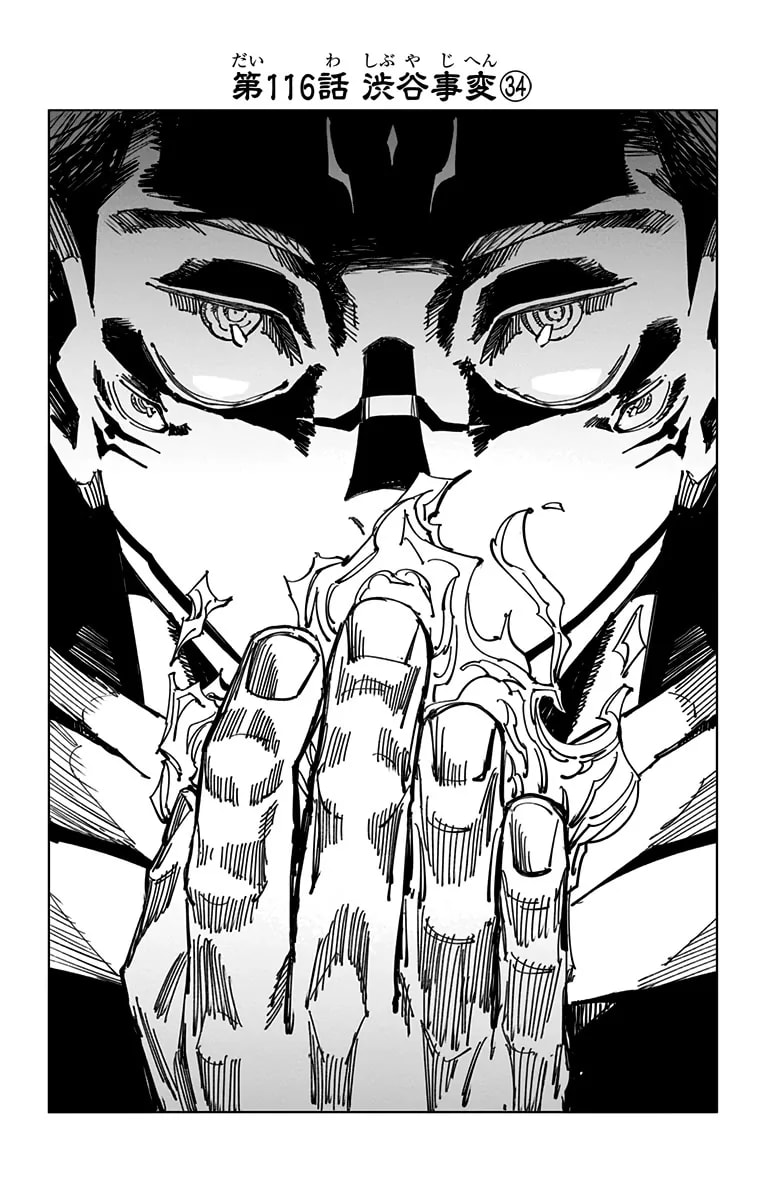
The fire duel between Sukuna and Jogo burns to its end. Though Jogo falls short, he wins rare acknowledgment from the King of Curses, while elsewhere a fallen Megumi leaves Shigemo facing a new and deadly threat.
Summary
The clash between the two flame-wielders blazes to its peak. Jogo loses, yet draws respect from Sukuna in his last moments. Far across the city, Megumi appears beaten, while a fresh arrival looms over Shigemo who may share the same fate.


Key Events
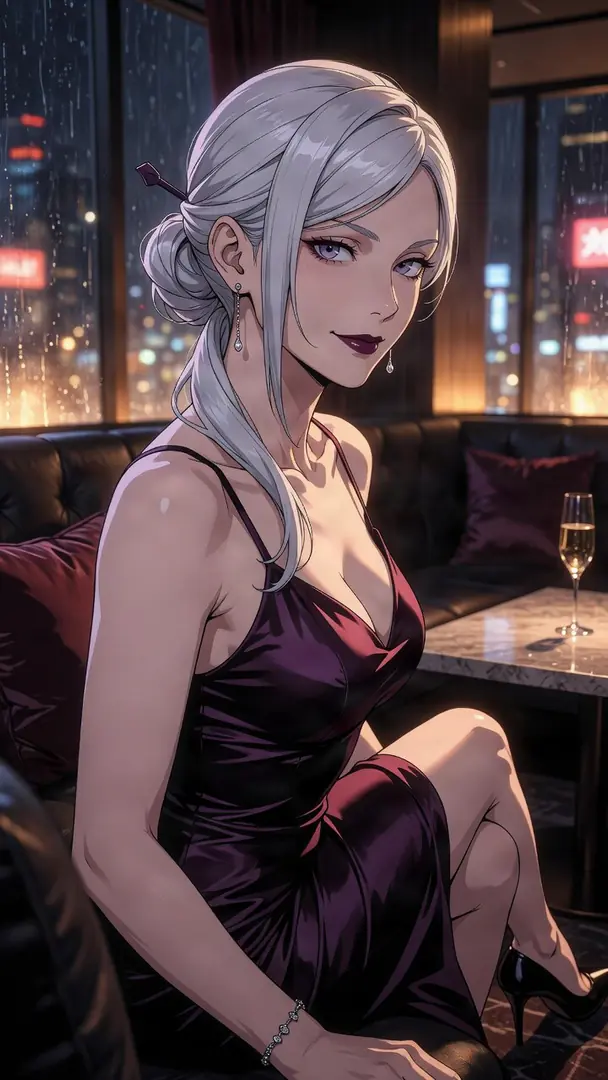
Standing on the burning wreck of Maximum: Meteor, Sukuna shapes an arrow of flame between his fingers as Jogo packs his own fire into a dense sphere. Jogo drifts into a vision beside his fallen comrades Hanami and Dagon and offers them an apology. When Hanami asks if Mahito still breathes, Jogo muses that humanity dreads death yet refuses to let go of it, that Mahito mirrors that very contradiction and will only keep growing, which is precisely why he installed him as leader. True to his conviction that cursed spirits are the genuine humans, Jogo wishes for a reunion once they are all reborn. Sukuna intrudes on the vision, asking whether Jogo longed to become human and dismissing the notion of curses supplanting humanity as foolish.
In Sukuna's view, Jogo ought to have reduced everything to cinders without pause, climbing higher and never sparing a thought for Gojo, but the spirit lacked the appetite for such ambition. The duel pleased him regardless, and Sukuna grades Jogo as worthy among his thousand years of opponents, urging him to take pride as someone strong. Touched by the words, Jogo weeps and asks what is happening to him; back in the real world, Sukuna tells the smoking corpse that he has no answer either. Then the curse user Uraume appears to fetch him, and Sukuna knows the face from ages past. The scene shifts to 11:07 P.M., where a gravely hurt Megumi lies senseless and a panicked Haruta Shigemo, confronted by a brand-new menace, begs him to wake.
Notes
This Shibuya Incident arc chapter wraps the duel between Sukuna and Jogo. The Shibuya 109 storefront marks the setting, just beyond the station exit. It showcases Jogo's Disaster Flames alongside Sukuna's Shrine and its Divine Flame, and brings Uraume into the story. The events were adapted in Episode 40 of the anime.
Related Reading
See all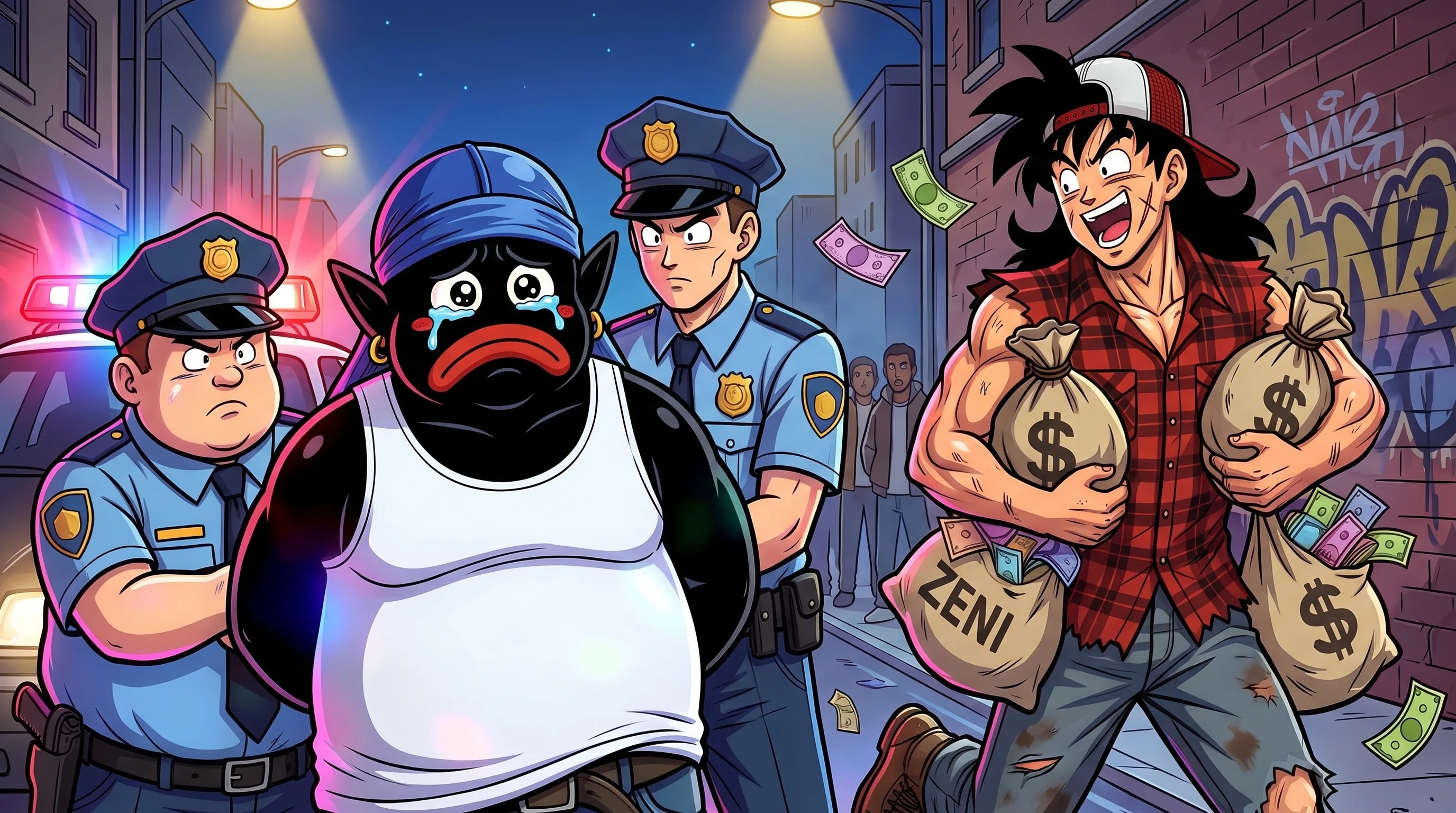
Infinite Zeni Glitch: When Yamcha Never Pays and Mr. Popo Always Does
The internet found an infinite money glitch. So did Yamcha. A smooth R&B track about the easiest money in the Dragon Ball world and the one man who keeps paying for it....
Super Saiyan Pubes: The Song About Where Super Saiyan Hair Actually Goes
The transformation everyone knows, the follow-up question nobody would touch. Why we made a smooth R&B track about the golden glow Dragon Ball never talks about....
Frequently Asked Questions
What happens in Jujutsu Kaisen Chapter 116?
In Chapter 116, the fire duel between Sukuna and Jogo burns to its end. Jogo falls short but wins rare acknowledgment from the King of Curses, while across the city a fallen Megumi leaves Shigemo facing a new and deadly threat.
Does Sukuna respect Jogo in Chapter 116?
Sukuna grades Jogo as worthy among his thousand years of opponents and urges him to take pride as someone strong. Touched by the words, Jogo weeps and asks what is happening to him in his final moments.
What are Jogo's final thoughts in Chapter 116?
Jogo drifts into a vision beside his fallen comrades Hanami and Dagon and offers them an apology. True to his conviction that cursed spirits are the genuine humans, he wishes for a reunion once they are all reborn and explains he installed Mahito as leader.
Who is Uraume, introduced in Chapter 116?
Uraume is a curse user who appears at the end of Chapter 116 to fetch Sukuna, a face the King of Curses recognizes from ages past. The character is brought into the story here for the first time.
Where is Chapter 116 set and which episode adapts it?
The Shibuya 109 storefront marks the setting of Chapter 116, just beyond the station exit. Part of the Shibuya Incident arc, it wraps the duel between Sukuna and Jogo and was adapted in Episode 40 of the anime.
Sources & Information
Looking for more on Chapter 116? The Jujutsu Kaisen Wiki on Fandom has a dedicated page with community notes.
View on FandomThis content is original writing by Daddy Jim Headquarters based on the Jujutsu Kaisen anime series, manga, and official materials. Episode and chapter references are cited where applicable.
Character and scene imagery on this site is original artwork by Daddy Jim Headquarters, not screenshots or licensed imagery. Official cover art is used on three types of pages for editorial commentary:
- Movie pages: theatrical posters and key visuals, credited to MAPPA and Toho.
- Game pages: official box art for Jujutsu Kaisen Cursed Clash, credited to Bandai Namco.
- Manga chapter pages: Jump Comics volume covers, credited to Shueisha and Gege Akutami.
Official resources:
Help Us Keep This Wiki Accurate
Daddy Jim Headquarters maintains this encyclopedia. If you spot an error, a translation issue, or something that doesn't look right, let us know.