Dragon Radar
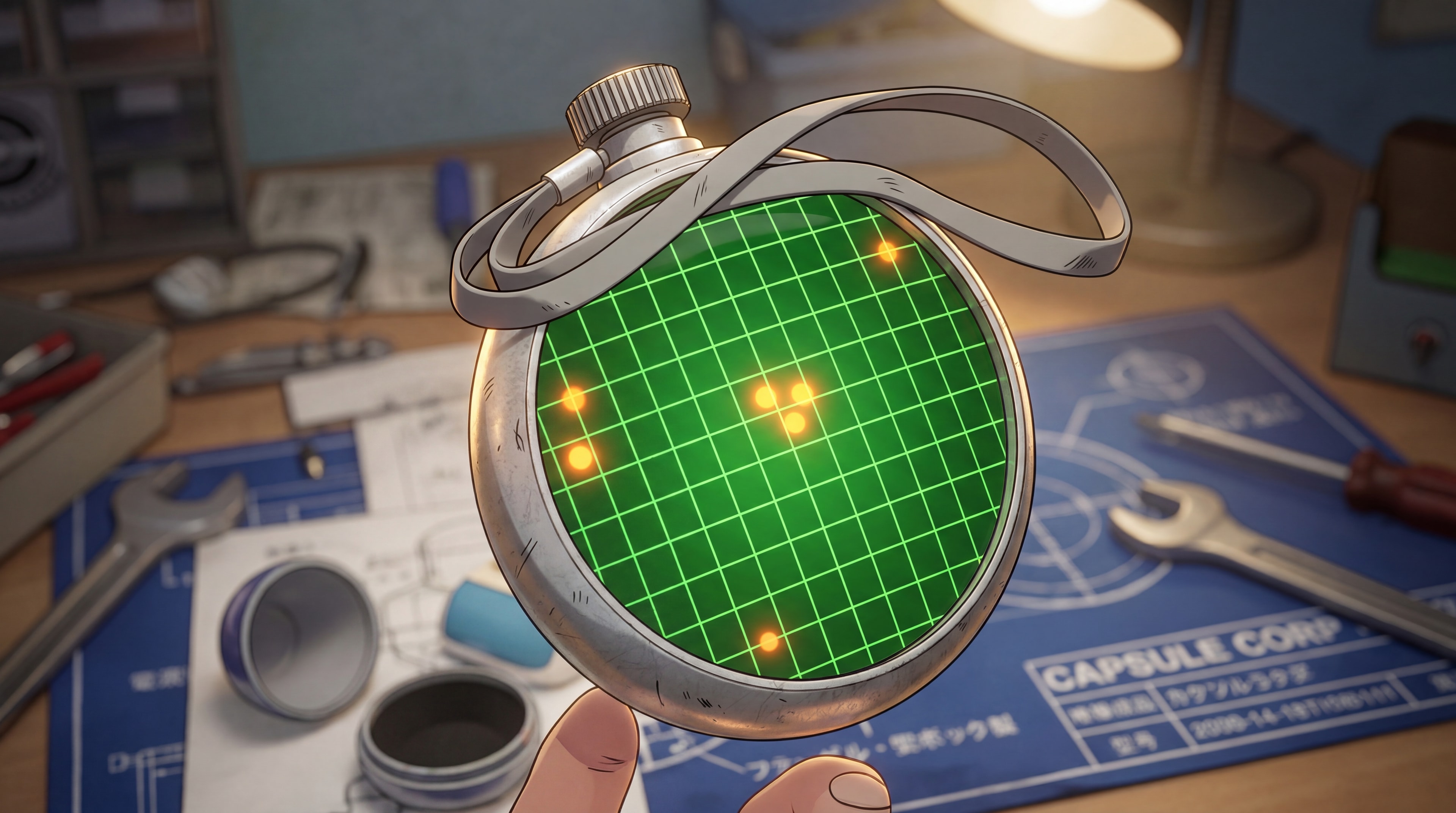
ItemA handheld tracking device invented by Bulma that detects the unique energy signature emitted by Dragon Balls, displaying their locations on a circular screen.
Design and Function
The Dragon Radar is a compact, handheld tracking device invented by the teenage prodigy Bulma. It detects a faint electromagnetic signal unique to Dragon Balls and displays their positions on a circular green screen. A button on top toggles between a wide-area map showing all seven Dragon Balls simultaneously and a zoomed-in view that provides more precise positioning for locating a specific ball.
Bulma created the Dragon Radar before the events of the original Dragon Ball series, and it was instrumental in her very first adventure with Goku. Without it, gathering the Dragon Balls would rely entirely on chance or magical means, making the radar arguably the single most important non-combat invention in the franchise. Bulma continues to maintain and upgrade the device throughout Dragon Ball Z, Dragon Ball Super, and Dragon Ball GT.
Other Versions
Bulma is not the only inventor to create a Dragon Ball tracking device. Emperor Pilaf constructed his own version independently, and the Red Ribbon Army developed their own radar as well, though neither matched the precision of Bulma's design. In Dragon Ball GT, the small robot Giru swallowed the Dragon Radar and integrated its functionality into his own systems, effectively becoming a living Dragon Radar for the duration of the Black Star Dragon Ball hunt.
The radar has proven useful beyond Earth's Dragon Balls. It was used to track the Namekian Dragon Balls on Planet Namek and later adapted to locate the Black Star Dragon Balls scattered across the universe. The Heeters even stole the radar from Earth to find the Cerealian Dragon Balls on Planet Cereal during the Granolah the Survivor Saga.



Frequently Asked Questions
Why didn't Goku instant transmission to get the Dragon Radar?
A handheld tracking device invented by Bulma that detects the unique energy signature emitted by Dragon Balls, displaying their locations on a circular screen. The Dragon Radar is a compact, handheld tracking device invented by the teenage prodigy Bulma.
Did Bulma invent the Dragon Radar?
A button on top toggles between a wide-area map showing all seven Dragon Balls simultaneously and a zoomed-in view that provides more precise positioning for locating a specific ball. It was used to track the Namekian Dragon Balls on Planet Namek and later adapted to locate the Black Star Dragon Balls scattered across the universe.
What is the Dragon Radar in Dragon Ball?
It detects a faint electromagnetic signal unique to Dragon Balls and displays their positions on a circular green screen. A button on top toggles between a wide-area map showing all seven Dragon Balls simultaneously and a zoomed-in view that provides more precise positioning for locating a specific ball. Bulma created the Dragon Radar before the events of the original Dragon Ball series, and it was instrumental in her very first adventure with Goku.
What does the Dragon Radar do in Dragon Ball?
Bulma created the Dragon Radar before the events of the original Dragon Ball series, and it was instrumental in her very first adventure with Goku. Without it, gathering the Dragon Balls would rely entirely on chance or magical means, making the radar arguably the single most important non-combat invention in the franchise. Bulma continues to maintain and upgrade the device throughout Dragon Ball Z, Dragon Ball Super, and Dragon Ball GT.
Who created the Dragon Radar?
The Dragon Radar was created by Bulma. Bulma created the Dragon Radar before the events of the original Dragon Ball series, and it was instrumental in her very first adventure with Goku.

Sources & Information
Looking for more on Dragon Radar? The Dragon Ball Wiki on Fandom has a dedicated page with community notes.
View on FandomThis content is original writing by Daddy Jim Headquarters based on the Dragon Ball anime series, manga, and official materials. Episode and chapter references are cited where applicable.
Character and scene imagery on this site is original artwork by Daddy Jim Headquarters, not screenshots or licensed imagery. Official cover art is used on three types of pages for editorial commentary:
- Movie pages: theatrical posters and key visuals, credited to Toei Animation and Shueisha.
- Game pages: official box art, credited to Bandai Namco, Atari, and other publishers.
- Manga chapter pages: Jump Comics volume covers, credited to Shueisha and Akira Toriyama.
Browse our episode guides:
Official resources:
Help Us Keep This Wiki Accurate
Daddy Jim Headquarters maintains this encyclopedia. If you spot an error, a translation issue, or something that doesn't look right, let us know.