Zeno's Button
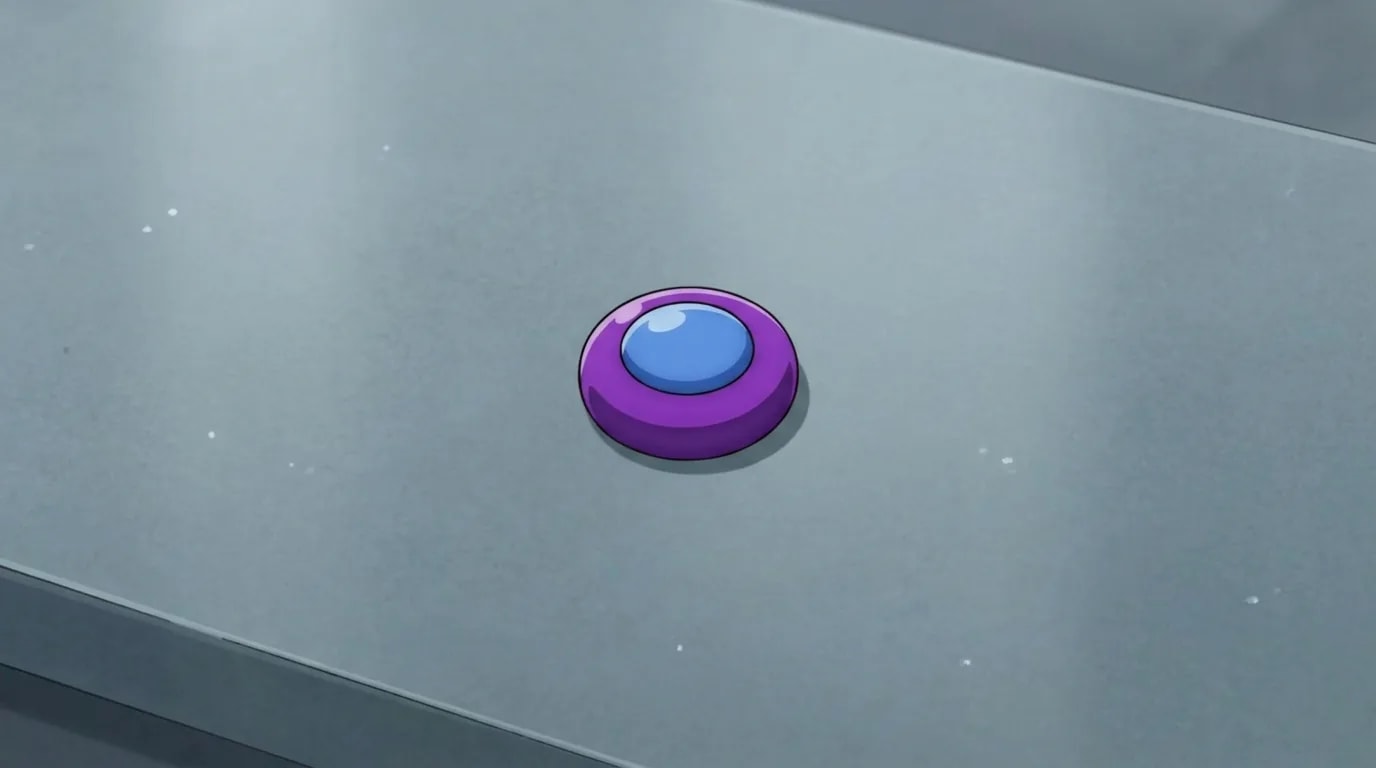
ItemA small teleportation device given to Goku by Zeno. Pressing the blue button summons Zeno to the user's location, while the red button on the reverse side transports the user to Zeno.
Origin and Use
Zeno gave the button to Goku after one of their friendly visits, impressed by the Saiyan's boldness in treating the supreme ruler of all existence as a casual friend. The device is deceptively simple in appearance, resembling a small handheld button, but its power is staggering: it provides a direct line to the most powerful being in the multiverse.
The button's most consequential use came during the "Future" Trunks Saga. After Goku, Vegeta, and Trunks failed to defeat Fused Zamasu, and Zamasu's consciousness began spreading across the entire future timeline as Infinite Zamasu, Goku discovered the button in his pocket (having mistaken it for a Senzu Bean earlier). He pressed it and summoned Future Zeno, who promptly erased the entire corrupted future timeline along with Infinite Zamasu, ending the threat once and for all.
The button also features a red side that transports the user directly to Zeno's palace. Goku used this function to visit Zeno and propose the idea of the Tournament of Power, much to Beerus's horror. The God of Destruction threatened to destroy Goku if he pressed the button, fearing what might happen, but Goku tricked him and teleported away. In the anime, Goku even offered the button as payment to Fortuneteller Baba for helping revive Frieza for the Tournament of Power, but she declined, terrified by the sheer power the artifact represented.


Frequently Asked Questions
What does a Zeno button do in Dragon Ball Xenoverse 2?
A small teleportation device given to Goku by Zeno. Pressing the blue button summons Zeno to the user's location, while the red button on the reverse side transports the user to Zeno. The God of Destruction threatened to destroy Goku if he pressed the button, fearing what might happen, but Goku tricked him and teleported away.
What is Zeno's Button?
A small teleportation device given to Goku by Zeno. Pressing the blue button summons Zeno to the user's location, while the red button on the reverse side transports the user to Zeno.
Who created Zeno's Button?
Zeno's Button was created by Zeno. Zeno gave the button to Goku after one of their friendly visits, impressed by the Saiyan's boldness in treating the supreme ruler of all existence as a casual friend.
When did Zeno's Button first appear?
Zeno's Button first appeared in the Dragon Ball Super anime episode "Come Forth, Shenron!." In the manga, it debuted in the chapter "Zamasu and Black." A small teleportation device given to Goku by Zeno. Zeno gave the button to Goku after one of their friendly visits, impressed by the Saiyan's boldness in treating the supreme ruler of all existence as a casual friend.
Who uses Zeno's Button?
The button's most consequential use came during the "Future" Trunks Saga. Goku used this function to visit Zeno and propose the idea of the Tournament of Power, much to Beerus's horror.
Sources & Information
Looking for more on Zeno's Button? The Dragon Ball Wiki on Fandom has a dedicated page with community notes.
View on FandomThis content is original writing by Daddy Jim Headquarters based on the Dragon Ball anime series, manga, and official materials. Episode and chapter references are cited where applicable.
Character and scene imagery on this site is original artwork by Daddy Jim Headquarters, not screenshots or licensed imagery. Official cover art is used on three types of pages for editorial commentary:
- Movie pages: theatrical posters and key visuals, credited to Toei Animation and Shueisha.
- Game pages: official box art, credited to Bandai Namco, Atari, and other publishers.
- Manga chapter pages: Jump Comics volume covers, credited to Shueisha and Akira Toriyama.
Browse our episode guides:
Official resources:
Help Us Keep This Wiki Accurate
Daddy Jim Headquarters maintains this encyclopedia. If you spot an error, a translation issue, or something that doesn't look right, let us know.