Demon God Second Version
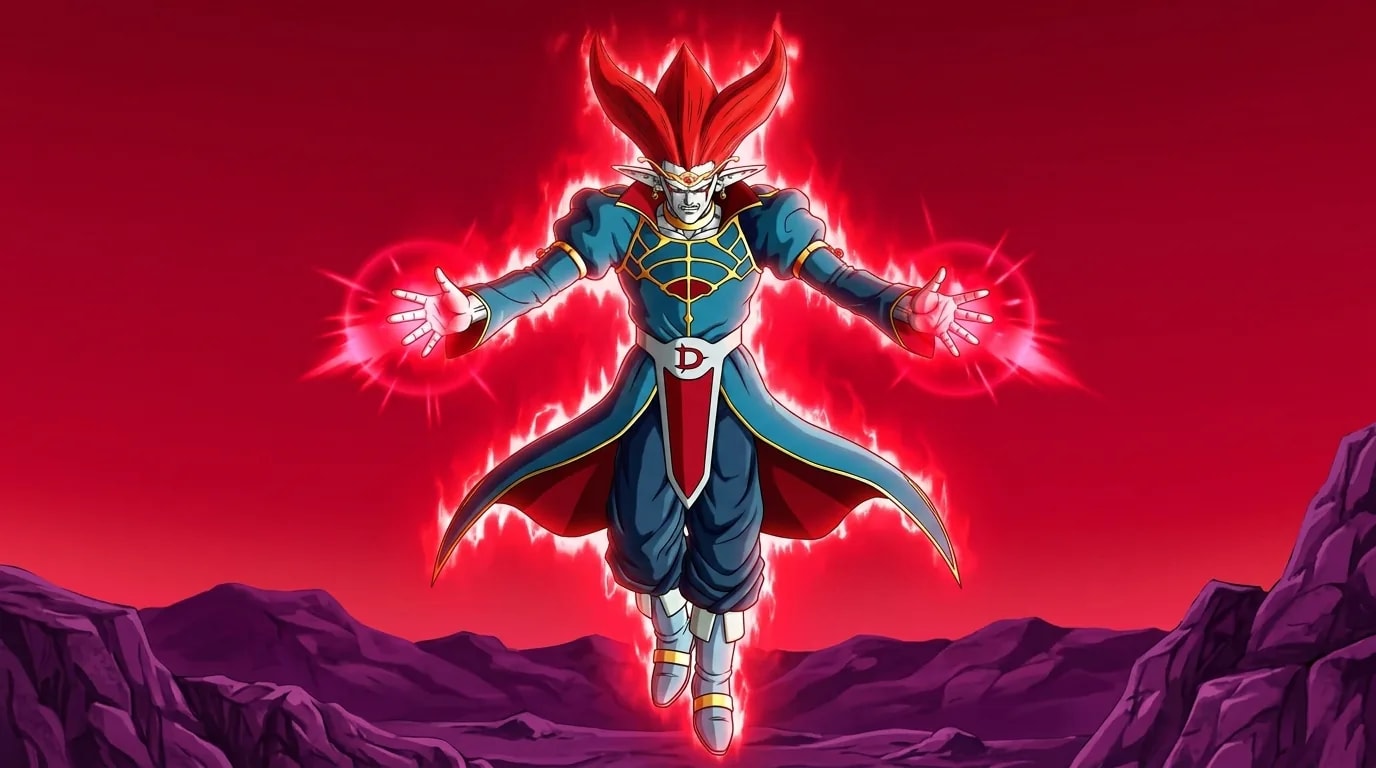
TransformationAn advanced evolution of the base Demon God transformation that emerged after Mechikabura's escape from the Time Labyrinth, distinguished by blue-irised black eyes and elaborate facial markings.
Evolution Through Dark Resonance
The Demon God Second Version represents a natural progression beyond the standard Demon God state, emerging under specific circumstances tied to the Dark Empire's supreme ruler Mechikabura. This enhanced form appeared following Mechikabura's escape from the Time Labyrinth, an event that sent ripples of dark energy through the connections binding him to his subordinate Demon Gods. The resulting surge of power enabled those already in possession of the Demon God form to evolve it further.
The Second Version is distinguished from its predecessor by several visual characteristics. The user's hair becomes longer and flows more freely than in the standard form. Their eyes transform dramatically, with blue irises set against fully black sclera, creating a striking and intimidating appearance. Facial markings become more elaborate, taking on tribal-style patterns that differ from the simpler lines of the base Demon God form. These changes are accompanied by modifications to the user's outfit, reflecting the enhanced state's elevated status in the demonic hierarchy.
In terms of raw power, the Second Version represents a considerable leap. Users in this state can compete with warriors operating at levels beyond Super Saiyan God, placing them firmly in the upper tiers of the Heroes power scale. The enhanced magical abilities that accompany this form make its users threats both in direct combat and through their spellcasting, as the Second Version appears to amplify both physical and arcane capabilities simultaneously.
Frequently Asked Questions
What is Demon God Second Version?
Demon God Second Version is an alternate refinement of the Demon God transformation, representing a different evolutionary path from the standard Demon God or its Perfect State. It retains the core demonic divine ki of the original form while introducing distinct visual cues and a separate power tier.
How does Demon God Second Version differ from the original Demon God?
Hair flows more freely and lengthens. Eyes shift to blue irises set in black sclera. Tribal-style facial markings appear or become more elaborate. Outfit modifications reflect the enhanced state.
How powerful is Demon God Second Version?
A significant leap beyond the standard Demon God form. Users in this state can compete with warriors who have surpassed Super Saiyan God tier.
What are the requirements to use Demon God Second Version?
Achieved after Mechikabura's escape from the Time Labyrinth, which apparently triggered an evolution in the Demon God forms of those connected to him. Requires having already attained the base Demon God transformation.
Who uses Demon God Second Version?
The form is most prominently demonstrated within the Demon God lineage tied to Mechikabura, including users whose Demon God state evolved after Mechikabura's escape from the Time Labyrinth. It serves as a Mechikabura-era extension of the original Demon God branch.
Sources & Information
Looking for more on Demon God Second Version? The Dragon Ball Wiki on Fandom has a dedicated page with community notes.
View on FandomThis content is original writing by Daddy Jim Headquarters based on the Dragon Ball anime series, manga, and official materials. Episode and chapter references are cited where applicable.
Character and scene imagery on this site is original artwork by Daddy Jim Headquarters, not screenshots or licensed imagery. Official cover art is used on three types of pages for editorial commentary:
- Movie pages: theatrical posters and key visuals, credited to Toei Animation and Shueisha.
- Game pages: official box art, credited to Bandai Namco, Atari, and other publishers.
- Manga chapter pages: Jump Comics volume covers, credited to Shueisha and Akira Toriyama.
Browse our episode guides:
Official resources:
Help Us Keep This Wiki Accurate
Daddy Jim Headquarters maintains this encyclopedia. If you spot an error, a translation issue, or something that doesn't look right, let us know.