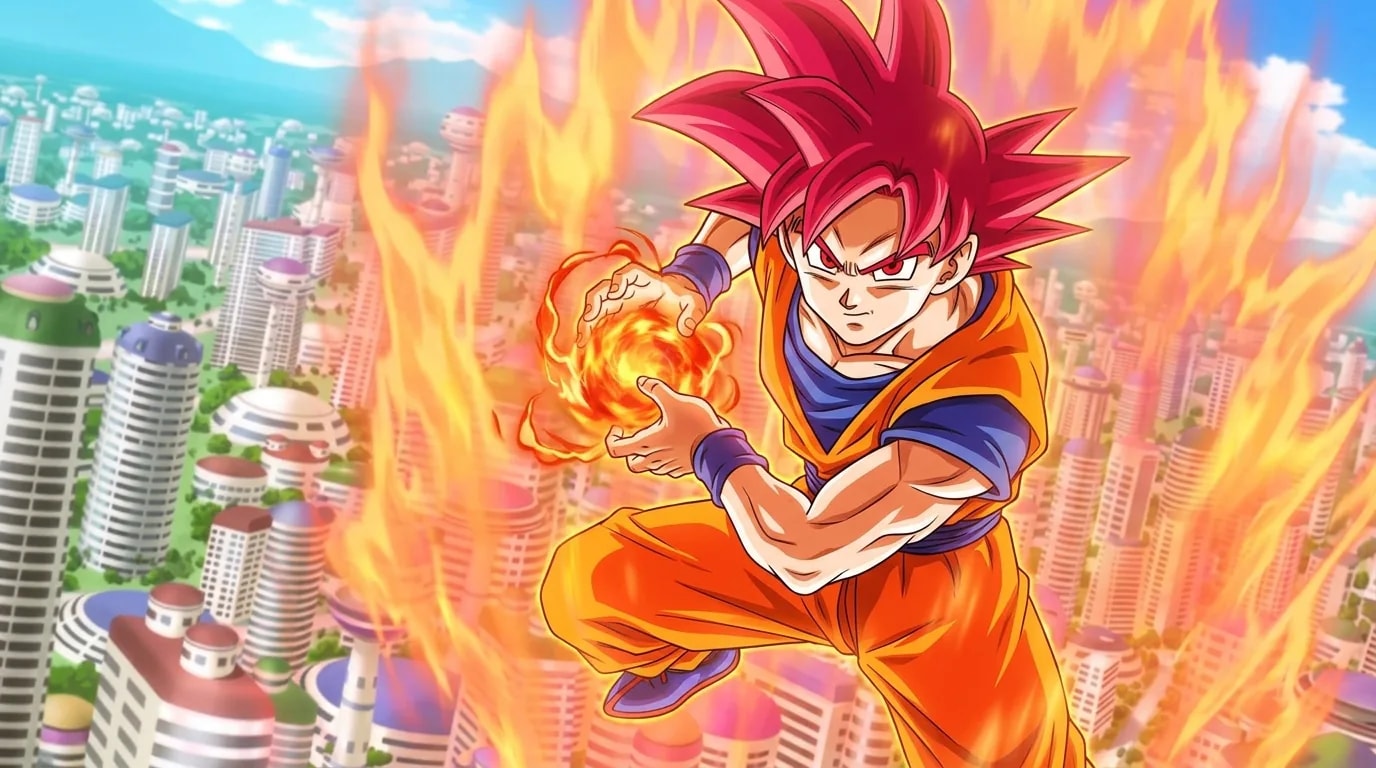
Super Saiyan God
TransformationA divine transformation that marked the beginning of an entirely new era of power in the Dragon Ball franchise. By infusing a Saiyan with godly ki, the form elevates them beyond anything the standard Super Saiyan line could achieve, placing them in the realm of the Gods of Destruction. It was introduced in Battle of Gods as the legendary power prophesied to challenge Beerus.
The Ritual and the Prophecy
The existence of Super Saiyan God entered the story through Beerus, the God of Destruction of Universe 7, who dreamed of a warrior called the Super Saiyan God who would prove to be a worthy opponent after his long slumber. Accompanied by his attendant Whis, Beerus traveled across the universe searching for this prophesied fighter. He tested Goku on King Kai's planet, defeating Super Saiyan 3 Goku with trivial effort and establishing that the entire Super Saiyan line up to that point was irrelevant at the divine level.
The ancient Saiyan warrior Yamoshi is connected to the legend. According to Saiyan lore, Yamoshi was a righteous Saiyan who achieved a godlike power long ago but could not maintain it. His spirit continued searching for six righteous Saiyans who could recreate the transformation, and this became the basis for the ritual that would eventually grant Goku the form.
The Six-Saiyan Ritual
The key to unlocking Super Saiyan God was discovered through Shenron, who revealed that five righteous Saiyans must pour their hearts and energy into a sixth. On Earth, Goku served as the recipient, with Vegeta, Gohan, Goten, Trunks, and the unborn Pan (through Videl) serving as the five donors. The ritual channeled their combined Saiyan energy into Goku, igniting his ki with divine properties and transforming him into the Super Saiyan God.
What made this transformation philosophically distinct was that it relied on collective Saiyan virtue rather than individual rage or trauma. Every prior Super Saiyan breakthrough had been driven by personal loss or fury. Super Saiyan God required cooperation, trust, and shared purpose among the Saiyan race, a fitting requirement for a form that was meant to stand alongside the gods.



Power and the Battle with Beerus
The power gap between Super Saiyan 3 and Super Saiyan God was treated as the largest leap in the franchise up to that point. Beerus had dispatched Super Saiyan 3 Goku with a casual flick, but Super Saiyan God Goku fought him across the sky, through the atmosphere, and into outer space in a battle that threatened to destroy the universe through the sheer force of their clashing punches. Each collision of their fists generated shockwaves that rippled across the cosmos, and the Supreme Kais and other divine observers watched in genuine alarm.
Despite the enormous power increase, Goku ultimately could not defeat Beerus. The God of Destruction was still holding back, and the ritual-granted form had a time limit that eventually expired during the fight. However, the experience fundamentally changed Goku's body. After the transformation faded, his base form had absorbed some of the divine energy, allowing him to continue fighting Beerus at a level far above his previous maximum. This absorption of godly ki into his normal state became the foundation for everything that followed.
The Visual Departure
Super Saiyan God deliberately broke from the escalating visual intensity of the prior forms. Where Super Saiyan 3 gave the user waist-length hair, no eyebrows, and an overwhelming aura, Super Saiyan God went in the opposite direction. The user becomes leaner, their hair lies flat and turns a deep red, and the aura is calm and smooth. Toriyama designed it this way to communicate that true godly power does not need to look overwhelming; it simply is. The form's understated appearance signaled a new design philosophy that would carry through to Super Saiyan Blue and Ultra Instinct.
After the Ritual
The most significant long-term effect of Super Saiyan God was not the form itself but the permanent access to godly ki it granted. After experiencing the ritual even once, a Saiyan could tap into divine energy on their own without needing five other Saiyans present. Both Goku and Vegeta learned to access godly ki through their training with Whis on Beerus's planet, and this became the basis for Super Saiyan Blue: the result of applying the Super Saiyan transformation to a body already saturated with godly ki.
Vegeta notably never used the six-Saiyan ritual at all. He achieved access to godly ki purely through his training with Whis, demonstrating that the ritual was one path but not the only one. This made the transformation more personal for Vegeta, as he reached divine power through his own determination rather than relying on others, fitting his character perfectly.
Continued Relevance
Even after Super Saiyan Blue surpassed it in raw power, Super Saiyan God remained tactically useful. In the manga version of the Tournament of Power, Vegeta strategically switched between Super Saiyan God and Blue during combat. God served as a more energy-efficient base state for movement and defense, while Blue provided the peak power needed for critical attacks. This switching technique extended his stamina considerably against opponents who were burning through their energy reserves recklessly.
The form also laid the conceptual groundwork for the franchise's exploration of divine power hierarchies, including Gods of Destruction, Angels, and the techniques of Ultra Instinct and Ultra Ego that would define the later arcs of Dragon Ball Super.
Related Reading
See all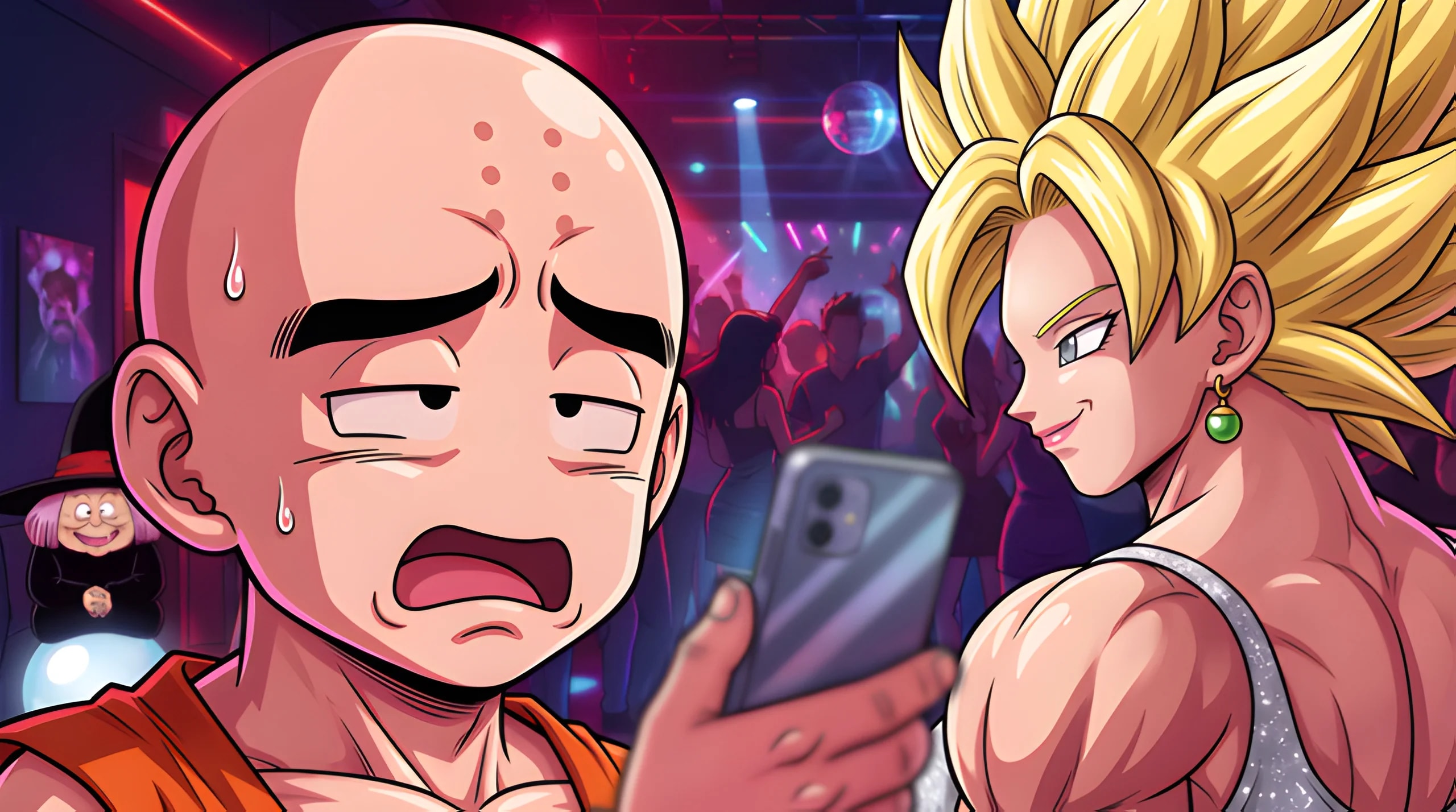
Krillin's on the Tinder: How the Ultimate Short King Survived the Height Filter
Tinder built a height filter. Dragon Ball built a five foot legend. What happened when we sent the ultimate short king into the modern dating hellscape....
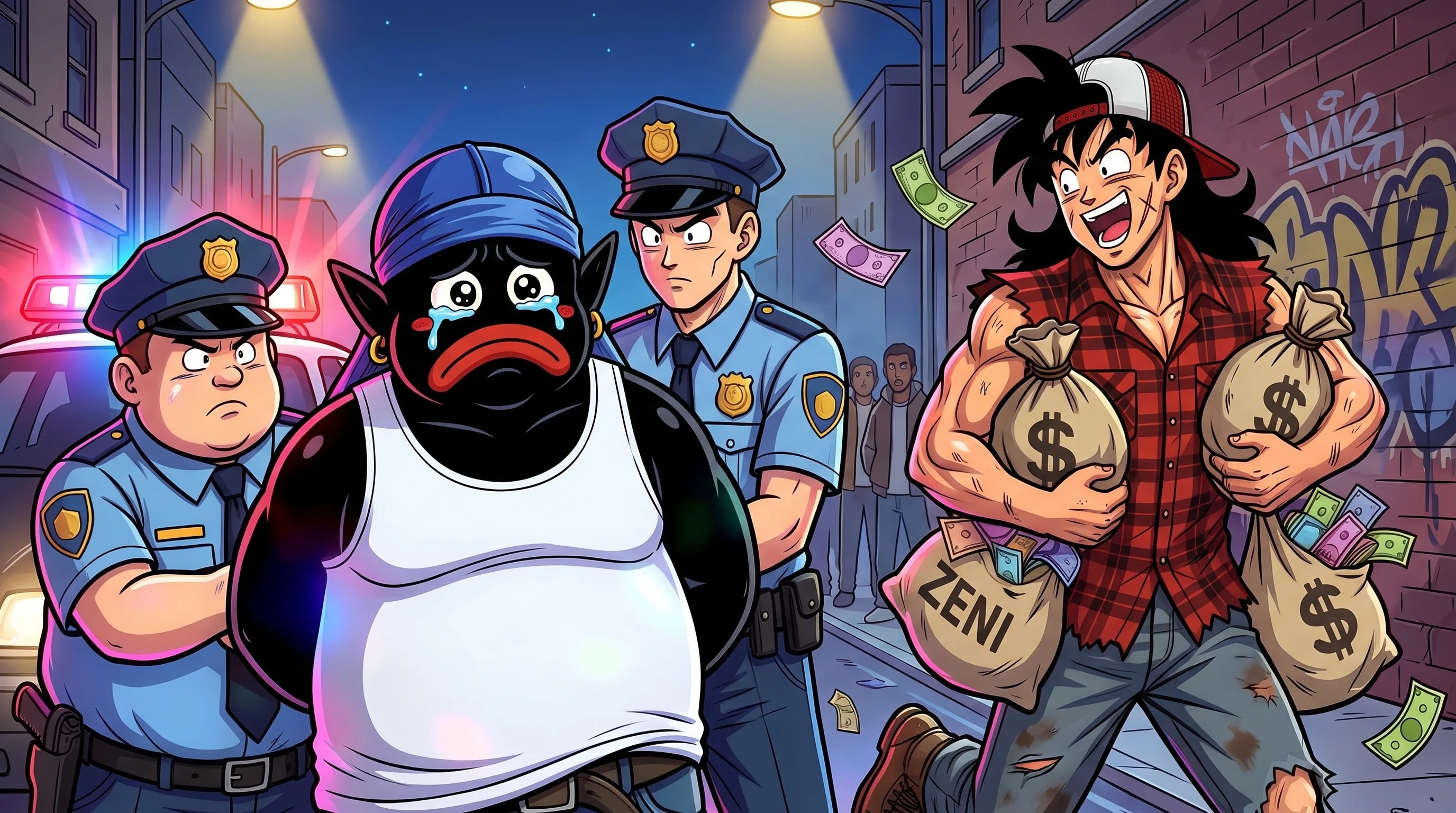
Infinite Zeni Glitch: When Yamcha Never Pays and Mr. Popo Always Does
The internet found an infinite money glitch. So did Yamcha. A smooth R&B track about the easiest money in the Dragon Ball world and the one man who keeps paying for it....
Frequently Asked Questions
Who is the super saiyan god in Dragon Ball?
A divine transformation that marked the beginning of an entirely new era of power in the Dragon Ball franchise. By infusing a Saiyan with godly ki, the form elevates them beyond anything the standard Super Saiyan line could achieve, placing them in the realm of the Gods of Destruction.
How is Super Saiyan God achieved?
Initially requires a ritual where five righteous Saiyans channel their energy into a sixth, elevating them to divine status. After experiencing the form once, the user can access godly ki independently without repeating the ritual. Can also be achieved through specialized divine training.
What does Super Saiyan God look like?
The user becomes noticeably leaner and more youthful in appearance. Hair turns a vivid crimson red and lies flatter against the head, lacking the spiky upward shape of other Super Saiyan forms. Eyes become sharper with red irises.
How powerful is Super Saiyan God?
Grants access to godly ki, a category of energy invisible to non-divine beings. Tremendous power increase far beyond Super Saiyan 3.
What are the drawbacks of Super Saiyan God?
The initial ritual method requires exactly six Saiyans. The time limit on the ritual-granted transformation can expire mid-battle. The form was not strong enough to defeat Beerus at full power.
Sources & Information
Looking for more on Super Saiyan God? The Dragon Ball Wiki on Fandom has a dedicated page with community notes.
View on FandomThis content is original writing by Daddy Jim Headquarters based on the Dragon Ball anime series, manga, and official materials. Episode and chapter references are cited where applicable.
Character and scene imagery on this site is original artwork by Daddy Jim Headquarters, not screenshots or licensed imagery. Official cover art is used on three types of pages for editorial commentary:
- Movie pages: theatrical posters and key visuals, credited to Toei Animation and Shueisha.
- Game pages: official box art, credited to Bandai Namco, Atari, and other publishers.
- Manga chapter pages: Jump Comics volume covers, credited to Shueisha and Akira Toriyama.
Browse our episode guides:
Official resources:
Help Us Keep This Wiki Accurate
Daddy Jim Headquarters maintains this encyclopedia. If you spot an error, a translation issue, or something that doesn't look right, let us know.