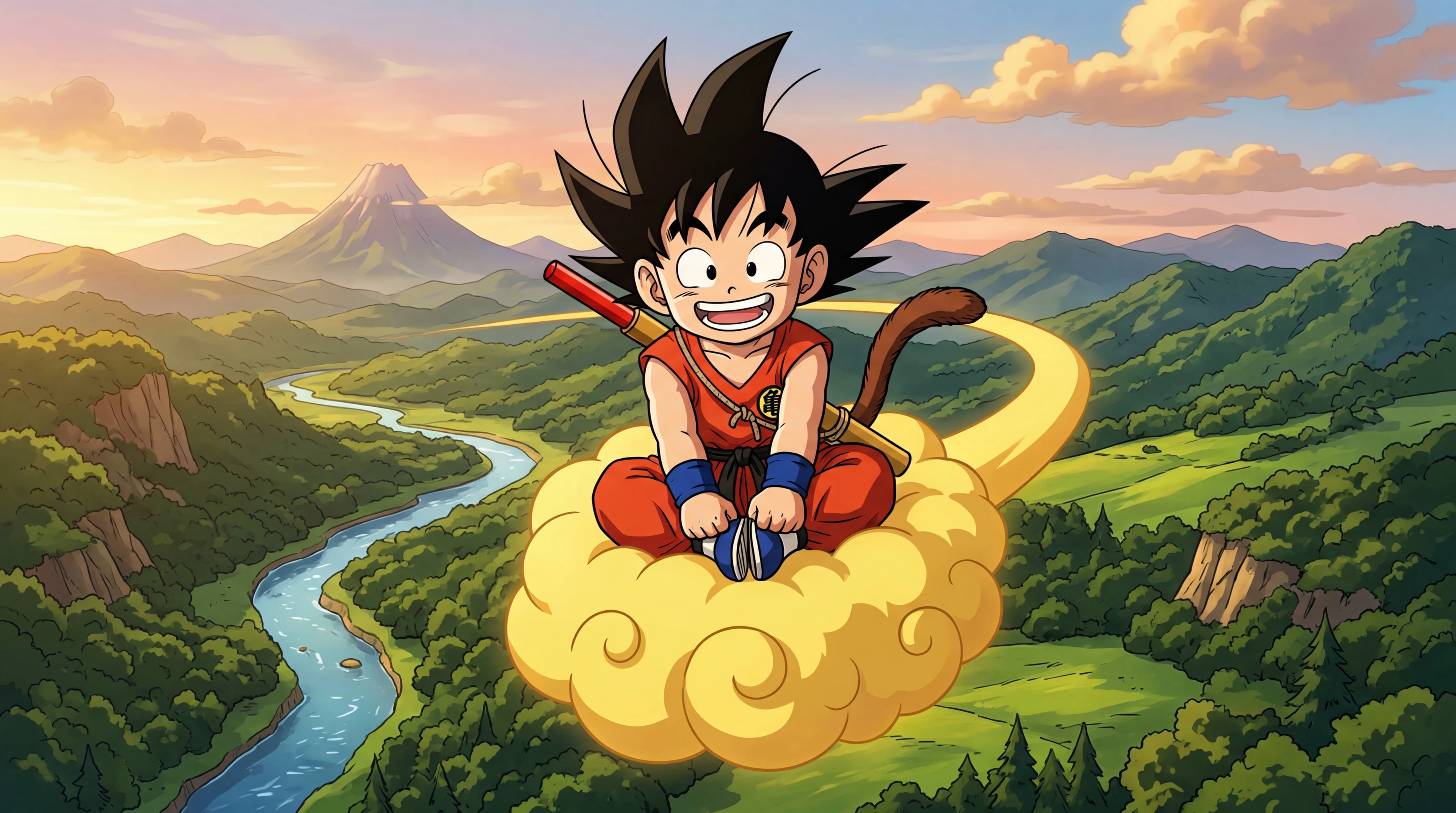
Metal Super Saiyan
TransformationAn unusual variant of Super Saiyan that coats the user's body in a metallic substance, granting enhanced durability alongside the standard power increase. This form appeared in the Dragon Ball Z: The Real 4-D at Super Tenkaichi Budokai theme park attraction and has not been featured in any mainline anime, manga, or standard video game release.
Origins and Context
Metal Super Saiyan originated in a 4-D theater attraction at Universal Studios Japan. The experience, titled "Dragon Ball Z: The Real 4-D at Super Tenkaichi Budokai," featured an original storyline where Goku faced off against a powered-up version of Frieza. During this encounter, Goku achieved a unique metallic transformation that went beyond his standard Super Saiyan form.
The attraction was designed to showcase cutting-edge 4-D effects, and the metallic transformation served as a visual spectacle that played well with the medium's reflective and textural capabilities. As a result, the form's design prioritized visual impact over narrative consistency with the broader Dragon Ball continuity.
Visual Design
The most distinctive feature is the chrome-like coating that covers the entire body. The standard golden Super Saiyan hair is replaced with a silvery metallic version that retains the upright flame-like shape. The skin takes on a polished metal appearance, and the aura shifts from warm golden tones to cool, reflective silvers. The overall effect suggests a Saiyan who has been forged rather than born into power.



Frequently Asked Questions
What is Metal Super Saiyan?
Metal Super Saiyan is the transformation used by Metal Cooler clones and the related Meta-Coolers, fusing the Frieza Race's Super Evolution upgrades with a regenerative metallic body. The state allows the user to repair damage in real time and adapt to their opponent's attacks.
How does Metal Super Saiyan differ from regular Super Saiyan?
The body takes on a metallic sheen as if coated in liquid metal. Hair retains the upright Super Saiyan style but appears silvery-chrome rather than golden. Eyes gain a cold, steel-like quality. The aura becomes sharp-edged and reflective.
What advantage does Metal Super Saiyan provide?
Enhanced physical durability due to the metallic body composition. Power exceeds standard Super Saiyan. The metallic coating may provide resistance to certain energy-based attacks.
What are the drawbacks of Metal Super Saiyan?
Limited information available due to the form's appearance in a single attraction. The metallic body may reduce flexibility.
Who uses Metal Super Saiyan?
The form is associated with Metal Cooler and the Meta-Cooler line from Dragon Ball Z: The Return of Cooler. Related metallic variants appear in Dragon Ball Heroes and Xenoverse as extensions of the same lineage rather than fully separate transformations.
Sources & Information
Looking for more on Metal Super Saiyan? The Dragon Ball Wiki on Fandom has a dedicated page with community notes.
View on FandomThis content is original writing by Daddy Jim Headquarters based on the Dragon Ball anime series, manga, and official materials. Episode and chapter references are cited where applicable.
Character and scene imagery on this site is original artwork by Daddy Jim Headquarters, not screenshots or licensed imagery. Official cover art is used on three types of pages for editorial commentary:
- Movie pages: theatrical posters and key visuals, credited to Toei Animation and Shueisha.
- Game pages: official box art, credited to Bandai Namco, Atari, and other publishers.
- Manga chapter pages: Jump Comics volume covers, credited to Shueisha and Akira Toriyama.
Browse our episode guides:
Official resources:
Help Us Keep This Wiki Accurate
Daddy Jim Headquarters maintains this encyclopedia. If you spot an error, a translation issue, or something that doesn't look right, let us know.