
Zard
MusicistaA massively successful pop rock group led by vocalist Izumi Sakai who shaped Dragon Ball GT's iconic musical identity. Sakai wrote the opening theme lyrics and sang the second ending, cementing Zard's franchise legacy.
Dragon Ball GT Contribution
Zard's connection to Dragon Ball GT came through two major contributions. Lead singer Izumi Sakai wrote the lyrics for Field of View's "DAN DAN Kokoro Hikarete 'ku," the opening theme that became instantly recognizable to millions of viewers. Additionally, Zard performed the series' second ending theme "Don't You See!," with lyrics again penned by Sakai. These two vocal touchstones placed Zard at the sonic heart of GT's identity, making the band inseparable from the series' musical legacy. Sakai's lyrical contributions shaped the emotional resonance that made these themes memorable decades after broadcast.

Musical Career
Zard was formed by CEO Daikō Nagato, who recruited model Sachiko Kamachi and renamed her Izumi Sakai to begin her musical career. The group debuted February 10, 1991, with \"Good-bye My Loneliness.\" Their breakthrough came in 1993 with \"Makenaide,\" which reached number one and sold over 1.8 million copies. Subsequent hits \"Yureru Omoi\" and \"Kitte Wasurenai\" established Zard as Japan's best-selling artist of 1993. By 2014, Zard had sold over 37 million records. Sakai was prolific as a lyricist, writing 150 songs during her seventeen-year career for both Zard and other artists. Zard disbanded in December 2002 but reunited in 2012 and again in 2020. Sadly, Sakai passed away on May 27, 2007, at age 40 following a fall during her recovery from cervical cancer.
Domande frequenti
Chi è Zard in Dragon Ball?
Zard è un gruppo giapponese, noto come autore del testo della sigla di apertura e cantante della sigla di chiusura di Dragon Ball GT. Un gruppo pop rock di enorme successo guidato dalla cantante Izumi Sakai che ha plasmato l'iconica identità musicale di Dragon Ball GT.
Qual è il contributo di Zard a Dragon Ball?
Il legame di Zard con Dragon Ball GT si è realizzato attraverso due importanti contributi. La cantante Izumi Sakai ha scritto il testo di "DAN DAN Kokoro Hikarete 'ku" dei Field of View, la sigla di apertura che è diventata immediatamente riconoscibile per milioni di spettatori.
Di che nazionalità è Zard?
Zard è un gruppo giapponese associato alle produzioni in lingua inglese di Dragon Ball.
Quando è stato attivo Zard in Dragon Ball?
Zard è stato attivo nel periodo 1991-2007 del franchise. Autore del testo della sigla di apertura e cantante della sigla di chiusura di Dragon Ball GT.
Per cos'altro è noto Zard?
Zard è stato formato dall'amministratore delegato Daikō Nagato, che ha reclutato la modella Sachiko Kamachi e l'ha rinominata Izumi Sakai per iniziare la sua carriera musicale. Il gruppo ha debuttato il 10 febbraio 1991 con "Good-bye My Loneliness". La loro svolta è arrivata nel 1993 con "Makenaide", che ha raggiunto il numero uno e ha venduto oltre 1,8 milioni di copie.
Letture correlate
Vedi tutto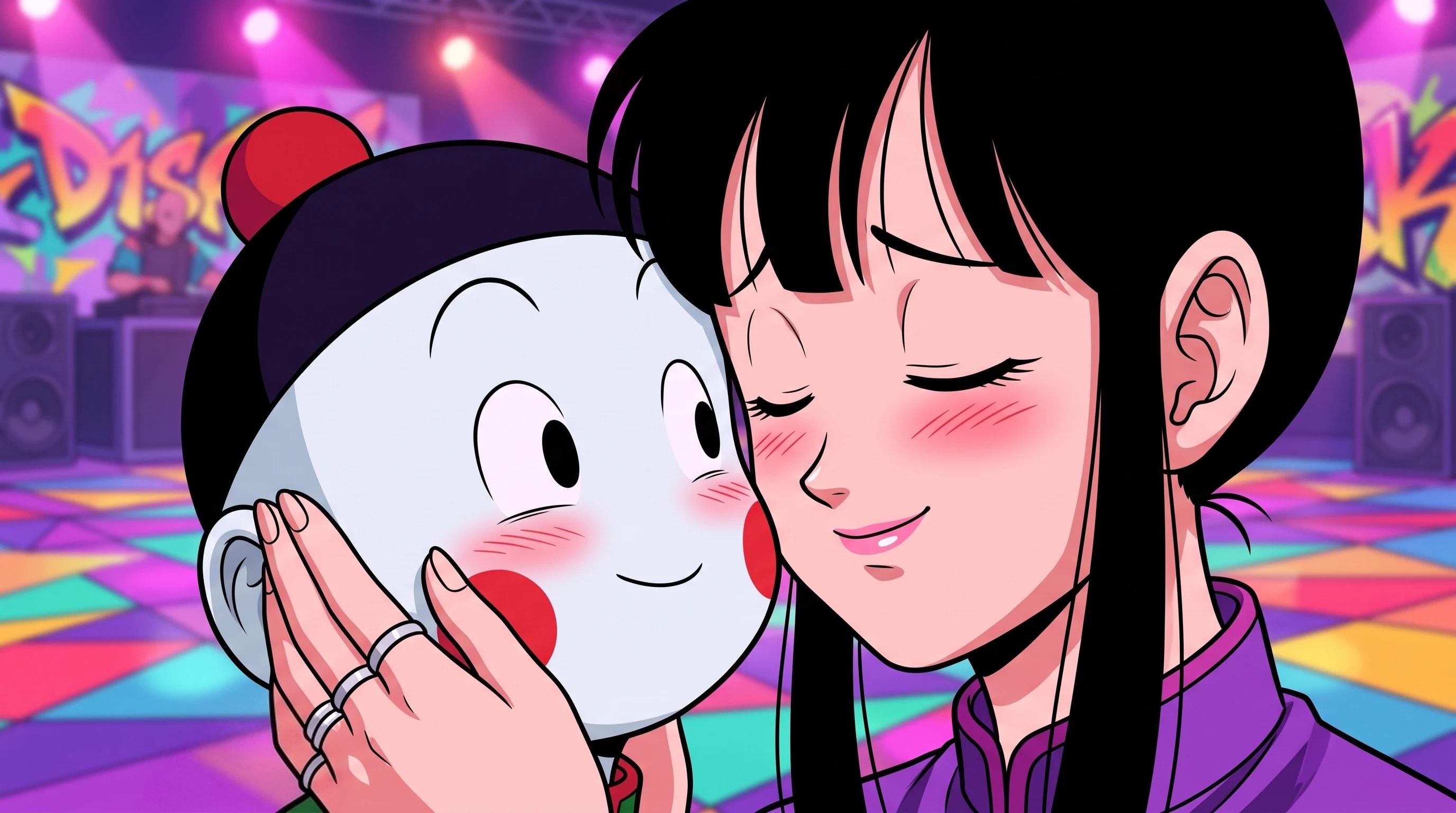
Chiaotzu is Chi-Chi's Boo: Perché il tizio che non vince mai finalmente vince
L'uomo più improbabile di Dragon Ball si è appena preso la vittoria più grande del nostro catalogo. La storia dietro il nostro brano R&B su Chaozu, Chichi e una casa in cui Goku non c'è mai....

Krillin's on the Tinder: come lo short king supremo è sopravvissuto al filtro dell'altezza
Tinder ha costruito un filtro per l'altezza. Dragon Ball ha creato una leggenda alta un metro e mezzo. Ecco cosa è successo quando abbiamo mandato lo short king supremo nell'inferno del dating moderno....


Fonti e informazioni
Cerchi altro su Zard? La Dragon Ball Wiki su Fandom ha una pagina dedicata con note della community.
Vedi su FandomQuesto contenuto è scritto originalmente da Daddy Jim Headquarters sulla base della serie anime Dragon Ball, del manga e dei materiali ufficiali. I riferimenti a episodi e capitoli sono citati dove applicabile.
Le immagini di personaggi e scene su questo sito sono opere originali di Daddy Jim Headquarters, non screenshot o immagini in licenza. Le copertine ufficiali sono usate su tre tipi di pagine per commento editoriale:
- Pagine film: poster teatrali e visual chiave, accreditati a Toei Animation e Shueisha.
- Pagine videogiochi: box art ufficiali, accreditati a Bandai Namco, Atari e altri publisher.
- Pagine capitoli manga: copertine dei volumi Jump Comics, accreditate a Shueisha e Akira Toriyama.
Sfoglia le guide agli episodi:
Aiutaci a mantenere questa Wiki accurata
Daddy Jim Headquarters mantiene questa enciclopedia. Se noti un errore, un problema di traduzione o qualcosa che non sembra corretto, faccelo sapere.