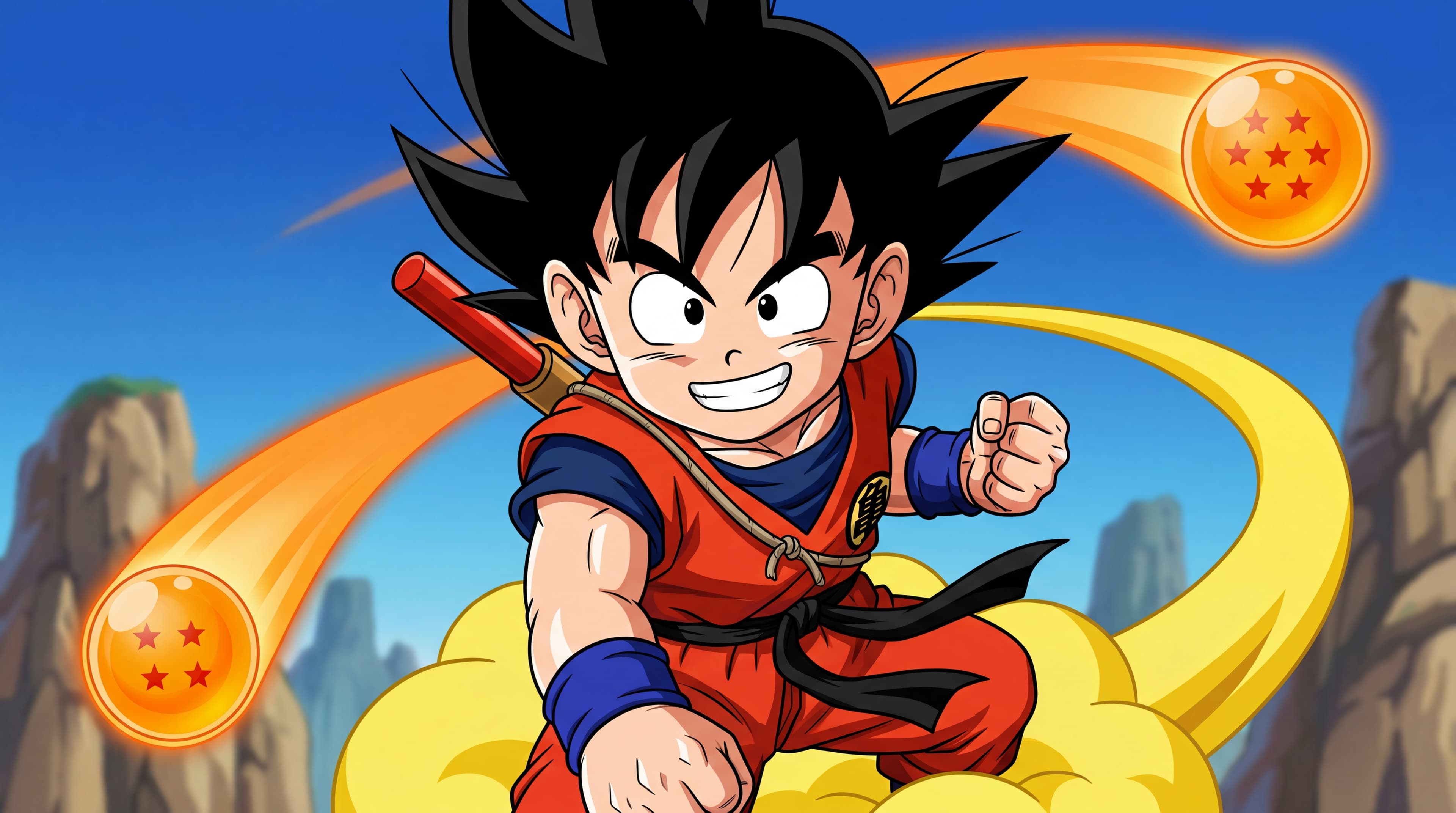
Android 8 refuses to fight Goku, revealing a gentle heart that rejects violence. Goku destroys the remote that could detonate the android and together they navigate General White's shifting maze, only to fall through a trapdoor on the sixth floor.
A Heart Inside the Machine
Android 8 breaks free of his chains with raw strength, but when Ninja Murasaki orders him to attack Goku, the android flatly refuses. A fault in his programming has given him something his creators never intended: a conscience. He declares that he hates violence and believes the Red Ribbon Army's actions are wrong.
The Remote Control Gambit
Murasaki pulls out a remote detonator, threatening to blow up Android 8 if he disobeys. Even facing destruction, Android 8 stands firm. Just before Murasaki can press the button, Goku springs into action, flipping through the air and using his Power Pole to knock the remote from Murasaki's hand. Goku smashes the device and sends Murasaki crashing into the wall. With the threat neutralized, Goku and Android 8 quickly bond, and the gentle android reminds Goku that the village chief still needs rescuing.
The Shifting Maze
General White, furious at the failure of all his fighters, calls his remaining soldiers to battle stations. Goku and Android 8 enter a maze room where the walls keep shifting, controlled remotely by White from his console. Goku gets hopelessly lost until Android 8 arrives and reveals he knows the layout. Together they figure out White's wall-moving trick and outsmart him. They ascend to the sixth floor and confront General White directly, but the cunning general triggers a trapdoor, sending both Goku and Android 8 plummeting into the darkness below.

Defiance and Friendship
Android 8's refusal to fight is a defining character moment. Standing before an armed ninja holding a detonator, this towering android chooses possible death over hurting anyone. It is a powerful statement about the nature of free will, especially from a being designed solely for combat.
Goku's Lightning Save
The sequence where Goku destroys the remote is beautifully choreographed. He leaps, flips, extends the Power Pole mid-air, and strikes the device from Murasaki's hand in one fluid motion. It is a perfect demonstration of Goku's instinct to protect someone he barely knows.
White's Desperation
General White's trapdoor trick at the episode's end shows his calculating nature. Having watched every fighter in his tower fall, he resorts to architecture itself as a weapon. The cliffhanger of Goku and Android 8 falling into the unknown raises the stakes heading into the next episode.
Related Reading
See all
Namek Has No Women, and Piccolo Pulls Anyway
There are no women on Namek. That isn't an oversight, it's the biology. Why we handed Piccolo the one thing his own species rules out, and why it had to be trap soul....
1000 Times Over: Who Is John Dragon Ball Singing To?
Dragon Ball handed us a protagonist with no history and the internet named him John Dragon Ball. So we built him somebody to talk to....


The Android with a Soul
Android 8's characterization here lays the groundwork for one of Dragon Ball's most enduring themes: that strength without compassion is meaningless. His bond with Goku forms almost instantly, built on mutual kindness rather than shared power.
The anime adds significant content to the maze sequence, including Goku getting lost and fighting additional soldiers, which does not appear in the manga. Suno's family scenes continue as anime-exclusive additions that keep the emotional stakes of Jingle Village present throughout the tower battles.
Frequently Asked Questions
What episode of Dragon Ball is Mysterious Android No. 8?
"Mysterious Android No. 8" is episode 39 of Dragon Ball. It airs during the Red Ribbon Army Saga.
What happens in the Dragon Ball episode Mysterious Android No. 8?
Android 8 refuses to fight Goku, revealing a gentle heart that rejects violence. Goku destroys the remote that could detonate the android and together they navigate General White's shifting maze, only to fall through a trapdoor on the sixth floor.
Which characters appear in Mysterious Android No. 8?
The episode features Android 8, Goku, and Ninja Murasaki. Android 8 carries the action across this Red Ribbon Army Saga episode.
What is the standout moment in Mysterious Android No. 8?
Android 8's refusal to fight is a defining character moment. Standing before an armed ninja holding a detonator, this towering android chooses possible death over hurting anyone.
Why is Mysterious Android No. 8 important in Dragon Ball?
Android 8's characterization here lays the groundwork for one of Dragon Ball's most enduring themes: that strength without compassion is meaningless. His bond with Goku forms almost instantly, built on mutual kindness rather than shared power.
Sources & Information
Looking for more on Mysterious Android No. 8? The Dragon Ball Wiki on Fandom has a dedicated page with community notes.
View on FandomThis content is original writing by Daddy Jim Headquarters based on the Dragon Ball anime series, manga, and official materials. Episode and chapter references are cited where applicable.
Rights holders
- Created byAkira Toriyama
- Published byShueisha
- Animated byToei Animation
All rights belong to their respective owners.
Character and scene imagery on this site is original artwork by Daddy Jim Headquarters, not screenshots or licensed imagery. Official cover art is used on three types of pages for editorial commentary:
- Movie pages: theatrical posters and key visuals, credited to Toei Animation and Shueisha.
- Game pages: official box art, credited to Bandai Namco, Atari, and other publishers.
- Manga chapter pages: Jump Comics volume covers, credited to Shueisha and Akira Toriyama.
Browse our episode guides:
Official resources:
Help Us Keep This Wiki Accurate
Daddy Jim Headquarters maintains this encyclopedia. If you spot an error, a translation issue, or something that doesn't look right, let us know.