Vegeta confesses his true reason for surrendering to Babidi: years of domestic life dulled the ruthless edge he needs to surpass Goku. As their evenly matched battle rages on, the energy meter for Majin Buu's cocoon reaches full power.
Confessions of a Domesticated Warrior
Gohan and Supreme Kai reach the lowest level of Babidi's spaceship, finding the massive sealed cocoon containing Majin Buu. Babidi and Dabura emerge from behind the vessel, and the wizard transports everyone to the surface, setting the stage for simultaneous confrontations: Gohan against Dabura, and Supreme Kai against Babidi himself.
At the rocky canyon, the battle between Goku and Majin Vegeta continues with neither fighter able to hold a decisive advantage. Between exchanges of devastating blows, Vegeta reveals the deeper truth behind his betrayal. He did not simply fall prey to Babidi's spell. He welcomed it. Years of living on Earth as a husband and father had softened something inside him, cultivating bonds and affections that he considered weaknesses. He wanted Babidi to strip away those "petty attachments" and restore the cold, uncompromising warrior he once was.
Goku refuses to accept this reasoning, condemning Vegeta for using selfish ambition as justification for abandoning the people who love him. The argument cuts deep, but neither warrior is willing to stop fighting. Their clash continues with punishing ferocity, each surge of advantage quickly countered by the other. As the stalemate grinds on, the energy meter monitoring Buu's cocoon climbs steadily. By episode's end, the gauge has reached maximum capacity. Supreme Kai stares upward in terror as the birth of the universe's most dangerous creature becomes inevitable.

Freedom Through Surrender
Vegeta's confession is one of the most psychologically complex moments in Dragon Ball Z. He is not simply seeking power; he is seeking liberation from vulnerability. Loving Bulma and Trunks made him something he never imagined becoming: a man with something to lose. For a warrior who built his identity on having nothing but strength, that emotional exposure felt like chains.
The tragic irony is unmistakable. Vegeta surrendered his freedom to Babidi precisely to feel free again. He traded genuine bonds for artificial power, convinced that severing his attachments would restore his warrior's edge. Goku sees through this immediately, calling it what it is: a lie Vegeta tells himself because the alternative, admitting he cares, frightens him more than any enemy ever could.
Related Reading
See all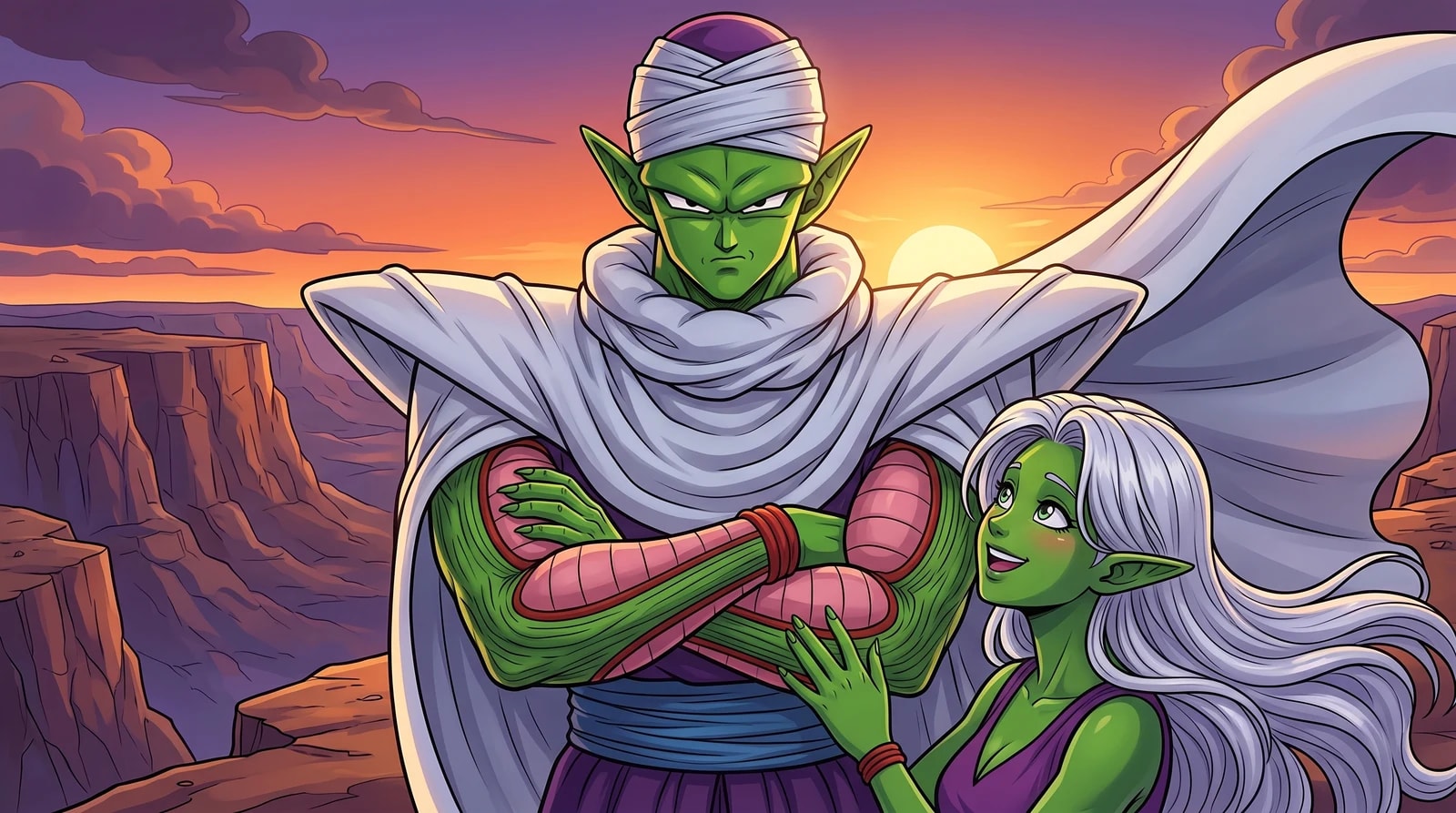
Namek Has No Women, and Piccolo Pulls Anyway
There are no women on Namek. That isn't an oversight, it's the biology. Why we handed Piccolo the one thing his own species rules out, and why it had to be trap soul....
1000 Times Over: Who Is John Dragon Ball Singing To?
Dragon Ball handed us a protagonist with no history and the internet named him John Dragon Ball. So we built him somebody to talk to....

The Clock Runs Out
This episode carries the ominous title "Magic Ball of Buu" for good reason. While the character drama between Goku and Vegeta commands attention, the real story is happening in the background. Every punch thrown, every blast exchanged, feeds energy directly into Buu's resurrection. The heroes' personal conflict is literally powering the apocalypse.
The anime extends the Goku and Vegeta fight well beyond its manga source material, adding sequences like Vegeta blasting Goku into the ocean. These additions serve the pacing by keeping the audience invested in both storylines simultaneously, building toward the moment when the sealed ball finally cracks open and the Buu Saga truly begins.
Frequently Asked Questions
Which Dragon Ball series is "Magic Ball of Buu" from?
"Magic Ball of Buu" is episode 231 of Dragon Ball Z. Vegeta confesses his true reason for surrendering to Babidi: years of domestic life dulled the ruthless edge he needs to surpass Goku.
What happens in "Magic Ball of Buu"?
Vegeta confesses his true reason for surrendering to Babidi: years of domestic life dulled the ruthless edge he needs to surpass Goku. As their evenly matched battle rages on, the energy meter for Majin Buu's cocoon reaches full power.
How does "Magic Ball of Buu" begin?
Gohan and Supreme Kai reach the lowest level of Babidi's spaceship, finding the massive sealed cocoon containing Majin Buu. Babidi and Dabura emerge from behind the vessel, and the wizard transports everyone to the surface, setting the stage for simultaneous confrontations: Gohan against Dabura, and Supreme Kai against Babidi himself. At the rocky canyon, the battle between Goku and Majin Vegeta continues with neither fighter able to hold a decisive advantage.
What is the middle act of "Magic Ball of Buu"?
Vegeta's confession is one of the most psychologically complex moments in Dragon Ball Z. He is not simply seeking power; he is seeking liberation from vulnerability. Loving Bulma and Trunks made him something he never imagined becoming: a man with something to lose.
How does "Magic Ball of Buu" end?
The heroes' personal conflict is literally powering the apocalypse. The anime extends the Goku and Vegeta fight well beyond its manga source material, adding sequences like Vegeta blasting Goku into the ocean. These additions serve the pacing by keeping the audience invested in both storylines simultaneously, building toward the moment when the sealed ball finally cracks open and the Buu Saga truly begins.
Sources & Information
Looking for more on Magic Ball of Buu? The Dragon Ball Wiki on Fandom has a dedicated page with community notes.
View on FandomThis content is original writing by Daddy Jim Headquarters based on the Dragon Ball anime series, manga, and official materials. Episode and chapter references are cited where applicable.
Rights holders
- Created byAkira Toriyama
- Published byShueisha
- Animated byToei Animation
All rights belong to their respective owners.
Character and scene imagery on this site is original artwork by Daddy Jim Headquarters, not screenshots or licensed imagery. Official cover art is used on three types of pages for editorial commentary:
- Movie pages: theatrical posters and key visuals, credited to Toei Animation and Shueisha.
- Game pages: official box art, credited to Bandai Namco, Atari, and other publishers.
- Manga chapter pages: Jump Comics volume covers, credited to Shueisha and Akira Toriyama.
Browse our episode guides:
Official resources:
Help Us Keep This Wiki Accurate
Daddy Jim Headquarters maintains this encyclopedia. If you spot an error, a translation issue, or something that doesn't look right, let us know.