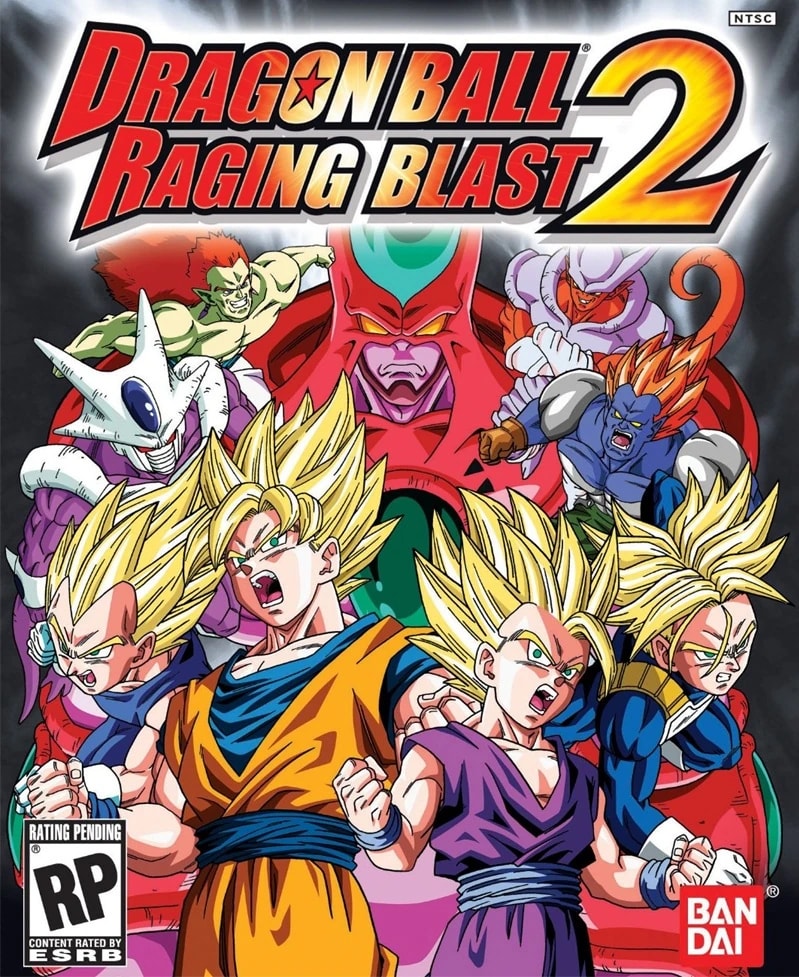
Dragon Ball: Raging Blast 2
Gameis a fighting video game and the 2010 sequel to the 2009 game, Dragon Ball: Raging Blast. First announced on May 3, 2010 Weekly Shōnen Jump, Dragon Ball: Raging Blast 2 sports up to exactly 100 playable characters, 27 of which are brand new to the Raging Blast series and 6 new to any Dragon Ball video game. New modes and additional environmental effects have also been included.
Gameplay & New Systems
Dragon Ball: Raging Blast 2 is a 3D arena fighting game released in 2010 for PlayStation 3 and Xbox 360, serving as the direct sequel to the 2009 original. The combat system retains the core mechanics of its predecessor, including destructible environments, Pursuit Attack combo chains that juggle opponents through the arena, character transformation mid-battle, and the capsule customization system. A key addition is the Raging Soul System, which places characters into a heightened combat state with dramatically increased strength and defense. While Raging Soul is active, Super and Ultimate Attacks are disabled unless a specific equippable item is carried, encouraging players to use the state's raw power boosts rather than special move access. A purple aura and darkened sky signal the activation visually.
Raging Blast 2 also introduces Armor Break, a mechanic that allows players to destroy an opponent's clothing and armor using Ultimate Blast attacks, a feature first seen in Budokai Tenkaichi 3. The Galaxy Mode replaces the story mode from the first game, taking a character-specific structure where each fighter in the roster has their own set of missions including a climactic boss fight and optional bonus battles. Some Galaxy Mode missions feature special conditions such as a time limit tied to Raging Soul duration or requiring the player to start with minimal health. A Dragon Ball collection system ties into Galaxy Mode, with Dragon Balls earned by completing each character's boss mission and granting gameplay rewards including music customization options.
The game features a roster of exactly 100 playable characters, of which 27 are new to the Raging Blast series and 6 represent franchise debuts in any Dragon Ball video game. Enhanced Character versions of select fighters with fixed high-power item loadouts can be unlocked through the Battle Zone mode, which chains Square Zone through Ultimate Zone sequences. Enhanced Characters cannot have their costumes changed or item sets modified, but their power levels reflect their equipped item bonuses.
Bonus Content: Plan to Eradicate the Saiyans
Every copy of Dragon Ball: Raging Blast 2 includes a fully reanimated and re-edited version of the original Japanese OVA Dragon Ball Z Gaiden: Saiyajin Zetsumetsu Keikaku, retitled Dragon Ball: Plan to Eradicate the Super Saiyans for its Western inclusion. This OVA was originally released in Japan on VHS in two parts in the early 1990s as a companion piece to a Famicom game, and had never previously received a North American or European release. The version included with Raging Blast 2 is a completely new animation production rather than an upscale of the original footage, though it lacks an English dub and is presented with English subtitles only. Watching the thirty-minute OVA in-game unlocks the antagonist Hatchiyack as a playable character.
The inclusion of Plan to Eradicate the Super Saiyans gave Western Dragon Ball fans their first official access to this particular piece of franchise history, and the reanimated version offers higher production values than the original VHS release. This bundled content distinguished Raging Blast 2 from its peers in the Dragon Ball game market, providing value beyond the game itself for franchise enthusiasts.
Reception & Series Context
Dragon Ball: Raging Blast 2 was notable at release for being, as described in its own promotional materials, the only modern Dragon Ball game at the time that lacked a traditional linear story mode. The Galaxy Mode's character-specific structure offered breadth at the expense of narrative continuity, a trade-off that drew both praise for its replayability and criticism from players who preferred the story-driven modes found in competing Dragon Ball titles of the period.
The game's 100-character roster represented the largest playable cast in the Raging Blast series and was a selling point for fans interested in comprehensive franchise representation. The bundled OVA content set a precedent for value-added physical releases in the Dragon Ball game market. The Raging Blast series concluded with this second entry, with Bandai Namco pivoting to other game concepts for subsequent Dragon Ball releases.
Related Reading
See all
Krillin's on the Tinder: How the Ultimate Short King Survived the Height Filter
Tinder built a height filter. Dragon Ball built a five foot legend. What happened when we sent the ultimate short king into the modern dating hellscape....
Infinite Zeni Glitch: When Yamcha Never Pays and Mr. Popo Always Does
The internet found an infinite money glitch. So did Yamcha. A smooth R&B track about the easiest money in the Dragon Ball world and the one man who keeps paying for it....
Frequently Asked Questions
What is Dragon Ball: Raging Blast 2?
is a fighting video game and the 2010 sequel to the 2009 game, Dragon Ball: Raging Blast. First announced on May 3, 2010 Weekly Shōnen Jump, Dragon Ball: Raging Blast 2 sports up to exactly 100 playable characters, 27 of which are brand new to the Raging Blast series and 6 new to any Dragon Ball video game. New modes and additional environmental effects have also been included.
Which characters appear in Dragon Ball: Raging Blast 2?
Every copy of Dragon Ball: Raging Blast 2 includes a fully reanimated and re-edited version of the original Japanese OVA Dragon Ball Z Gaiden: Saiyajin Zetsumetsu Keikaku, retitled Dragon Ball: Plan to Eradicate the Super Saiyans for its Western inclusion. This OVA was originally released in Japan on VHS in two parts in the early 1990s as a companion piece to a Famicom game, and had never previously received a North American or European release. The version included with Raging Blast 2 is a completely new animation production rather than an upscale of the original footage, though it lacks an English dub and is presented with English subtitles only.
What is Dragon Ball: Raging Blast 2 about?
Dragon Ball: Raging Blast 2 is a 3D arena fighting game released in 2010 for PlayStation 3 and Xbox 360, serving as the direct sequel to the 2009 original. The combat system retains the core mechanics of its predecessor, including destructible environments, Pursuit Attack combo chains that juggle opponents through the arena, character transformation mid-battle, and the capsule customization system. A key addition is the Raging Soul System, which places characters into a heightened combat state with dramatically increased strength and defense.
When was Dragon Ball: Raging Blast 2 released?
Dragon Ball: Raging Blast 2 was released in 2009. It was developed by Spike and published by Bandai Namco.
Who developed Dragon Ball: Raging Blast 2?
Dragon Ball: Raging Blast 2 was developed by Spike. The game was published by Bandai Namco in 2009.
Sources & Information
Looking for more on Dragon Ball: Raging Blast 2? The Dragon Ball Wiki on Fandom has a dedicated page with community notes.
View on FandomThis content is original writing by Daddy Jim Headquarters based on the Dragon Ball anime series, manga, and official materials. Episode and chapter references are cited where applicable.
Character and scene imagery on this site is original artwork by Daddy Jim Headquarters, not screenshots or licensed imagery. Official cover art is used on three types of pages for editorial commentary:
- Movie pages: theatrical posters and key visuals, credited to Toei Animation and Shueisha.
- Game pages: official box art, credited to Bandai Namco, Atari, and other publishers.
- Manga chapter pages: Jump Comics volume covers, credited to Shueisha and Akira Toriyama.
Browse our episode guides:
Official resources:
Help Us Keep This Wiki Accurate
Daddy Jim Headquarters maintains this encyclopedia. If you spot an error, a translation issue, or something that doesn't look right, let us know.