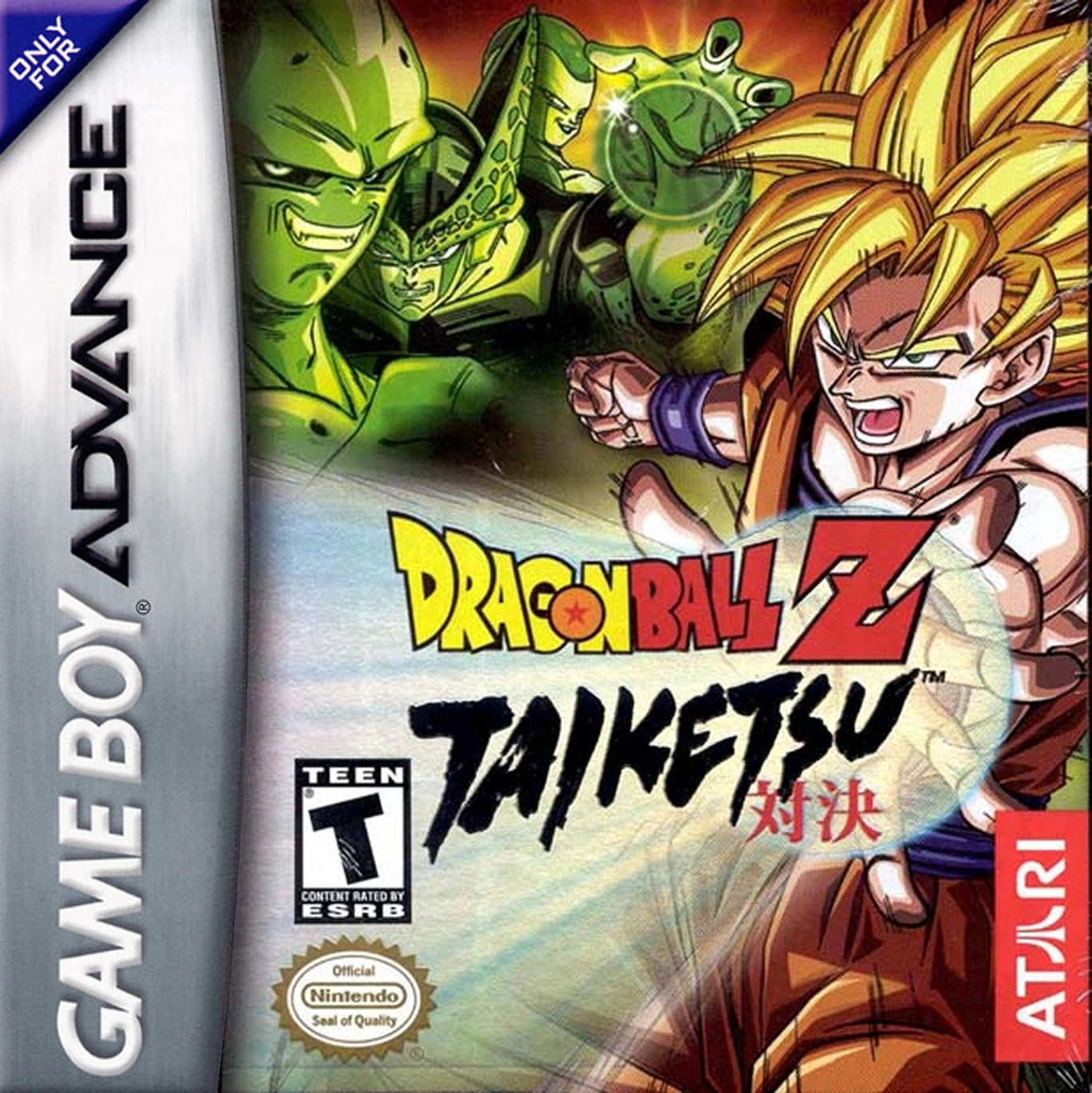
Gameplay
Dragon Ball Z: Taiketsu is a 2D fighting game that emphasizes timing and precise input over the simplified combo systems found in games like the Budokai series. Combos and special moves demand accurate execution, positioning the game closer to traditional fighting game conventions than most Dragon Ball Z titles of its era. Each of the fifteen playable characters can perform one of three Super Attacks during a match, and a handful of fighters can shift into alternate forms as part of their super move animations. Goku, for example, becomes Super Saiyan for his first and second supers, while Vegeta transforms into his Great Ape form for his Level 3 super. Outside of these specific moments, all characters fight in their base states.
The game also includes a "Sky Battle" clashing system that activates when both players engage in a mid-air confrontation. Each fighter possesses a unique story ending unlocked by completing the game with that character, which provides incentive to work through the roster multiple times. Broly appears as one of the fifteen characters, a notable addition at the time given that he was a recent and heavily promoted villain for North American audiences.


Modes and Content
Taiketsu features both single-player and multiplayer modes. In multiplayer, two players connect via a link cable for head-to-head bouts. The single-player suite includes five distinct modes: Tournament, Endurance, Time Challenge, Sparring, and Endurance 2x. Tournament mode pits the player against seven randomly selected opponents and rewards a new character or 25,000 Zeni on completion. Several characters are locked at the start and unlock through specific tournament runs, including Raditz, Nappa, Gotenks, Frieza, Cell, Majin Buu, and Broly.
Endurance mode challenges players to survive as many fights as possible without recovering health between matches, with the best runs saved to a high-score list. Time Challenge adds a clock to the tournament format, awarding bonus points for finishing any bout within thirty seconds. Android 16 unlocks by completing Time Challenge with two different characters. The Z-Store provides bonus cosmetics, a jukebox of stage themes, and unlockable rule modifiers such as Invisible fighters, Free Supers, and Instant Death.


Context and Reception
Taiketsu was developed by Webfoot Technologies, the studio that previously handled the Legacy of Goku series for the Game Boy Advance, and it was released on November 24, 2003 for the same platform. Atari published the title in North America. Despite its pedigree, the game was met with mixed critical response, with reviewers frequently noting that its stricter input demands compared to contemporaneous Dragon Ball Z titles created a steep barrier for casual players unfamiliar with traditional fighting game mechanics.
The inclusion of Broly in a handheld fighter at a time when the character was still novel to Western audiences was highlighted in the game's marketing materials and became one of the more discussed aspects of the release. The title stands as an example of the variety of approaches publishers experimented with during the early 2000s Dragon Ball Z licensed game boom, before the Budokai series established a dominant template for the franchise.
Sparking Zero May 26 Update Adds Demon World Stage and Reworks Transformation Healing
May 27, 2026Bandai Namco shipped a free Dragon Ball: Sparking Zero update on May 26, 2026 that introduces a new Demon World stage, overhauls transformation healing, and confirms the Daima Character Pack and Shallot DLC for release on June 27, 2026....
Dragon Ball FighterZ Adds Super Saiyan 4 Goku From Daima
May 25, 2026Dragon Ball FighterZ added Super Saiyan 4 Goku, the form featured in the Daima anime, as DLC on April 22, 2026. The 2018 fighting game is still getting new content nearly eight years on....
Dragon Ball Sparking Zero Super Limit-Breaking NEO DLC Adds 30 Plus Fighters for Summer 2026
Apr 20, 2026Bandai Namco and Spike Chunsoft unveiled the Super Limit-Breaking NEO expansion for Dragon Ball Sparking Zero at Battle Hour 2026. Summer 2026 release, 30 plus characters, four new stages, and a new solo mode....
Sources & Information
Looking for more on Dragon Ball Z: Taiketsu? The Dragon Ball Wiki on Fandom has a dedicated page with community notes.
View on FandomThis content is original writing by Daddy Jim Headquarters based on the Dragon Ball anime series, manga, and official materials. Episode and chapter references are cited where applicable.
Character and scene imagery on this site is original artwork by Daddy Jim Headquarters, not screenshots or licensed imagery. Official cover art is used on three types of pages for editorial commentary:
- Movie pages: theatrical posters and key visuals, credited to Toei Animation and Shueisha.
- Game pages: official box art, credited to Bandai Namco, Atari, and other publishers.
- Manga chapter pages: Jump Comics volume covers, credited to Shueisha and Akira Toriyama.
Browse our episode guides:
Official resources:
Dragon Ball Music by Daddy Jim Headquarters
Come listen to some Dragon Ball R&B.
Help Us Keep This Wiki Accurate
Daddy Jim Headquarters maintains this encyclopedia across 13 languages. If you spot an error, a translation issue, or something that doesn't look right, let us know.