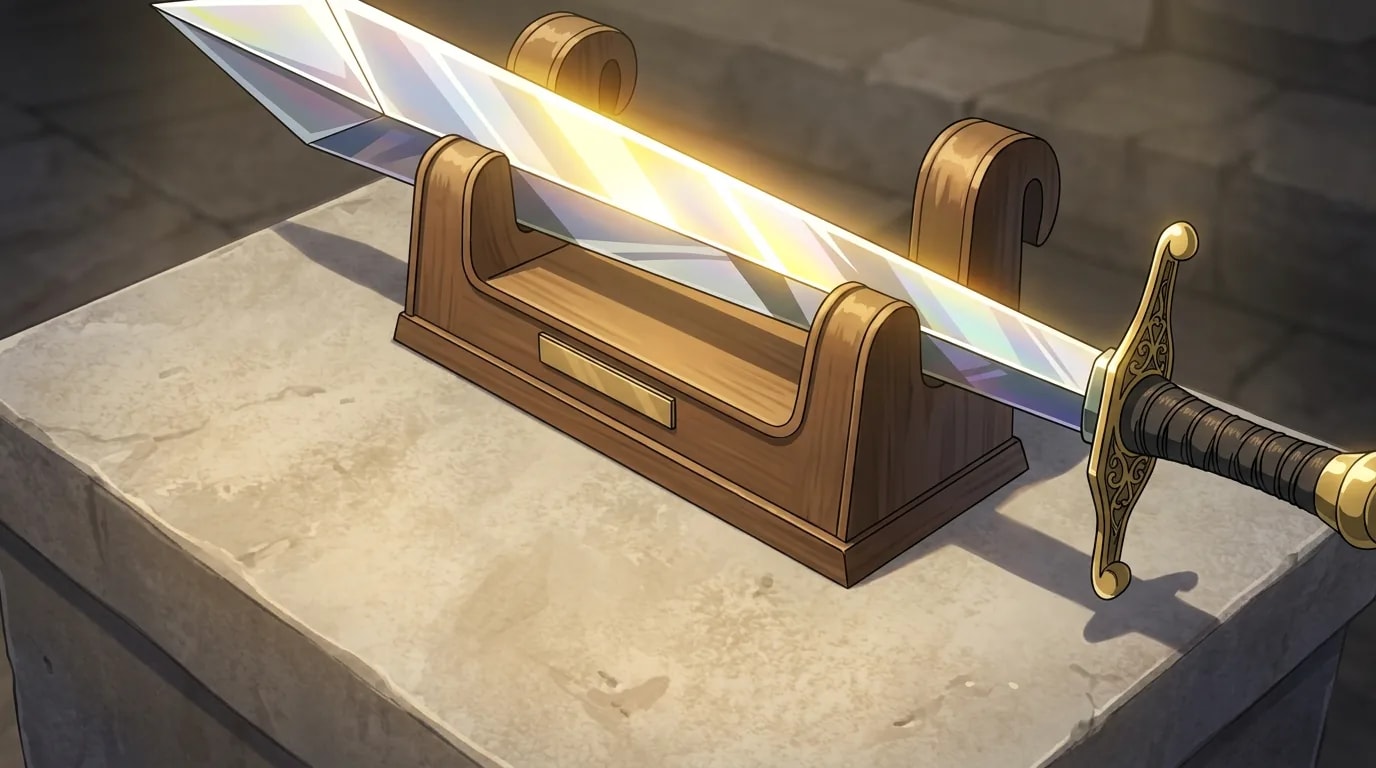
Brave Sword
ItemAn enchanted blade wielded by Tapion, used in the ancient war against Hirudegarn and later passed down to young Trunks as a treasured memento.
History
The Brave Sword is an ancient, enchanted weapon originating from the planet Konats. During the devastating war between the Konatsians and the colossal monster Hirudegarn, Tapion and his younger brother Minotia used their Hero's Flutes to immobilize the beast. While Hirudegarn was held at bay by their music, a Konatsian Wizard brandished the Brave Sword and sliced the monster in two, sealing each half within the bodies of the two brothers.
The sword's enchantment makes it uniquely effective against Hirudegarn, capable of inflicting real damage on a creature that most conventional attacks cannot touch. Tapion carried the blade throughout his long imprisonment within a music box and continued to wield it after being freed on Earth during the events of Dragon Ball Z: Wrath of the Dragon.
A Gift for Trunks
After Hirudegarn's final defeat, Tapion entrusted the Brave Sword to young Trunks, telling him that the blade was always meant for him. This gesture references the fact that Trunks' future counterpart, Future Trunks, is famously associated with his own sword. Trunks kept the Brave Sword as a cherished memento of his bond with Tapion and later co-founded the Kikoukenjutsu Sword School alongside Goten.
The exact relationship between the Brave Sword and Future Trunks' weapon remains debated. Some sources state they are the same blade from different timelines, while Dragon Ball Z: Kakarot describes them as merely sharing a similar design. Regardless, both swords occupy an important place in the Trunks legacy across multiple timelines.
Frequently Asked Questions
How does the Brave Sword compare to Arcsaber 11 Pro?
An enchanted blade wielded by Tapion, used in the ancient war against Hirudegarn and later passed down to young Trunks as a treasured memento. The Brave Sword is an ancient, enchanted weapon originating from the planet Konats.
What is the Brave Sword in Dragon Ball?
During the devastating war between the Konatsians and the colossal monster Hirudegarn, Tapion and his younger brother Minotia used their Hero's Flutes to immobilize the beast. While Hirudegarn was held at bay by their music, a Konatsian Wizard brandished the Brave Sword and sliced the monster in two, sealing each half within the bodies of the two brothers. The sword's enchantment makes it uniquely effective against Hirudegarn, capable of inflicting real damage on a creature that most conventional attacks cannot touch.
What does the Brave Sword do in Dragon Ball?
The sword's enchantment makes it uniquely effective against Hirudegarn, capable of inflicting real damage on a creature that most conventional attacks cannot touch. An enchanted blade wielded by Tapion, used in the ancient war against Hirudegarn and later passed down to young Trunks as a treasured memento.
Who uses the Brave Sword in Dragon Ball?
While Hirudegarn was held at bay by their music, a Konatsian Wizard brandished the Brave Sword and sliced the monster in two, sealing each half within the bodies of the two brothers. The sword's enchantment makes it uniquely effective against Hirudegarn, capable of inflicting real damage on a creature that most conventional attacks cannot touch. Tapion carried the blade throughout his long imprisonment within a music box and continued to wield it after being freed on Earth during the events of Dragon Ball Z: Wrath of the Dragon.
When does the Brave Sword first appear?
The Brave Sword first appears in Dragon Ball Z: Wrath of the Dragon. An enchanted blade wielded by Tapion, used in the ancient war against Hirudegarn and later passed down to young Trunks as a treasured memento.
Sources & Information
Looking for more on Brave Sword? The Dragon Ball Wiki on Fandom has a dedicated page with community notes.
View on FandomThis content is original writing by Daddy Jim Headquarters based on the Dragon Ball anime series, manga, and official materials. Episode and chapter references are cited where applicable.
Character and scene imagery on this site is original artwork by Daddy Jim Headquarters, not screenshots or licensed imagery. Official cover art is used on three types of pages for editorial commentary:
- Movie pages: theatrical posters and key visuals, credited to Toei Animation and Shueisha.
- Game pages: official box art, credited to Bandai Namco, Atari, and other publishers.
- Manga chapter pages: Jump Comics volume covers, credited to Shueisha and Akira Toriyama.
Browse our episode guides:
Official resources:
Help Us Keep This Wiki Accurate
Daddy Jim Headquarters maintains this encyclopedia. If you spot an error, a translation issue, or something that doesn't look right, let us know.