Shunsuke Kikuchi
MusicianShunsuke Kikuchi was the original Japanese composer for Dragon Ball and Dragon Ball Z, scoring nearly a decade of the franchise from 1986 through 1995 and shaping the sound of Goku's adventures for an entire generation.
Scoring Goku's Japan
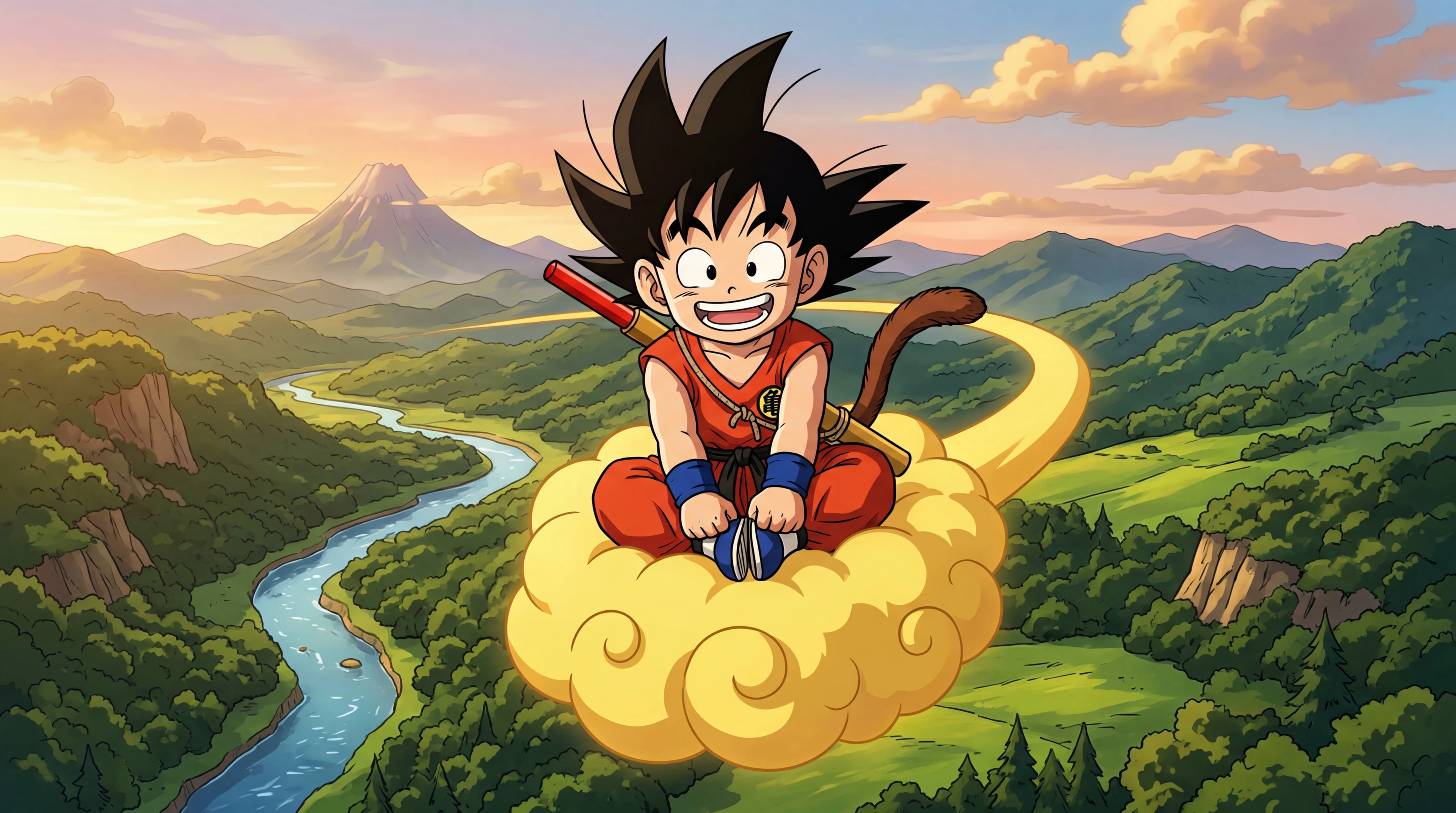
From the first episode of Dragon Ball in February 1986 to the final bell of Dragon Ball Z in 1995, Shunsuke Kikuchi was the voice of the franchise in sound. Working for Toei Animation, he wrote the cues that Japanese audiences heard the moment Goku first rode his Flying Nimbus, the brass swell behind Piccolo Daimao's arrival, the nervous strings that underscored the Saiyan invasion, and the triumphant fanfares that greeted every new transformation. His music was inseparable from the pacing of the show.
Across that decade Kikuchi produced twenty three distinct music packages for the two series, amounting to well over five hundred individual cues. Each new arc and every theatrical film received its own recording session, meaning that the Red Ribbon Army, the 23rd Tenkaichi Budokai, Namek, the Androids, Cell, and Buu all had their own musical fingerprints. It is one of the largest anime scores ever committed to tape, and almost all of it was built around his signature sixteen beat blues and pentatonic instincts.

Craft and Career
Kikuchi was already a veteran long before Goku was born. A graduate of Nihon University's College of Fine Arts, he began scoring film and television in 1961 and became one of the most in demand composers in Japan, working steadily on tokusatsu heroes, samurai jidaigeki, gritty action pictures, and children's anime. Fans of Kamen Rider, Abarenbo Shogun, and Doraemon know his sound as intimately as Dragon Ball fans do, and his 12/8 Doraemon theme remains one of the most recognisable pieces of music in postwar Japanese television.
His approach on Dragon Ball favoured bold, physical themes over orchestral gloss. Horn stabs, electric bass, funk guitar, and a pulsing rhythm section gave the fight scenes their forward lean, while slower cues built on modal piano and woodwinds carried the quieter moments. Tracks like Kyoufu no Ginyu Tokusentai and Chikyuu Marugoto Chou-Kessen became as iconic as the characters they underscored. When Kikuchi stepped away after Dragon Ball Z, Akihito Tokunaga took over for GT, and Kikuchi narrowed his focus to the Doraemon franchise he had also helped define.
Return and Remembrance
Kikuchi's Dragon Ball music refused to fade quietly. It was reused for the 2008 OVA Dragon Ball: The Return of Son Goku and Friends, and in 2011 Toei made the dramatic decision to pull Kenji Yamamoto's replacement score from Dragon Ball Z Kai after plagiarism allegations. Kikuchi's original cues were hastily retrofitted onto the last two broadcast episodes and then used to rescore the entire series for later releases, giving a new generation of fans the soundtrack the original 1989 audience had grown up with.
He passed away on April 24, 2021, at the age of eighty nine, from aspiration pneumonia. By then his catalogue spanned more than half a century of Japanese screen music, but for Dragon Ball fans his legacy is simpler and more personal. His themes are what plays in your head the moment you hear the words Kamehameha.
Related Reading
See all
Krillin's on the Tinder: How the Ultimate Short King Survived the Height Filter
Tinder built a height filter. Dragon Ball built a five foot legend. What happened when we sent the ultimate short king into the modern dating hellscape....

Infinite Zeni Glitch: When Yamcha Never Pays and Mr. Popo Always Does
The internet found an infinite money glitch. So did Yamcha. A smooth R&B track about the easiest money in the Dragon Ball world and the one man who keeps paying for it....
Frequently Asked Questions
Who is Shunsuke Kikuchi in Dragon Ball?
Shunsuke Kikuchi was the original Japanese composer for Dragon Ball and Dragon Ball Z, scoring nearly a decade of the franchise from 1986 through 1995 and shaping the sound of Goku's adventures for an entire generation. From the first episode of Dragon Ball in February 1986 to the final bell of Dragon Ball Z in 1995, Shunsuke Kikuchi was the voice of the franchise in sound.
What is Shunsuke Kikuchi best known for in Dragon Ball?
From the first episode of Dragon Ball in February 1986 to the final bell of Dragon Ball Z in 1995, Shunsuke Kikuchi was the voice of the franchise in sound. Working for Toei Animation, he wrote the cues that Japanese audiences heard the moment Goku first rode his Flying Nimbus, the brass swell behind Piccolo Daimao's arrival, the nervous strings that underscored the Saiyan invasion, and the triumphant fanfares that greeted every new transformation. His music was inseparable from the pacing of the show.
What does Shunsuke Kikuchi do in Dragon Ball?
Shunsuke Kikuchi is a Japanese musician who has worked on the Dragon Ball franchise. Specifically, Shunsuke Kikuchi is credited as Original Dragon Ball / DBZ composer (Japan).
What other work has Shunsuke Kikuchi done outside Dragon Ball?
Kikuchi was already a veteran long before Goku was born. A graduate of Nihon University's College of Fine Arts, he began scoring film and television in 1961 and became one of the most in demand composers in Japan, working steadily on tokusatsu heroes, samurai jidaigeki , gritty action pictures, and children's anime. Fans of Kamen Rider , Abarenbo Shogun , and Doraemon know his sound as intimately as Dragon Ball fans do, and his 12/8 Doraemon theme remains one of the most recognisable pieces of music in postwar Japanese television.
Why is Shunsuke Kikuchi notable in the Dragon Ball franchise?
Kikuchi's Dragon Ball music refused to fade quietly. It was reused for the 2008 OVA Dragon Ball: The Return of Son Goku and Friends , and in 2011 Toei made the dramatic decision to pull Kenji Yamamoto's replacement score from Dragon Ball Z Kai after plagiarism allegations. Kikuchi's original cues were hastily retrofitted onto the last two broadcast episodes and then used to rescore the entire series for later releases, giving a new generation of fans the soundtrack the original 1989 audience had grown up with.
Sources & Information
Looking for more on Shunsuke Kikuchi? The Dragon Ball Wiki on Fandom has a dedicated page with community notes.
View on FandomThis content is original writing by Daddy Jim Headquarters based on the Dragon Ball anime series, manga, and official materials. Episode and chapter references are cited where applicable.
Character and scene imagery on this site is original artwork by Daddy Jim Headquarters, not screenshots or licensed imagery. Official cover art is used on three types of pages for editorial commentary:
- Movie pages: theatrical posters and key visuals, credited to Toei Animation and Shueisha.
- Game pages: official box art, credited to Bandai Namco, Atari, and other publishers.
- Manga chapter pages: Jump Comics volume covers, credited to Shueisha and Akira Toriyama.
Browse our episode guides:
Official resources:
Help Us Keep This Wiki Accurate
Daddy Jim Headquarters maintains this encyclopedia. If you spot an error, a translation issue, or something that doesn't look right, let us know.