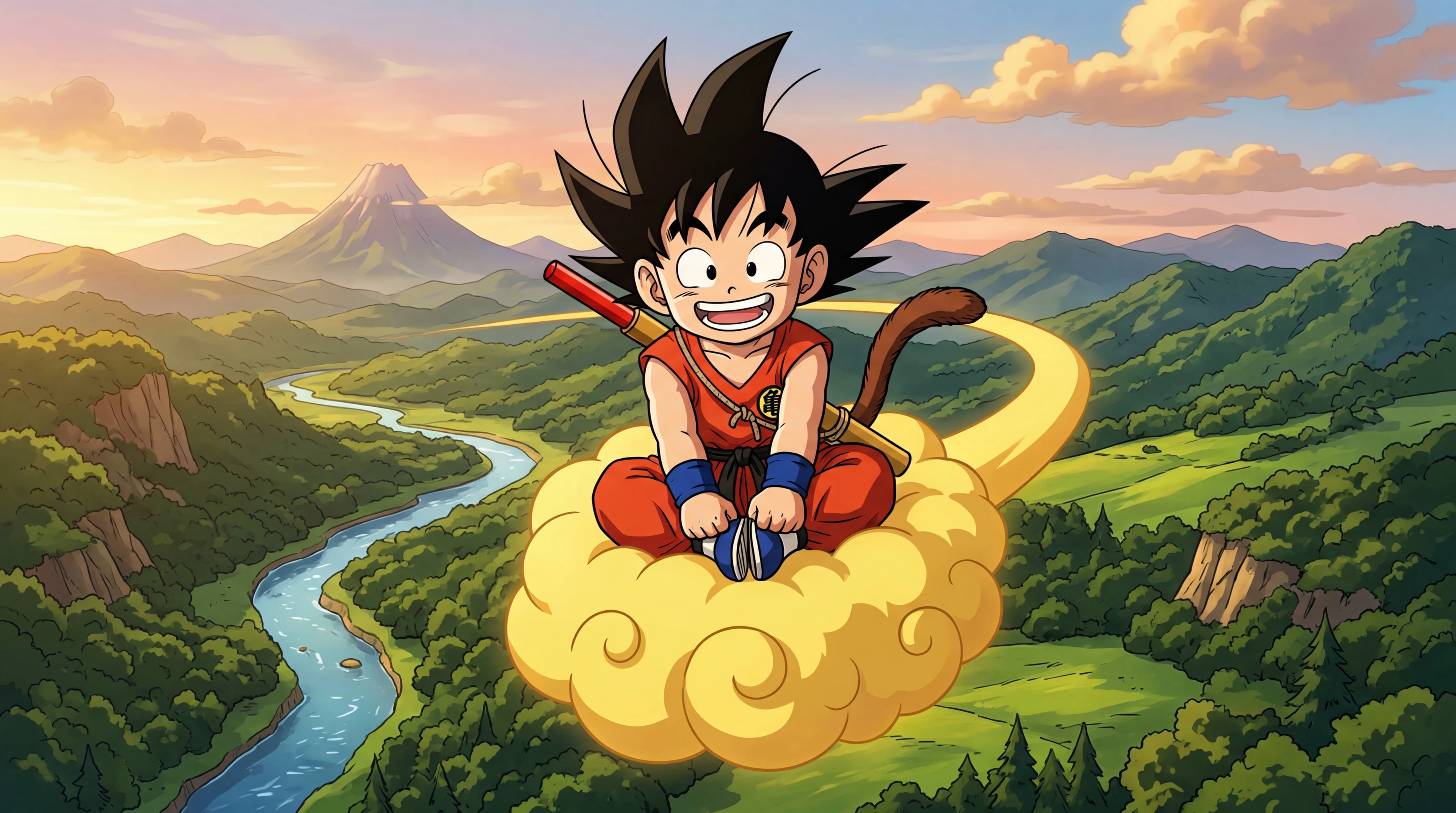
Tuffle
RaceA highly advanced technological civilization native to Planet Plant who shared their world with the Saiyans until a brutal war of extermination wiped them out. Their scientific achievements, including the invention of scouters, outlasted their civilization. The Tuffle legacy lived on through vengeful creations like Dr. Lychee's Hatchiyack and the bio-weapon Baby, who sought to avenge his creators against the Saiyan race.
Brilliant Minds on a Doomed World
The Tuffles (Tsufuru-jin) were a technologically advanced species native to Planet Plant, the world that would eventually be renamed Planet Vegeta by their conquerors. Smaller in stature than the average Saiyan, they resembled Human-type Earthlings but possessed white-colored skin in Universe 7. Their name is a deliberate pun: "Tsufuru" is the Japanese pronunciation of "fruit," placing them in direct opposition to the Saiyans, whose name derives from "yasai" (vegetable).
What the Tuffles lacked in physical power they more than compensated for with intellect. Their civilization produced vast metropolitan cities powered by technology far beyond what most species in the universe had achieved. They invented the scouter, the iconic power-reading device that would later become standard equipment throughout the Frieza Force. The original Tuffle scouters were designed for defense against predators and hostile creatures; it was only after the Saiyan-Tuffle War that the engineer Gichamu modified them for military use with concrete power level readings and telecommunications.
A Peaceful People
Despite their technological superiority, the Tuffles were largely docile. They demonstrated no aggressive tendencies or internal strife. Their cities occupied the fertile regions of Planet Plant, while Saiyan tribes dwelled in the surrounding badlands. The circumstances of this coexistence vary by source. Some accounts describe the two species evolving side by side; others indicate the Saiyans were not native to the planet at all, arriving on a wrecked spaceship and being welcomed by the Tuffles.
One Full Moon Changed Everything
Around Age 720, a Saiyan leader rose to power who Dr. Lychee described as possessing "the cunning of a Tuffle." This was the warrior who would become King Vegeta, and he united the Saiyan tribes with a single purpose: the total extermination of the Tuffle race.
The causes of the war remain disputed even within the series. Vegeta claimed the Tuffles treated Saiyans as slaves and second-class citizens. Dr. Lychee's account paints the opposite picture, saying the Tuffles welcomed Saiyans with open arms. The truth likely lies somewhere between these competing narratives.
Regardless of what sparked the conflict, the war initially reached a stalemate. The Saiyans held a significant advantage in individual strength, but the Tuffles vastly outnumbered them and their technological prowess evened the odds. Advanced weaponry and fortified cities kept the Saiyan offensive at bay for a decade.
The Night Everything Ended
In Age 730, the full moon appeared. In a single night, the entire Saiyan race transformed into Great Apes. The Tuffles, for all their technology, had no answer for an army of building-sized berserkers rampaging through their cities. By morning, the Tuffle civilization had been annihilated. The Saiyans claimed whatever technology interested them, crowned King Vegeta, and renamed the planet after him.
But extinction was not quite total. Dr. Lychee, a brilliant Tuffle scientist, had created Hatchiyack before his death, a machine designed to amplify the "power of hate" and resurrect the dead as Ghost Warriors. Dr. Lychee himself was eventually revived by his own creation. And in Dragon Ball GT, the most dangerous Tuffle remnant emerged: Baby, a Neo Machine Mutant carrying the genetic information of the last Tuffle King. Baby was not technically a Tuffle himself, but he possessed all their memories, tendencies, and burning hatred for the Saiyan race.
Revenge, Legacy, and Parallel Universes
Baby's campaign of vengeance in Dragon Ball GT represents the most dramatic chapter of Tuffle history. He infected the entire population of Earth with Tuffle genetic material, essentially converting humanity into his subjects. He possessed Vegeta's body, achieving a twisted form of poetic justice by turning the descendant of the Saiyan king into a vessel for Tuffle revenge. Yet even this elaborate scheme ultimately failed. The combined might of the surviving Saiyans destroyed both Baby and, by extension, the last active remnant of Tuffle civilization.
Survivors in Other Universes
The Tuffle race did not share the same tragic fate in every universe. In Universe 2, Tuffles participated in the Tournament of Power as part of Team Universe 2, with members like Zarbuto fighting alongside warriors from other species. In Universe 6, Tuffles lived on Planet Tuffle and created the Neo Machine Mutant twins Oren and Kamin, though these artificial beings proved uncontrollable and turned against their creators.
Crucially, Universe 6 never experienced a Saiyan-Tuffle war. The Saiyans of that universe remained on Sadala as peacekeepers rather than conquerors, meaning the two races coexisted without the catastrophic conflict that defined Universe 7. This parallel highlights how a single event, one ambitious Saiyan leader and one full moon, altered the course of an entire civilization.
The Tuffles' most enduring contribution to the Dragon Ball universe is not Baby's rampage or Hatchiyack's hatred but the humble scouter, a device born from a peaceful race's desire for safety that became the symbol of a galactic military empire they never lived to see.
Related Reading
See all
Krillin's on the Tinder: How the Ultimate Short King Survived the Height Filter
Tinder built a height filter. Dragon Ball built a five foot legend. What happened when we sent the ultimate short king into the modern dating hellscape....
Infinite Zeni Glitch: When Yamcha Never Pays and Mr. Popo Always Does
The internet found an infinite money glitch. So did Yamcha. A smooth R&B track about the easiest money in the Dragon Ball world and the one man who keeps paying for it....
Frequently Asked Questions
Are Tuffles stronger than Saiyans?
Extraordinary scientific and engineering capabilities. They created scouters, Battle Armor, and other technology later adopted by the Saiyans and Frieza Force. Dr. Myuu created the Machine Mutants using Tuffle science.
What is a Tuffle in Dragon Ball?
A highly advanced technological civilization native to Planet Plant who shared their world with the Saiyans until a brutal war of extermination wiped them out. Their scientific achievements, including the invention of scouters, outlasted their civilization. The Tuffle legacy lived on through vengeful creations like Dr. Lychee's Hatchiyack and the bio-weapon Baby, who sought to avenge his creators against the Saiyan race.
Where do the Tuffle come from?
The Tuffle are associated with Planet Plant. A highly advanced technological civilization native to Planet Plant who shared their world with the Saiyans until a brutal war of extermination wiped them out.
What do the Tuffle look like?
Smaller than Saiyans, physically weaker but intellectually superior. They have a humanoid appearance.
What is the culture of the Tuffle like?
An advanced technological civilization. They built cities and developed sophisticated weaponry and machines.
Sources & Information
Looking for more on Tuffle? The Dragon Ball Wiki on Fandom has a dedicated page with community notes.
View on FandomThis content is original writing by Daddy Jim Headquarters based on the Dragon Ball anime series, manga, and official materials. Episode and chapter references are cited where applicable.
Character and scene imagery on this site is original artwork by Daddy Jim Headquarters, not screenshots or licensed imagery. Official cover art is used on three types of pages for editorial commentary:
- Movie pages: theatrical posters and key visuals, credited to Toei Animation and Shueisha.
- Game pages: official box art, credited to Bandai Namco, Atari, and other publishers.
- Manga chapter pages: Jump Comics volume covers, credited to Shueisha and Akira Toriyama.
Browse our episode guides:
Official resources:
Help Us Keep This Wiki Accurate
Daddy Jim Headquarters maintains this encyclopedia. If you spot an error, a translation issue, or something that doesn't look right, let us know.