Saiyan
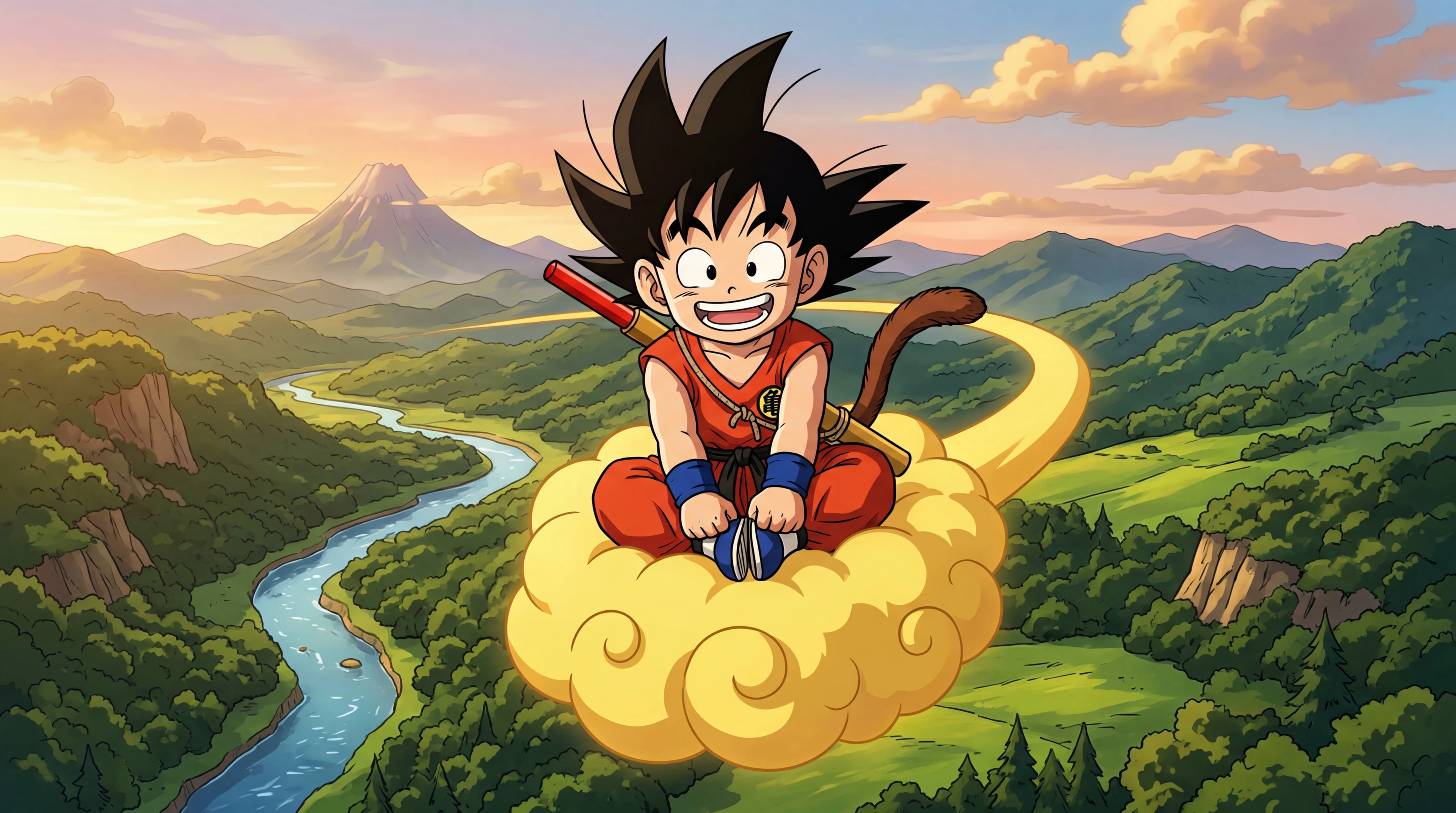
RaceThe Saiyans are a warrior race of extraterrestrials and the single most important species in all of Dragon Ball. Originally from Planet Sadala, the Universe 7 Saiyans eventually settled on Planet Vegeta, served under Frieza's empire, and were nearly wiped out when Frieza destroyed their homeworld. The survivors, most notably Goku and Vegeta, went on to become the most powerful fighters in the universe and the driving force behind nearly every major arc in the franchise.
Blood of Warriors, Named After Vegetables
The Saiyans are a race of extraterrestrials defined by three things: an insatiable drive to fight, a biology built for escalating power, and a naming convention based entirely on vegetables. Vegeta comes from "vegetable." Kakarot is "carrot." Raditz is "radish." Broly is "broccoli." Bardock is "burdock." Nappa is a type of cabbage. Toriyama applied this pattern with remarkable consistency, turning the most fearsome warrior race in fiction into a walking produce aisle.
Physically, Saiyans appear almost identical to humans, with one critical exception: they are born with monkey-like tails. These tails are the key to the Great Ape transformation, which activates when a tailed Saiyan looks at the full moon or an artificial equivalent called a Power Ball. Under the light of a full moon, a Saiyan transforms into a colossal Great Ape, multiplying their power tenfold but often losing control of their rational mind in the process.
A Body Built to Break Limits
Saiyan biology is purpose-built for combat. They possess a unique genetic trait called S-Cells, microscopic structures within their bodies that respond to intense emotional states and battle experience. When S-Cell counts reach sufficient levels, they enable the legendary Super Saiyan transformation. Saiyans also benefit from a phenomenon known as Zenkai, a dramatic increase in power that occurs after recovering from near-fatal injuries. Every time a Saiyan is beaten to the edge of death and survives, they come back measurably stronger.
Their appetite is legendary, with adult Saiyans consuming enough food in a single sitting to bankrupt a restaurant. They maintain their physical prime for far longer than humans, with Vegeta noting that Saiyans stay youthful and combat-ready well past the age when humans begin to decline. Their children develop fighting instincts almost from birth, and half-Saiyan hybrids often display even greater latent potential than their pureblooded parents.
Planet Sadala and the Migration
The Saiyan homeworld in Universe 7 was originally Planet Sadala, which the Saiyans destroyed through internal conflict. They subsequently invaded Planet Plant, defeated the native Tuffles after a brutal war, and renamed the conquered world Planet Vegeta in honor of their king. This new homeworld became the base of Saiyan civilization until Frieza destroyed it, along with nearly the entire species, in Age 737.
In Universe 6, the Saiyans followed a completely different path. They never left Sadala, never became planet brokers, and evolved into a heroic, protection-oriented society. The contrast between the two Saiyan civilizations across universes is one of the most interesting pieces of worldbuilding in Dragon Ball Super.

From Genocide to Godhood
The history of the Universe 7 Saiyans is a story of destruction, survival against impossible odds, and an ascent to power that no one could have predicted.
The Tuffle War and Frieza's Rule
After arriving on Planet Plant, the Saiyans coexisted uneasily with the Tuffles, the planet's original technologically advanced inhabitants. Eventually, war erupted. The Tuffles held the advantage in technology and intelligence, but the Saiyans' raw power, amplified by the Great Ape transformation during a full moon, overwhelmed them completely. The Tuffles were wiped out, and Planet Plant became Planet Vegeta.
This victory was short-lived in terms of independence. The Saiyans were soon absorbed into the Frieza Force, serving as planet brokers who purged worlds of their inhabitants for sale on the galactic market. As Raditz later explained to Goku, "We scour space for planets that will bring a high price on the galactic market. Once we find them, we send our warriors there to purge them of any life." The Saiyans were effective at this brutal work, but Frieza always feared them. The legend of the Super Saiyan, a warrior of unimaginable power who appeared once every thousand years, haunted the tyrant.
The Genocide
In Age 737, Frieza decided the risk was too great. He gathered virtually the entire Saiyan population on Planet Vegeta under the pretense of a summons, then destroyed the planet with a single Supernova attack from orbit. Nearly every Saiyan in Universe 7 died that day. The survivors could be counted on one hand: Goku, an infant sent to Earth before the destruction; Vegeta, who was on a mission for Frieza; Nappa, who was with Vegeta; Raditz, also away on assignment; Broly and his father Paragus, exiled to a remote planet; and Tarble, Vegeta's brother, banished for being too weak.
Goku's Journey
Goku, sent to Earth as the low-class warrior Kakarot, was found by the elderly martial artist Grandpa Gohan. A head injury as an infant erased his violent Saiyan programming, and he grew up believing he was human. His journey from a wild boy living alone in the mountains to the strongest fighter in the universe forms the backbone of the entire Dragon Ball franchise.
Goku's Saiyan heritage was not revealed until Raditz arrived on Earth at the start of Dragon Ball Z, turning the series upside down. From that moment, the Saiyan bloodline became the central driving force of the story, with each new arc pushing the boundaries of what Saiyans could achieve.
Vegeta's Redemption
Vegeta arrived on Earth as an antagonist, a proud prince willing to destroy planets without hesitation. His arc from villain to rival to reluctant hero to devoted father is one of the longest and most compelling character transformations in anime history. His rivalry with Goku, fueled by Saiyan pride and the need to prove himself the greatest of his race, became the emotional spine of the franchise alongside Goku's own journey.
The Transformation Chain
The Saiyan transformation hierarchy is one of Dragon Ball's most iconic elements. The original Super Saiyan form, first achieved by Goku on Namek in a moment of pure rage after Frieza killed Krillin, turned the legend into reality. Super Saiyan 2 followed, first achieved by Gohan during the Cell Games. Super Saiyan 3, with its dramatically extended hair, pushed the form to its limits. The God forms introduced in Dragon Ball Super elevated Saiyans to divine territory: Super Saiyan God, achieved through a ritual of six righteous Saiyans, and Super Saiyan Blue, the combination of Super Saiyan power with godly ki.
Goku later accessed Ultra Instinct, a technique so advanced that even the Gods of Destruction struggle to master it, allowing the body to move and fight independently of conscious thought. Vegeta developed Ultra Ego, a Destruction-based counterpart that grows stronger the more damage the user takes. Gohan achieved Beast form, an entirely unique transformation born from his hybrid potential. Each of these forms represents a different philosophical approach to power: Goku's path of self-emptying instinct, Vegeta's path of destructive willpower, and Gohan's path of awakened potential.
A Warrior Culture That Conquered Pop Culture
Universe 6 Saiyans
The Tournament of Destroyers and the Tournament of Power introduced the Universe 6 Saiyans, who evolved along a completely different path. Cabba, a polite and disciplined young warrior, was the first to appear, and Vegeta took him under his wing as something of a student. Caulifla, a brash and talented fighter, achieved Super Saiyan 2 with almost casual ease. Kale, Caulifla's protege, manifested a berserker form reminiscent of the Legendary Super Saiyan Broly, confirming that even in a universe where Saiyans never became conquerors, the raw potential of the species remains staggering.
Universe 6 Saiyans notably lack tails, having evolved past them at some point. They live on the original Planet Sadala, which was never destroyed in their timeline, and serve as a heroic defense force for their world rather than as planet brokers. Their existence raises provocative questions about nature versus nurture: are Saiyans inherently violent, or did circumstances make them so?
Saiyan-Human Hybrids
Some of the most powerful characters in Dragon Ball are Saiyan-human hybrids. Gohan, the son of Goku and Chi-Chi, demonstrated from childhood that hybrid Saiyans possess enormous latent potential that can surpass even their pureblooded parents. His transformation to Super Saiyan 2 during the Cell Games remains one of the franchise's peak moments. Trunks, the son of Vegeta and Bulma, traveled back in time from a destroyed future to warn the Z Fighters about the Androids. Goten, Goku's younger son, achieved Super Saiyan at an absurdly young age, treating it as casually as riding a bicycle. Pan, Gohan's daughter and a quarter-Saiyan, and Bulla, Vegeta's daughter, represent the continuing dilution and evolution of Saiyan blood on Earth.
Cultural Impact
The Saiyans are not just the most important race in Dragon Ball; they are one of the most recognizable concepts in all of anime and manga. The Super Saiyan transformation, with its spiky golden hair and explosive aura, became a universal visual shorthand for powering up that transcended the franchise entirely. "Going Super Saiyan" entered mainstream vocabulary as a metaphor for reaching a new level of intensity in any field.
The vegetable naming convention became one of Toriyama's most beloved running jokes, and the revelation that nearly every Saiyan name is a pun continues to delight new fans discovering it for the first time. The species embodies Dragon Ball's core message: that limits exist to be broken, that every defeat is an opportunity to grow stronger, and that the hunger to improve is the most powerful force in any universe.
Related Reading
See all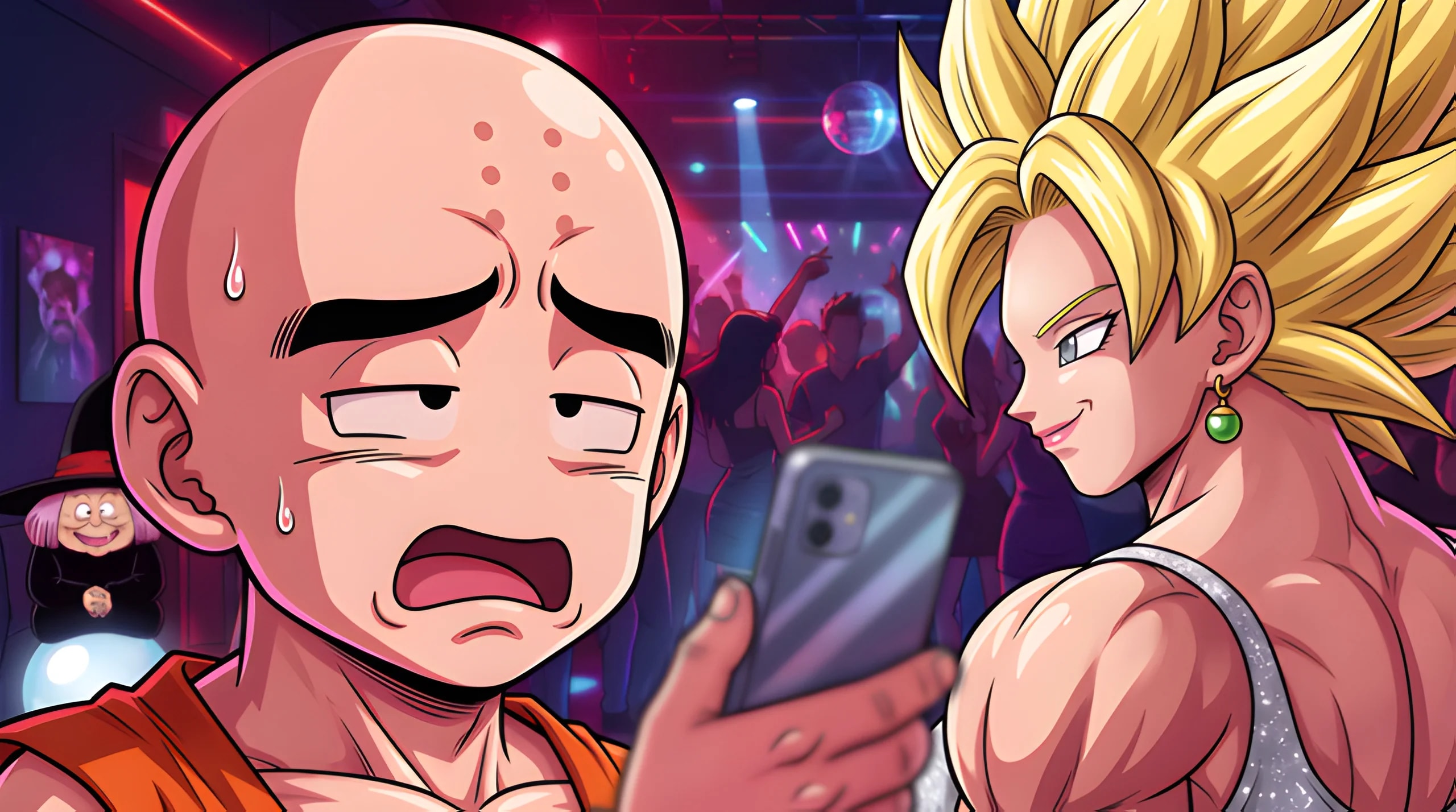
Krillin's on the Tinder: How the Ultimate Short King Survived the Height Filter
Tinder built a height filter. Dragon Ball built a five foot legend. What happened when we sent the ultimate short king into the modern dating hellscape....
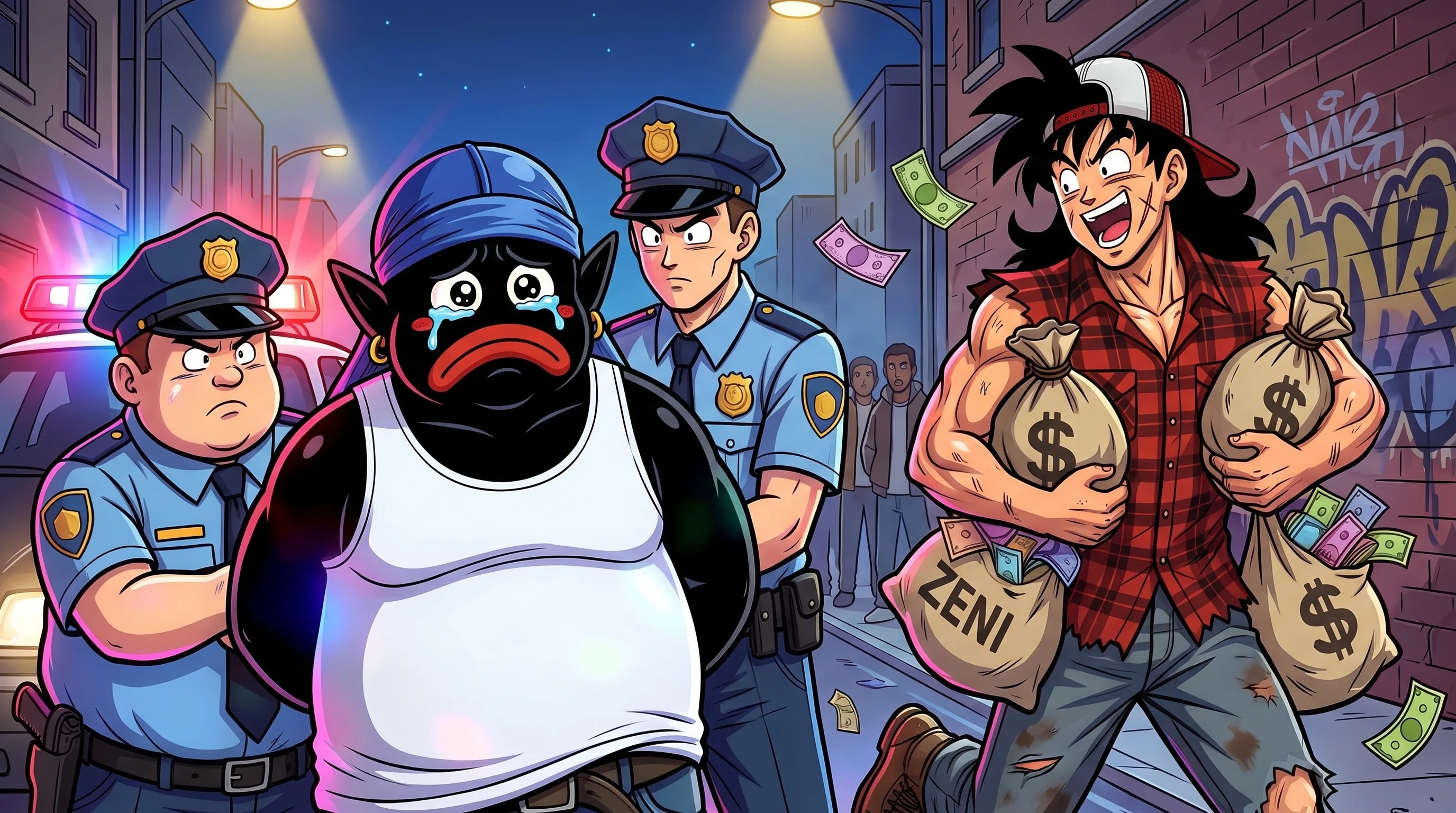
Infinite Zeni Glitch: When Yamcha Never Pays and Mr. Popo Always Does
The internet found an infinite money glitch. So did Yamcha. A smooth R&B track about the easiest money in the Dragon Ball world and the one man who keeps paying for it....
Frequently Asked Questions
What are the Saiyan in Dragon Ball?
The Saiyans are a warrior race of extraterrestrials and the single most important species in all of Dragon Ball. Originally from Planet Sadala, the Universe 7 Saiyans eventually settled on Planet Vegeta, served under Frieza's empire, and were nearly wiped out when Frieza destroyed their homeworld. The survivors, most notably Goku and Vegeta, went on to become the most powerful fighters in the universe and the driving force behind nearly every major arc in the franchise.
Where do the Saiyan come from?
The Saiyan are associated with Planet Vegeta. The Saiyans are a warrior race of extraterrestrials and the single most important species in all of Dragon Ball.
What do the Saiyan look like?
Similar to humans in appearance but with monkey-like tails (which allow Great Ape transformation under a full moon). They have universally black hair that does not change length from birth (with rare exceptions). Saiyans age slowly once reaching adulthood, maintaining their fighting prime for much longer than humans.
What abilities do the Saiyan have?
Great Ape transformation (under full moon, requires tail), Super Saiyan (and its advanced forms: SS2, SS3, SS God, SS Blue, Ultra Instinct, and Ultra Ego), Zenkai boosts, exceptional ki capacity, incredible physical durability, and an innate drive to surpass their limits. Saiyan-human hybrids often possess even greater latent potential than pure Saiyans.
What is the culture of the Saiyan like?
A warrior society organized by power level. They conquered planets and sold them under Frieza's command. They are driven by a biological compulsion to fight and grow stronger.
Sources & Information
Looking for more on Saiyan? The Dragon Ball Wiki on Fandom has a dedicated page with community notes.
View on FandomThis content is original writing by Daddy Jim Headquarters based on the Dragon Ball anime series, manga, and official materials. Episode and chapter references are cited where applicable.
Character and scene imagery on this site is original artwork by Daddy Jim Headquarters, not screenshots or licensed imagery. Official cover art is used on three types of pages for editorial commentary:
- Movie pages: theatrical posters and key visuals, credited to Toei Animation and Shueisha.
- Game pages: official box art, credited to Bandai Namco, Atari, and other publishers.
- Manga chapter pages: Jump Comics volume covers, credited to Shueisha and Akira Toriyama.
Browse our episode guides:
Official resources:
Help Us Keep This Wiki Accurate
Daddy Jim Headquarters maintains this encyclopedia. If you spot an error, a translation issue, or something that doesn't look right, let us know.