Demon God
TransformationThe pinnacle divine-tier transformation available to members of the Demon Realm Race, granting god-level power, transcendent dark sorcery, and access to a chain of increasingly powerful advanced forms.
Ascension and Power
The Demon God transformation represents the demonic counterpart to Super Saiyan God, elevating members of the Demon Realm Race to divine-tier power. It was first encountered by players in Dragon Ball Xenoverse through the ancient wizard Demigra, who had accumulated enough kili over millennia to achieve the state independently. The form later became central to the Super Dragon Ball Heroes storyline, where numerous demons attained it through various means.
There are two primary paths to becoming a Demon God. The first involves the independent accumulation of vast quantities of kili, the unit of magical energy used in the Demon Realm. This is the method Demigra used, and it requires centuries of patient cultivation. The second, faster route involves receiving the transformation directly from Mechikabura, the supreme ruler of the Demon Realm. Characters such as Towa, Putine, Gravy, Salsa, and Xeno Dabura all received their Demon God forms through Mechikabura's bestowment.
The form's power is not immediately at full capacity. When a Demon God first ascends, their body needs time to adapt to the massive influx of divine demonic energy. This was illustrated clearly by Salsa, who initially could not even budge a Rampaging Xeno Turles when his power had not yet stabilized. Once his body fully acclimated, however, Salsa became powerful enough to defeat Dark Demon God Buu, who had absorbed Evil Demon Xeno Janemba. This gap between initial and stabilized power represents a critical vulnerability during the early period after transformation.

Users and Variations
The Demon God form has been achieved by a substantial number of characters throughout the Heroes franchise. Demigra and Mechikabura stand as the most powerful wielders, with Mechikabura's mastery being so absolute that he could grant or revoke the form in others. Other prominent Demon Gods include Towa (who becomes known as Demon Goddess in English when using the female variant), Putine, Gravy, Xeno Dabura, Salsa, Chamel, Aurora, Shroom, Fu, and Robelu.
Xeno Majin Buu represents a special case. As a Majin capable of absorption rather than a Demon Realm Race member, he obtained a variant called Dark Demon God by absorbing an existing Demon God. This demonstrates that the form's energy can be transferred through unconventional means, not just through kili accumulation or Mechikabura's direct grant.
The dependency on Mechikabura proved to be a double-edged sword. When Mechikabura was sealed away, several Demon Gods who had received their power from him lost the ability to use the form entirely. Towa, Salsa, and Putine all experienced this loss, while Xeno Dabura and Gravy appeared to retain their Demon God capabilities. The reason for this discrepancy has not been fully explained, though it may relate to how deeply each individual had internalized the transformation versus relying on Mechikabura's ongoing connection.
Physical Characteristics
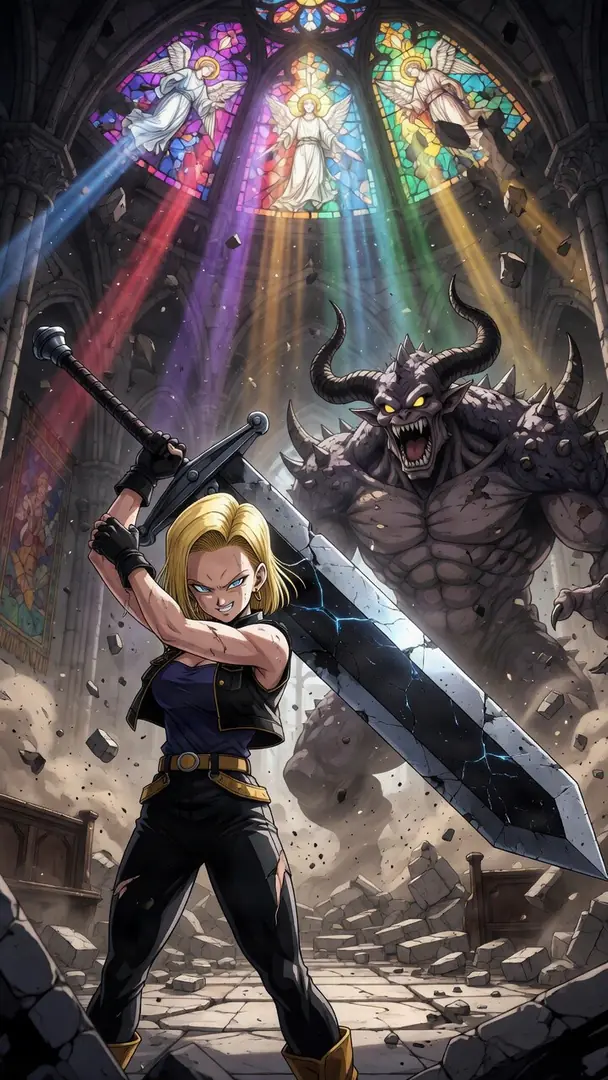
Upon entering the Demon God state, the user undergoes several consistent physical changes. Their hair or horns rise dramatically, growing longer and wilder. Distinctive markings appear near their eyes, serving as a visual indicator of their ascended status. Each Demon God also manifests a unique magical weapon, typically a staff, hammer, or sword, that becomes an extension of their power. These weapons are not merely decorative; the crystal orbs embedded within them can serve as communication devices, as demonstrated by Gravy and Shroom using theirs to coordinate across distances.
The weapons play an even more critical role in advanced transformations. When a Demon God evolves into their True Form, they merge with their weapon entirely, incorporating its power into their physical body. This fusion process produces a dramatically altered, often monstrous appearance that varies significantly between users.
A Demon God can be knocked out of the form through sufficient damage, as Towa demonstrated when Dark Broly's attack forced her back to her base state. However, this reversion is temporary; once the user recovers, they can re-enter the Demon God form at will. For others like Chamel, the form's massive stamina consumption means it can only be maintained for limited periods regardless of whether they sustain damage, making prolonged battles particularly risky.
Related Reading
See all
Krillin's on the Tinder: How the Ultimate Short King Survived the Height Filter
Tinder built a height filter. Dragon Ball built a five foot legend. What happened when we sent the ultimate short king into the modern dating hellscape....

Infinite Zeni Glitch: When Yamcha Never Pays and Mr. Popo Always Does
The internet found an infinite money glitch. So did Yamcha. A smooth R&B track about the easiest money in the Dragon Ball world and the one man who keeps paying for it....
Frequently Asked Questions
What is Demon God in Dragon Ball?
Demon God is a divine state granted to members of the Demon Realm race by the Demon God Demigra or other high-ranking demonic entities. It functions as the demon-side counterpart to the godly transformations used by Saiyans, raising the user's power to a level capable of contending with Gods of Destruction. The form is most prominently associated with Demigra, Dabura, Towa, and Mira in Dragon Ball Heroes and Xenoverse content.
How do you become a Demon God?
Members of the Demon Realm Race can achieve this form by accumulating a massive amount of kili or by having Mechikabura directly grant the transformation. Non-Demon Realm Race members can obtain it through Demon God absorption (as Xeno Majin Buu demonstrated).
How does the Demon God form change the user?
Hair or horns rise, grow, and become wilder. Facial markings appear near the eyes. The user gains a magical tool such as a staff, hammer, or sword that becomes integral to advanced transformations. Outfit changes accompany the transformation.
How powerful is the Demon God transformation?
The Demon God transformation is enormously powerful, with Demigra's Demon God form rivaling Super Saiyan 3 Goku. The form's full power requires time to stabilize in the user's body, so newly ascended Demon Gods are significantly weaker than those who have fully adapted to the state.
Who are the most famous Demon Gods?
Notable variations include the Demon Goddess female variant, the Dark Demon God form Xeno Majin Buu accesses through absorption, plus the Second Version, True Form, Transcended, Dark King, and Perfect State branches. Each variant builds on the base Demon God transformation with its own visual cues and power tier.
Sources & Information
Looking for more on Demon God? The Dragon Ball Wiki on Fandom has a dedicated page with community notes.
View on FandomThis content is original writing by Daddy Jim Headquarters based on the Dragon Ball anime series, manga, and official materials. Episode and chapter references are cited where applicable.
Character and scene imagery on this site is original artwork by Daddy Jim Headquarters, not screenshots or licensed imagery. Official cover art is used on three types of pages for editorial commentary:
- Movie pages: theatrical posters and key visuals, credited to Toei Animation and Shueisha.
- Game pages: official box art, credited to Bandai Namco, Atari, and other publishers.
- Manga chapter pages: Jump Comics volume covers, credited to Shueisha and Akira Toriyama.
Browse our episode guides:
Official resources:
Help Us Keep This Wiki Accurate
Daddy Jim Headquarters maintains this encyclopedia. If you spot an error, a translation issue, or something that doesn't look right, let us know.