Legendary Super Saiyan
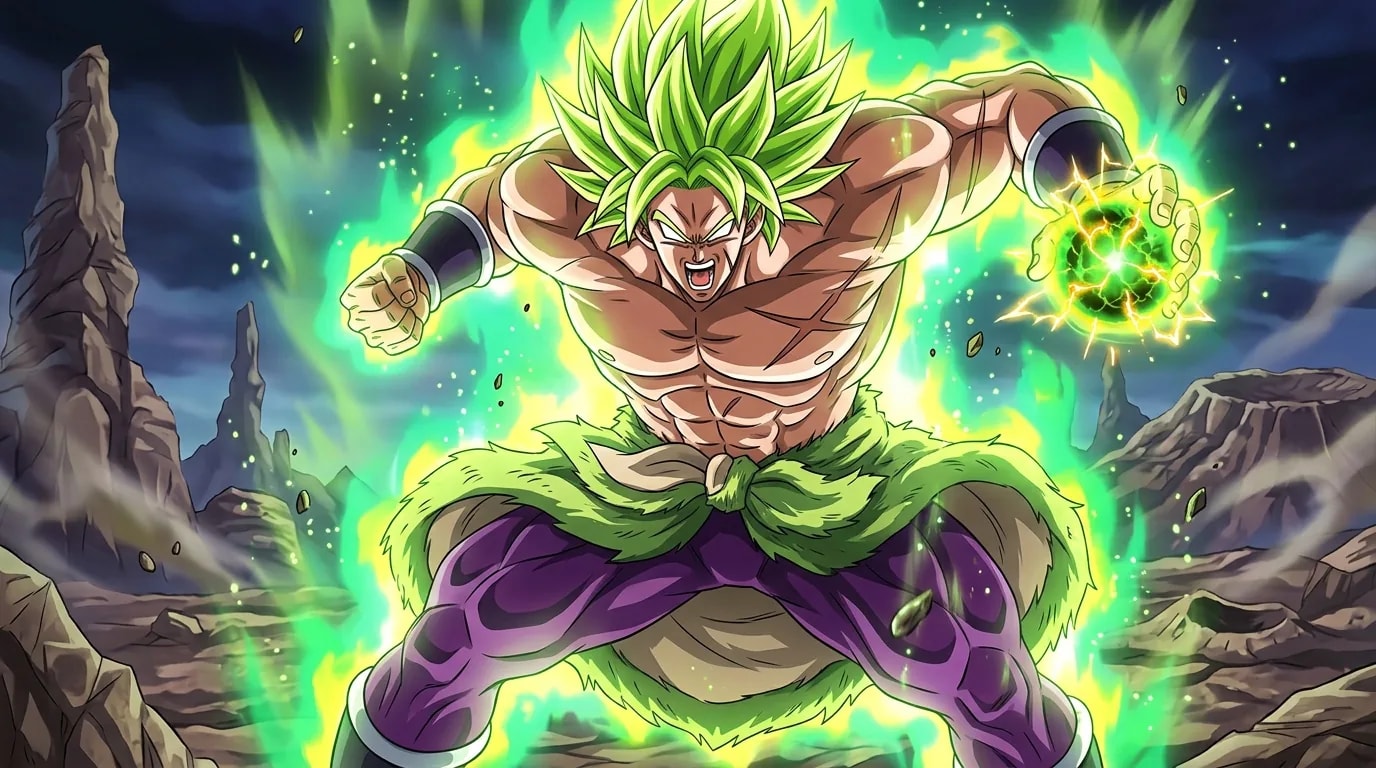
TransformationA mutation-driven transformation that represents the Saiyan race's ultimate expression of raw, uncontrolled power. Unlike the standard Super Saiyan form that can be trained and refined, the Legendary Super Saiyan is a genetic anomaly that manifests in only one Saiyan per generation. It was first demonstrated by Broly in the 1993 film, and its most distinctive trait is a power level that climbs continuously during battle, making the user progressively more dangerous the longer a fight continues.
The Legendary Mutation
The Legendary Super Saiyan is not a form that can be achieved through training or emotional triggers alone. It is tied to a specific genetic condition that produces a Saiyan of extraordinary power from birth. The original Broly was born with a battle power of 10,000, a figure that placed him above most adult Saiyan warriors while he was still an infant. King Vegeta, fearing the implications of such power, ordered the child's execution, but Broly survived the assassination attempt and the subsequent destruction of Planet Vegeta.
The exact nature of the mutation has never been fully explained in canon. What is clear is that it produces a fundamentally different type of Super Saiyan transformation. Where standard Super Saiyan multiplies the user's power by a fixed amount (roughly fifty times), the Legendary form operates on a scaling model where power output increases over time during combat. This makes the user more dangerous with every passing minute.
The 1993 Film and Its Impact
Broly's debut in "Dragon Ball Z: Broly - The Legendary Super Saiyan" introduced the concept of a Super Saiyan who existed outside the standard power hierarchy. At the time of the film, the Z Fighters had access to Super Saiyan and its graded forms, yet even their combined efforts were insufficient against Broly in his Legendary state. The film established the template for what the Legendary Super Saiyan would represent going forward: an overwhelming force that could only be stopped through unconventional means.


Power Characteristics
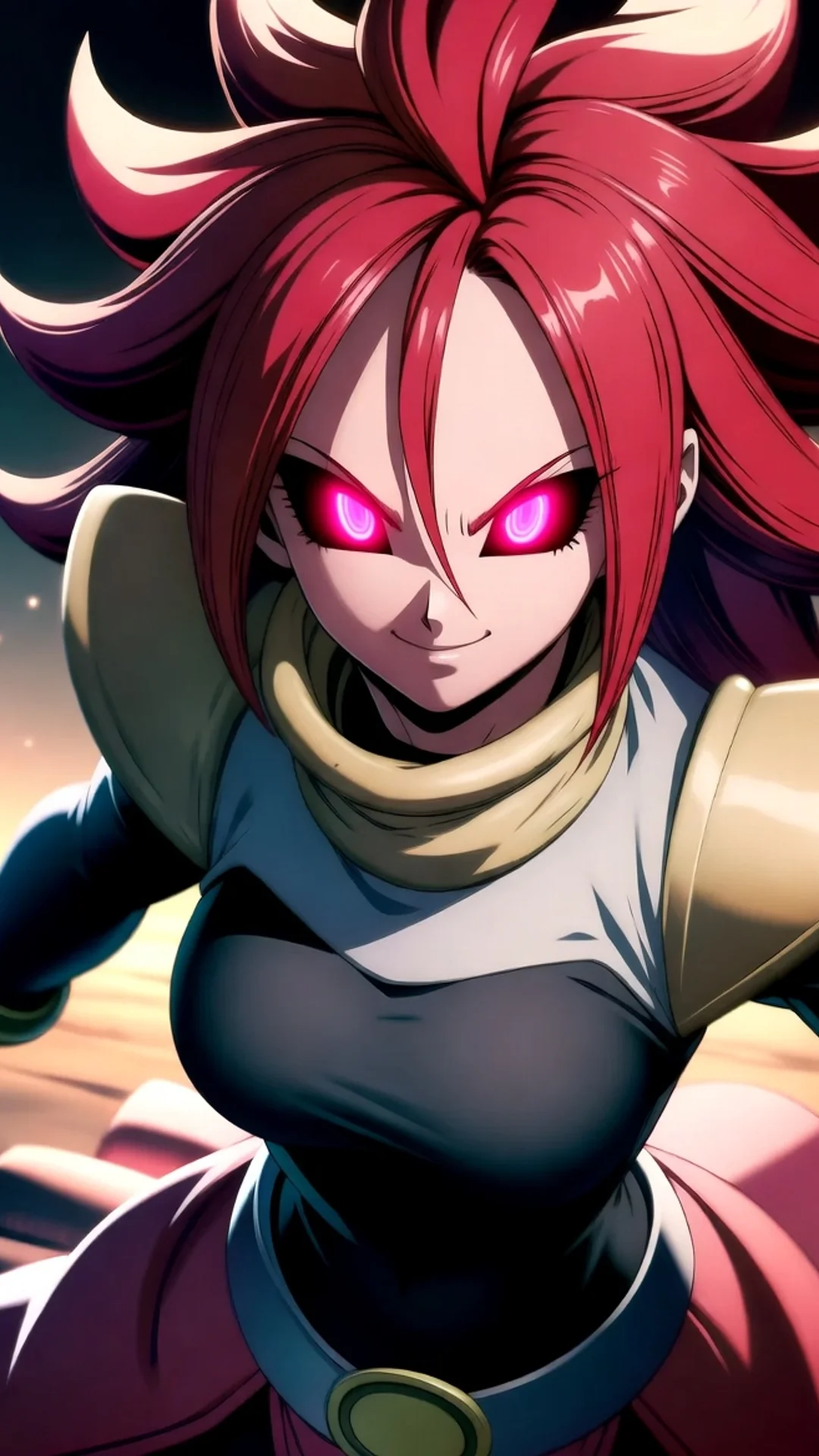
The defining mechanical trait of the Legendary Super Saiyan is its escalating power curve. In a standard fight, a Super Saiyan maintains a relatively stable power output that can be pushed higher through techniques like Kaio-ken or power-up stages. The Legendary Super Saiyan, by contrast, generates more energy the longer the fight continues. This creates a ticking clock scenario for opponents: the longer they fail to defeat the Legendary Super Saiyan, the less likely they are to ever do so.
This characteristic has been depicted across multiple appearances, from the original Broly films to the Dragon Ball Super version of the character. Even in the Broly film (2018), where the character was reimagined with a different origin story, the core trait of escalating power remained intact. Broly grew stronger throughout his battles with Vegeta and Goku, forcing them to fuse into Gogeta to finally match him.
Physical Toll
The form's power comes with severe physical consequences. The massive muscle growth strains the body, and the continuous energy escalation appears to cause significant pain. Broly's screams during combat are not simply battle cries but expressions of genuine agony as his body struggles to contain the ever-increasing power flowing through it. The lack of mental control compounds the problem, as the user cannot regulate their own output.
Legacy Across the Franchise
The Legendary Super Saiyan concept exists in two distinct continuities. The original Broly from the Z-era films was a purely villainous character driven by an irrational hatred of Goku stemming from their shared nursery. The Dragon Ball Super version, introduced in the 2018 Broly film, reimagined the character as a sympathetic figure raised in isolation by his father Paragus. Both versions access the Legendary Super Saiyan form, but the Super version channels the power somewhat differently through the Wrathful state as an intermediate step.
Kale from Universe 6, introduced during the Tournament of Power arc, is another user of the Legendary Super Saiyan form. Her transformation closely mirrors the original Broly's visual design and behavioral traits, including the blank white eyes, green aura, and loss of rational control. Kale eventually learned to control the form through Caulifla's encouragement, creating a controlled variant that retained the power without the berserker mentality.
Cultural Impact
The Legendary Super Saiyan has become one of the most recognizable concepts in Dragon Ball outside of the standard Super Saiyan itself. Broly consistently ranks among the franchise's most popular characters, and the Legendary form's distinctive green color scheme has made it instantly identifiable. The 2018 film's enormous commercial success (the highest-grossing Dragon Ball film at its release) ensured that the concept would remain central to the franchise going forward.
Related Reading
See all
Krillin's on the Tinder: How the Ultimate Short King Survived the Height Filter
Tinder built a height filter. Dragon Ball built a five foot legend. What happened when we sent the ultimate short king into the modern dating hellscape....
Infinite Zeni Glitch: When Yamcha Never Pays and Mr. Popo Always Does
The internet found an infinite money glitch. So did Yamcha. A smooth R&B track about the easiest money in the Dragon Ball world and the one man who keeps paying for it....
Frequently Asked Questions
What is a Legendary Super Saiyan?
Legendary Super Saiyan is an extremely rare transformation said to appear once every thousand years among Saiyans. The form grants the user massive muscle expansion, a green-tinted aura, and combat power that dwarfs ordinary Super Saiyans, with the trade-off of degraded technique and self-control.
Who is the Legendary Super Saiyan?
Broly is the canonical Legendary Super Saiyan in Dragon Ball, introduced in Broly: The Legendary Super Saiyan and revived as a separate character in Dragon Ball Super: Broly. His unique birth power and emotional instability make him the only fighter consistently identified with the title.
How is Legendary Super Saiyan different from regular Super Saiyan?
Legendary Super Saiyan produces an extreme increase in muscle mass and height, with hair shifting to green or pale gold and a slight greenish tinge to the skin. The eyes become blank white with no visible pupils. A massive, crackling green aura envelops the entire body.
What are the drawbacks of Legendary Super Saiyan?
The user loses most rational thought and becomes consumed by destructive rage. The form is physically painful to maintain. The continuously rising power can become self-destructive if the user's body cannot contain it.
How strong is Legendary Super Saiyan?
Legendary Super Saiyan vastly exceeds standard Super Saiyan in raw output, with the form's power treated as continuously increasing during use. Broly's strength grows the longer he fights, which is the core reason a single fighter cannot reliably outlast him head-on.
Sources & Information
Looking for more on Legendary Super Saiyan? The Dragon Ball Wiki on Fandom has a dedicated page with community notes.
View on FandomThis content is original writing by Daddy Jim Headquarters based on the Dragon Ball anime series, manga, and official materials. Episode and chapter references are cited where applicable.
Character and scene imagery on this site is original artwork by Daddy Jim Headquarters, not screenshots or licensed imagery. Official cover art is used on three types of pages for editorial commentary:
- Movie pages: theatrical posters and key visuals, credited to Toei Animation and Shueisha.
- Game pages: official box art, credited to Bandai Namco, Atari, and other publishers.
- Manga chapter pages: Jump Comics volume covers, credited to Shueisha and Akira Toriyama.
Browse our episode guides:
Official resources:
Help Us Keep This Wiki Accurate
Daddy Jim Headquarters maintains this encyclopedia. If you spot an error, a translation issue, or something that doesn't look right, let us know.