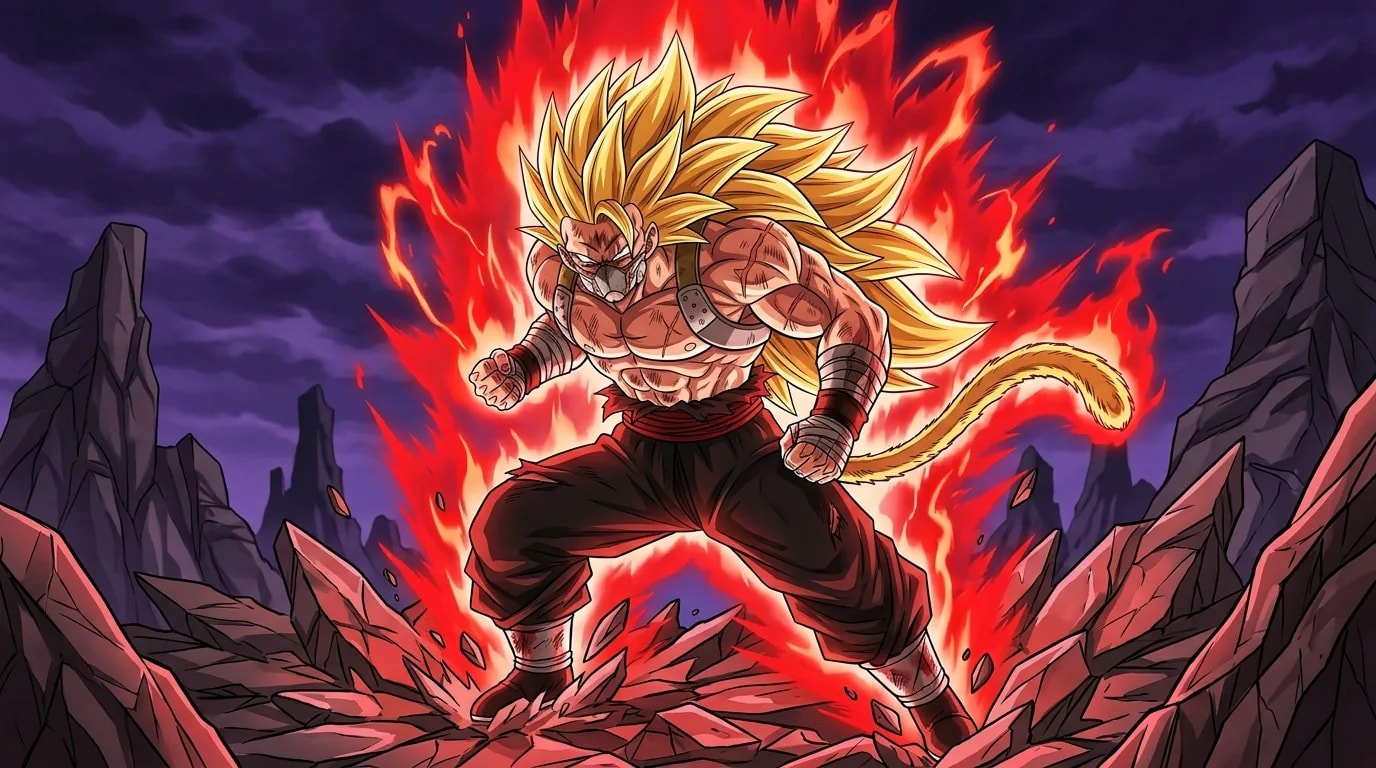
Super Saiyan 3 Full Power
TransformationThe fully mastered peak of Super Saiyan 3, representing the absolute ceiling of what the third Super Saiyan tier can achieve. This form appears primarily in Dragon Ball Heroes, where characters like Goku and Vegeta push their SS3 forms beyond the standard limits into a "Full Power" state that extracts every last drop of potential from the transformation.
Pushing SS3 to Its Limit
Standard Super Saiyan 3 was always defined by its drawbacks. The form's massive power came at the cost of equally massive stamina drain, making it impractical for extended combat. Goku himself admitted during the Buu Saga that maintaining SS3 while alive was extremely difficult, and the form's energy consumption was the primary reason he could not finish Majin Buu when he had the chance.
Full Power Super Saiyan 3 represents the theoretical endpoint of training within the form: a state where the user has pushed the transformation to its absolute maximum output while achieving whatever degree of stamina efficiency is possible. It does not eliminate SS3's inherent weaknesses, but it does represent the most refined version of the form achievable through training alone.
Game Appearances
In Dragon Ball Heroes, Full Power SS3 serves as an intermediate power tier between standard SS3 and the godly transformations. It is often depicted as the strongest form available to characters who have not yet achieved Super Saiyan God or Blue, providing a meaningful power-up for scenarios where those divine forms are not accessible. The form is visually distinguished from standard SS3 primarily through aura intensity and environmental effects rather than major changes to the user's physical appearance.
Frequently Asked Questions
What is Super Saiyan 3 full power?
The fully mastered peak of Super Saiyan 3, representing the absolute ceiling of what the third Super Saiyan tier can achieve. This form appears primarily in Dragon Ball Heroes, where characters like Goku and Vegeta push their SS3 forms beyond the standard limits into a "Full Power" state that extracts every last drop of potential from the transformation. Must have fully mastered Super Saiyan 3 and pushed it to its absolute peak output.
How is Super Saiyan 3 Full Power achieved?
Must have fully mastered Super Saiyan 3 and pushed it to its absolute peak output. Requires overcoming the standard form's stamina limitations.
What does Super Saiyan 3 Full Power look like?
Similar to standard Super Saiyan 3 but with an even more pronounced golden aura. Hair may appear slightly more radiant. The overall energy output creates a more intense visual effect around the body, with stronger environmental disturbance.
How powerful is Super Saiyan 3 Full Power?
Beyond standard Super Saiyan 3. Represents the absolute maximum of the Super Saiyan 3 form's potential.
What are the drawbacks of Super Saiyan 3 Full Power?
Still carries the severe stamina drain inherent to SS3, though potentially mitigated through mastery. Remains inferior to godly transformations.
Sources & Information
Looking for more on Super Saiyan 3 Full Power? The Dragon Ball Wiki on Fandom has a dedicated page with community notes.
View on FandomThis content is original writing by Daddy Jim Headquarters based on the Dragon Ball anime series, manga, and official materials. Episode and chapter references are cited where applicable.
Character and scene imagery on this site is original artwork by Daddy Jim Headquarters, not screenshots or licensed imagery. Official cover art is used on three types of pages for editorial commentary:
- Movie pages: theatrical posters and key visuals, credited to Toei Animation and Shueisha.
- Game pages: official box art, credited to Bandai Namco, Atari, and other publishers.
- Manga chapter pages: Jump Comics volume covers, credited to Shueisha and Akira Toriyama.
Browse our episode guides:
Official resources:
Help Us Keep This Wiki Accurate
Daddy Jim Headquarters maintains this encyclopedia. If you spot an error, a translation issue, or something that doesn't look right, let us know.