
Dr. Gero reaches his lab just ahead of the Z Fighters and activates Androids 17 and 18. The newly awakened machines show immediate defiance, with 17 snatching the emergency shutdown remote from Gero's hand. Vegeta blasts down the door, and the heroes come face to face with the real threat at last.
The Door Opens on Doomsday
Goku writhes in his bed, trapped in a fever dream where the androids overwhelm him. The nightmare creature he envisions is grotesque, a pink elastic monstrosity that wraps around his throat while Chi-Chi tries helplessly to wake him. The scene captures the virus's stranglehold on his subconscious, turning his greatest fears into vivid hallucinations.
In the northern mountains, the race to the laboratory grows increasingly frantic. Vegeta and Future Trunks scour the terrain from above while Piccolo, Tien, and Krillin arrive at North City and split up to cover more ground. Dr. Gero, running on foot through the wilderness, nearly gets shot by a hunter who mistakes him for a deer. When the doctor retaliates, the commotion draws Krillin close enough to spot him. Gero swats the smaller fighter aside with contemptuous ease but decides against finishing him off when he notices Piccolo nearby. Stealth is more valuable than one more kill.
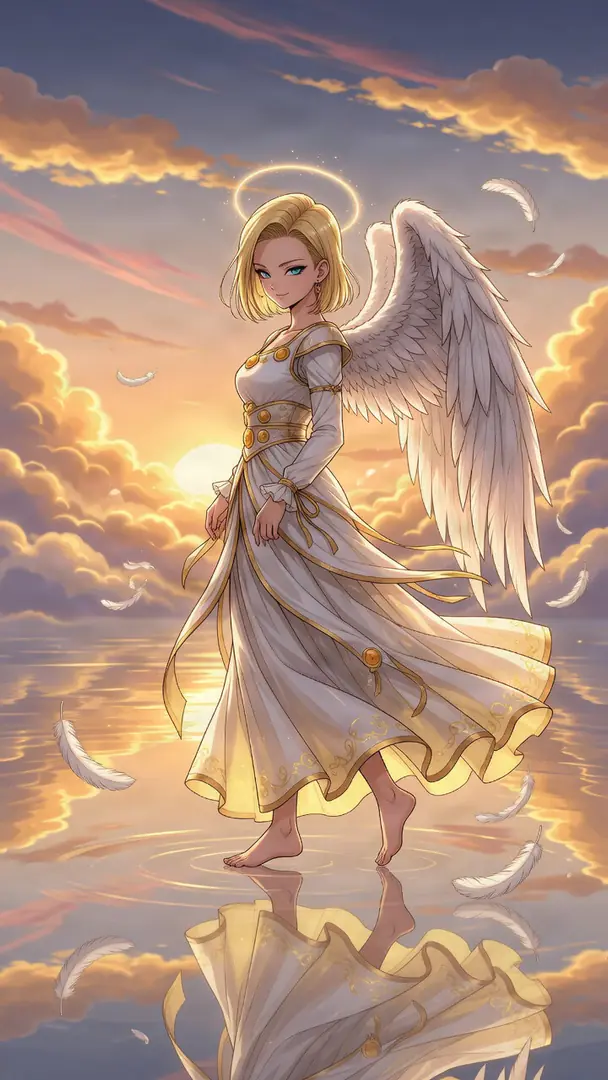
Krillin, battered but conscious, manages to tail Gero all the way to the hidden entrance of his laboratory and signals the others. They converge on the mountainside and begin trying to break through the reinforced door. Inside, Dr. Gero works with feverish speed, powering up the containment pods for Android 17 and Android 18. The two machines awaken with cold, disinterested expressions. Gero issues his first command, and both androids simply stare at him, unmoved.
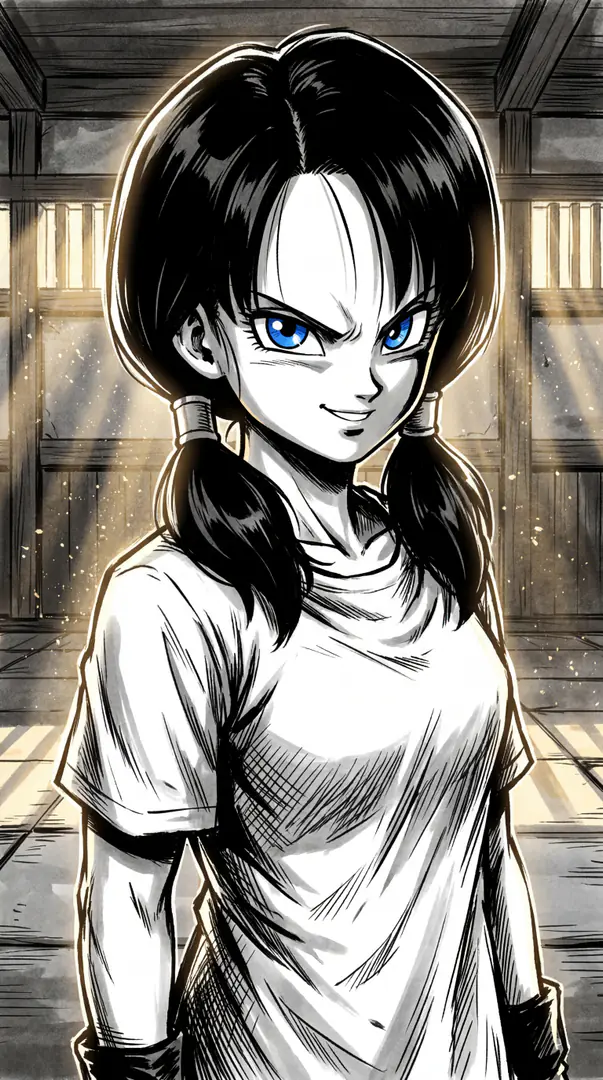
Android 17 moves with casual precision, plucking the emergency deactivation remote from Gero's hand before the scientist can react. The balance of power in the room shifts instantly. Outside, Vegeta loses patience and blasts the reinforced door to rubble. The Z Fighters pour into the lab to find not a strategic advantage, but a new and far more dangerous situation: two fully activated androids who answer to no one.

The Creator Loses Control
Dr. Gero's fatal miscalculation is one of science fiction's oldest cautionary tales: the creation that refuses to obey its maker. He built 17 and 18 to be weapons powerful enough to destroy Goku, but that same power makes them impossible to control. The instant 17 takes the remote, Gero's authority evaporates. He is no longer a mad scientist with an army. He is an old man in a room with two beings who could erase him on a whim.
Goku's nightmare sequence adds thematic depth by revealing his own fear of powerlessness. Even unconscious and delirious, the greatest warrior alive is haunted by an enemy he cannot punch his way past. The virus represents a threat that exists beyond the reach of training, transformation, or willpower.
Familiar Faces in the Background
Sharp-eyed viewers will notice that the hunter who fires at Dr. Gero bears a striking resemblance to the farmer from the very first episode of Dragon Ball Z, the man who shot at Raditz upon his arrival on Earth. Whether intended as the same character or simply a visual callback, it creates a neat bookend connecting the series' humble beginning to its escalating android crisis.
The pink monster in Goku's nightmare has drawn comparisons to Majin Buu, who would not appear in the series for many more episodes. The creature's elastic body and ability to stretch its limbs mirror Buu's signature fighting style, making this either a remarkable coincidence or a very early visual seed planted by the animators.
Related Reading
See all
Krillin's on the Tinder: How the Ultimate Short King Survived the Height Filter
Tinder built a height filter. Dragon Ball built a five foot legend. What happened when we sent the ultimate short king into the modern dating hellscape....
Infinite Zeni Glitch: When Yamcha Never Pays and Mr. Popo Always Does
The internet found an infinite money glitch. So did Yamcha. A smooth R&B track about the easiest money in the Dragon Ball world and the one man who keeps paying for it....
Frequently Asked Questions
What episode of Dragon Ball Z is "Nightmare Comes True"?
"Nightmare Comes True" is episode 133 of Dragon Ball Z. It is the 133rd episode in the dub broadcast order.
When did "Nightmare Comes True" originally air?
The original Japanese broadcast date for "Nightmare Comes True" is not listed in our records for this Dragon Ball Z episode. Check the parent saga page for the air window that covers this stretch of episodes.
What happens in "Nightmare Comes True"?
Dr. Gero reaches his lab just ahead of the Z Fighters and activates Androids 17 and 18. The newly awakened machines show immediate defiance, with 17 snatching the emergency shutdown remote from Gero's hand. Vegeta blasts down the door, and the heroes come face to face with the real threat at last.
Which manga chapters does "Nightmare Comes True" adapt?
Our records do not list a specific manga chapter for "Nightmare Comes True". This stretch of the anime adapts the Cell Saga arc of Akira Toriyama's original manga, with some episodes containing anime-original material that does not map to a single chapter.
What is the key moment in "Nightmare Comes True"?
Vegeta and Future Trunks scour the terrain from above while Piccolo, Tien, and Krillin arrive at North City and split up to cover more ground. Goku writhes in his bed, trapped in a fever dream where the androids overwhelm him.
Sources & Information
Looking for more on Nightmare Comes True? The Dragon Ball Wiki on Fandom has a dedicated page with community notes.
View on FandomThis content is original writing by Daddy Jim Headquarters based on the Dragon Ball anime series, manga, and official materials. Episode and chapter references are cited where applicable.
Character and scene imagery on this site is original artwork by Daddy Jim Headquarters, not screenshots or licensed imagery. Official cover art is used on three types of pages for editorial commentary:
- Movie pages: theatrical posters and key visuals, credited to Toei Animation and Shueisha.
- Game pages: official box art, credited to Bandai Namco, Atari, and other publishers.
- Manga chapter pages: Jump Comics volume covers, credited to Shueisha and Akira Toriyama.
Browse our episode guides:
Official resources:
Help Us Keep This Wiki Accurate
Daddy Jim Headquarters maintains this encyclopedia. If you spot an error, a translation issue, or something that doesn't look right, let us know.