
When Babidi discovers Trunks lives at Capsule Corp., the race is on. Trunks flies to retrieve the Dragon Radar while Goku uses Instant Transmission to intercept Buu, setting up a legendary confrontation.
A Race Against Destruction
Fusion training begins in earnest as Goku has the boys power up to Super Saiyan and match their energy levels precisely. Trunks is slightly stronger than Goten due to their age difference, so he must learn to suppress his power to create equilibrium. The fusion technique demands perfect symmetry, and even minor imbalances would ruin the result. Bulma interrupts to check on Trunks, prompting Krillin to physically carry her out of the training room so they can continue.
The crisis escalates when Idasa's mother recognizes Trunks' name from Babidi's broadcast. She contacts Babidi telepathically, revealing that Trunks lives at Capsule Corporation in West City. Babidi wastes no time announcing his new destination to the world. If Trunks does not appear, West City and everyone in it will be obliterated. This puts Bulma's parents, Dr. Brief and Bikini, directly in the crosshairs.
The heroes face a dilemma. The Dragon Radar is still at Capsule Corp., and without it, finding the Dragon Balls again would be nearly impossible. Trunks volunteers to fly there at maximum speed to grab the radar. To buy him time, Goku uses Instant Transmission to appear directly in front of Babidi and Majin Buu. After a tense exchange of words, Goku plants himself between the villains and West City. Babidi orders Buu to kill him, but Goku has one more trick up his sleeve. He tells Babidi he is about to surpass everything they have seen, powering up to Super Saiyan 2 as the episode ends on a tantalizing cliffhanger.

The Civilian Factor
Idasa's mother represents something rare in Dragon Ball: a civilian who actively makes the situation worse. Her decision to contact Babidi is motivated not by survival but by petty grudge. She is still bitter about her son losing to Trunks in the Junior Division. This small, selfish act puts an entire city in jeopardy and forces the heroes into a dangerous scramble. It is a sharp commentary on how ordinary human weakness can have extraordinary consequences during extraordinary times.
The Dragon Radar also becomes a surprisingly critical plot device here. Without this small piece of technology, the heroes lose their ability to locate the Dragon Balls efficiently, which means losing their ability to reverse the damage Buu causes. A handheld gadget suddenly carries more strategic value than any fighting technique.
Related Reading
See all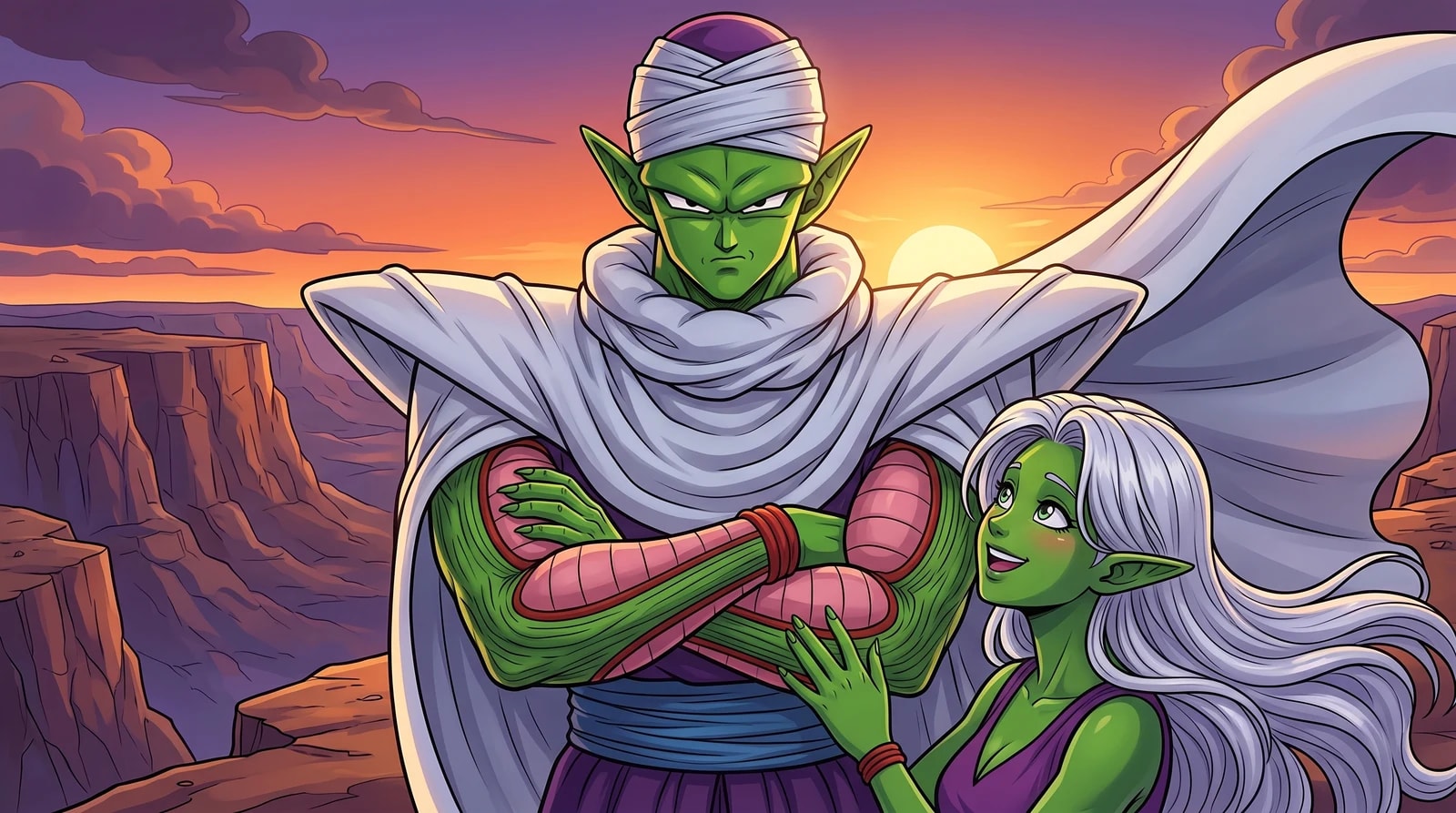
Namek Has No Women, and Piccolo Pulls Anyway
There are no women on Namek. That isn't an oversight, it's the biology. Why we handed Piccolo the one thing his own species rules out, and why it had to be trap soul....
1000 Times Over: Who Is John Dragon Ball Singing To?
Dragon Ball handed us a protagonist with no history and the internet named him John Dragon Ball. So we built him somebody to talk to....


Setting the Stage for History
Everything in this episode converges toward one of Dragon Ball Z's most iconic moments. Goku's decision to intercept Buu personally serves a dual purpose: it protects West City long enough for Trunks to complete his mission, and it gives Goku a reason to reveal a power that he has been hiding from everyone. The cliffhanger, with Goku hinting at a level beyond Super Saiyan 2, is one of the saga's greatest tension-building moments.
Krillin's brief flashback to training under Master Roshi with Goku is a lovely touch that grounds the present crisis in the series' history. These two have been through everything together, and watching the next generation train evokes genuine nostalgia alongside the urgency of the current threat.
Frequently Asked Questions
What is the Dragon Ball episode "Race to Capsule Corp."?
When Babidi discovers Trunks lives at Capsule Corp., the race is on. Trunks flies to retrieve the Dragon Radar while Goku uses Instant Transmission to intercept Buu, setting up a legendary confrontation.
Which Dragon Ball series is "Race to Capsule Corp." from?
"Race to Capsule Corp." is episode 244 of Dragon Ball Z. When Babidi discovers Trunks lives at Capsule Corp., the race is on.
How does "Race to Capsule Corp." begin?
Fusion training begins in earnest as Goku has the boys power up to Super Saiyan and match their energy levels precisely. Trunks is slightly stronger than Goten due to their age difference, so he must learn to suppress his power to create equilibrium. The fusion technique demands perfect symmetry, and even minor imbalances would ruin the result.
What is the middle act of "Race to Capsule Corp."?
Idasa's mother represents something rare in Dragon Ball: a civilian who actively makes the situation worse. Her decision to contact Babidi is motivated not by survival but by petty grudge. She is still bitter about her son losing to Trunks in the Junior Division.
How does "Race to Capsule Corp." end?
The cliffhanger, with Goku hinting at a level beyond Super Saiyan 2, is one of the saga's greatest tension-building moments. Krillin's brief flashback to training under Master Roshi with Goku is a lovely touch that grounds the present crisis in the series' history. These two have been through everything together, and watching the next generation train evokes genuine nostalgia alongside the urgency of the current threat.
Sources & Information
Looking for more on Race to Capsule Corp.? The Dragon Ball Wiki on Fandom has a dedicated page with community notes.
View on FandomThis content is original writing by Daddy Jim Headquarters based on the Dragon Ball anime series, manga, and official materials. Episode and chapter references are cited where applicable.
Rights holders
- Created byAkira Toriyama
- Published byShueisha
- Animated byToei Animation
All rights belong to their respective owners.
Character and scene imagery on this site is original artwork by Daddy Jim Headquarters, not screenshots or licensed imagery. Official cover art is used on three types of pages for editorial commentary:
- Movie pages: theatrical posters and key visuals, credited to Toei Animation and Shueisha.
- Game pages: official box art, credited to Bandai Namco, Atari, and other publishers.
- Manga chapter pages: Jump Comics volume covers, credited to Shueisha and Akira Toriyama.
Browse our episode guides:
Official resources:
Help Us Keep This Wiki Accurate
Daddy Jim Headquarters maintains this encyclopedia. If you spot an error, a translation issue, or something that doesn't look right, let us know.
