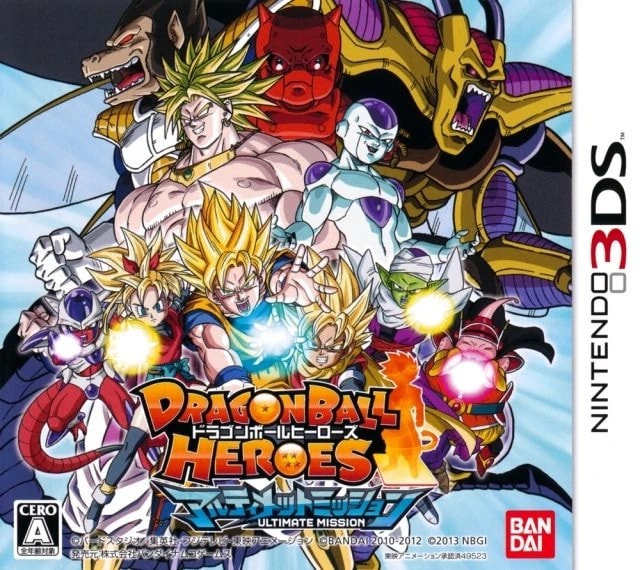
Dragon Ball Heroes: Ultimate Mission
Gameis a card-based fighting game that is a portable-port of the arcade game Dragon Ball Heroes. It was released in Japan for the handheld gaming console on February 28, 2013. Its sequel, Dragon Ball Heroes: Ultimate Mission 2, was released in 2014.
Gameplay
Dragon Ball Heroes: Ultimate Mission is a card-based fighting game for the Nintendo 3DS that brings the Dragon Ball Heroes arcade experience to portable hardware. Players assemble a deck of five cards and position them on the lower touch screen, with the resulting battle playing out on the upper display. Actions including the Charge Impact are performed by manipulating the stylus intuitively on the portable device, translating the physical gesture-based play of the arcade cabinet into a handheld context. Cards represent characters from across the Dragon Ball universe, and completing missions awards new cards that can be added to the player's collection.
The game includes a Scouter function that uses the 3DS camera to photograph a real person's face and assess their power level, earning the player Zeni currency and items. Scanning a sufficiently powerful face triggers a boss fight against Great Ape Vegeta, which can be tackled cooperatively with friends via local wireless. Special QR codes unlock additional boss fights against characters such as Beerus and Super Saiyan God Goku from Dragon Ball Z: Battle of Gods. The Story Mode places players on the Ultimate Map and recreates iconic scenes from the Saiyan Saga through the Dragon Ball GT era, with mission completion serving as the primary method of earning new cards.
The game contains over 200 characters distributed across 971 digital cards covering all Dragon Ball Heroes sets from the first through Galaxy Mission 4. Wireless connectivity supports head-to-head duels and card trading between players, extending the experience beyond solo play. First-run copies include a bonus set of Dragon Ball Heroes arcade cards, and a special edition version bundled with a card-carrying case was available through Bandai Namco's LaLaBit Market storefront.



Story & Features
The opening animation for Dragon Ball Heroes: Ultimate Mission depicts the player's Hero avatar being transported from the real world directly into the Dragon Ball Heroes universe, where they encounter a series of battles against iconic villains including Frieza, Cell, Majin Buu, and Legendary Super Saiyan Broly. The sequence ends with Goku arriving to protect the heroes before all three combine their Kamehamehas against Broly's energy wave, capturing the cooperative spirit central to the game's design philosophy.
The game was announced by Namco Bandai at E3 2010 as a Dragon Ball title designed around Nintendo 3DS hardware, with its final card count and release date confirmed through Japanese gaming publications in late 2012 and early 2013. The announcement built anticipation across the domestic Dragon Ball fanbase, which had a long history with collectible card play. The game's connectivity with the physical arcade machines added tangible value for players who also frequented Dragon Ball Heroes arcade locations in Japan.
Release & Legacy
Dragon Ball Heroes: Ultimate Mission was released in Japan on February 28, 2013, at a price of 5,800 yen, becoming the first portable adaptation of the Dragon Ball Heroes arcade game. The title was Japan-exclusive throughout its commercial life, never receiving a localization for Western markets. Its sequel, Dragon Ball Heroes: Ultimate Mission 2, released the following year in 2014, and the series continued through Ultimate Mission X in 2017.
The game established the template for the portable Dragon Ball Heroes series: card library comprehensiveness, arcade-faithful touch mechanics, and connectivity features that bridged the handheld and arcade ecosystems. Together the three portable titles built a dedicated domestic audience and contributed to the Dragon Ball Heroes franchise's status as the number one digital card game in the Japanese market for over a decade.
Related Reading
See all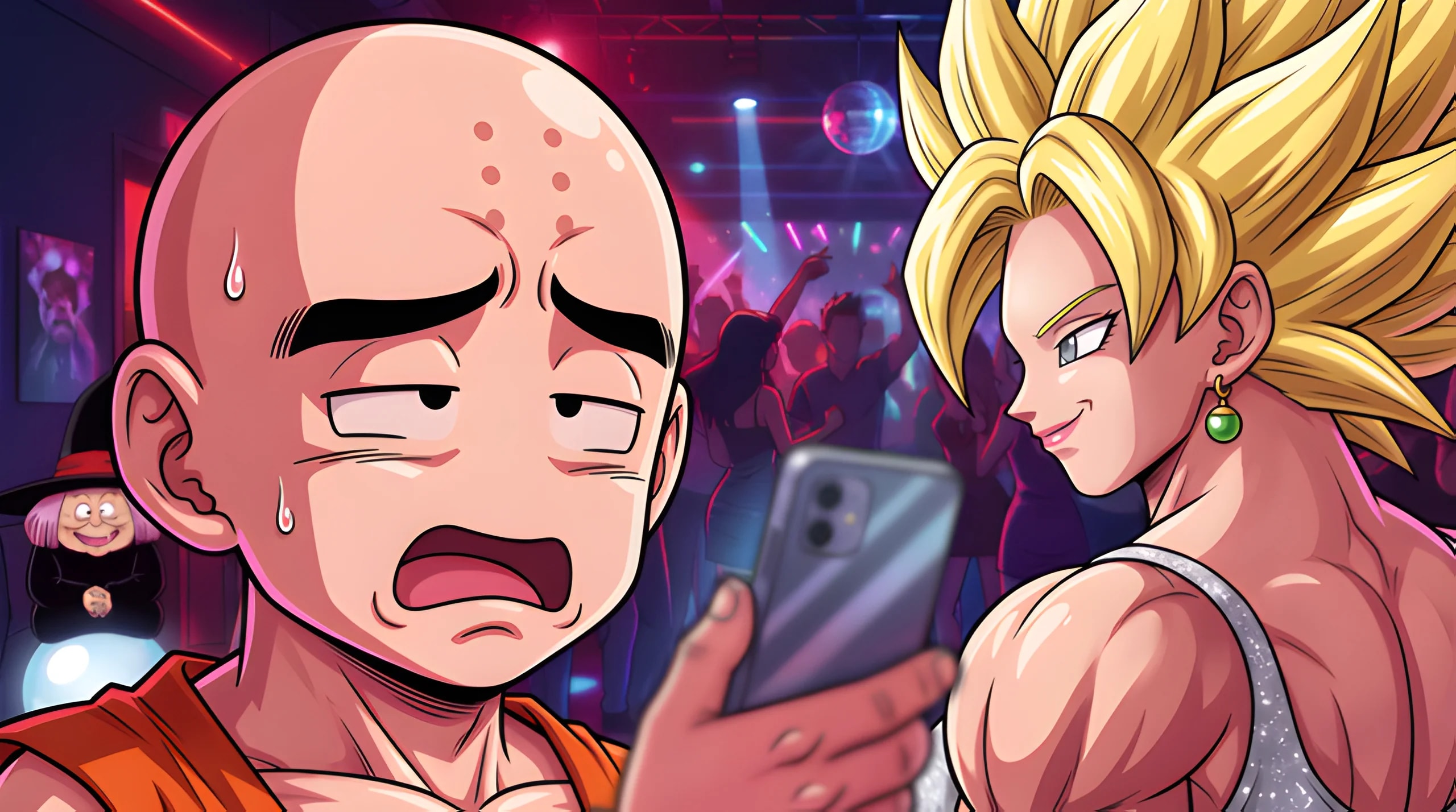
Krillin's on the Tinder: How the Ultimate Short King Survived the Height Filter
Tinder built a height filter. Dragon Ball built a five foot legend. What happened when we sent the ultimate short king into the modern dating hellscape....
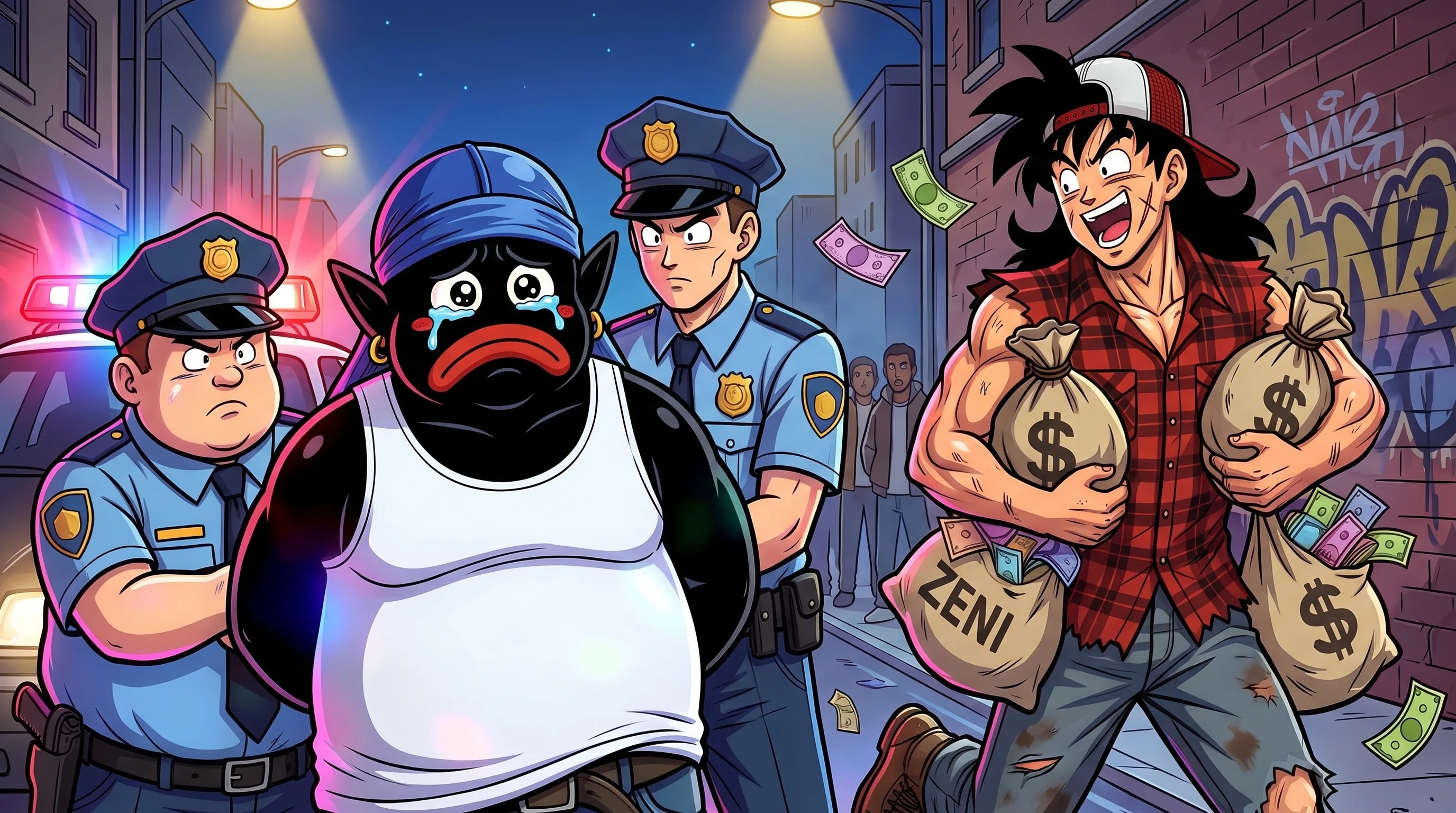
Infinite Zeni Glitch: When Yamcha Never Pays and Mr. Popo Always Does
The internet found an infinite money glitch. So did Yamcha. A smooth R&B track about the easiest money in the Dragon Ball world and the one man who keeps paying for it....
Frequently Asked Questions
What is Dragon Ball Heroes: Ultimate Mission?
is a card-based fighting game that is a portable-port of the arcade game Dragon Ball Heroes. It was released in Japan for the handheld gaming console on February 28, 2013. Its sequel, Dragon Ball Heroes: Ultimate Mission 2, was released in 2014.
When was Dragon Ball Heroes: Ultimate Mission released?
Dragon Ball Heroes: Ultimate Mission was released in 2013. It was developed by Dimps and published by Bandai Namco.
What is Dragon Ball Heroes: Ultimate Mission about?
Dragon Ball Heroes: Ultimate Mission is a card-based fighting game for the Nintendo 3DS that brings the Dragon Ball Heroes arcade experience to portable hardware. Players assemble a deck of five cards and position them on the lower touch screen, with the resulting battle playing out on the upper display. Actions including the Charge Impact are performed by manipulating the stylus intuitively on the portable device, translating the physical gesture-based play of the arcade cabinet into a handheld context.
Who developed Dragon Ball Heroes: Ultimate Mission?
Dragon Ball Heroes: Ultimate Mission was developed by Dimps. The game was published by Bandai Namco in 2013.
Who published Dragon Ball Heroes: Ultimate Mission?
Dragon Ball Heroes: Ultimate Mission was published by Bandai Namco. The game was developed by Dimps and released in 2013.
Sources & Information
Looking for more on Dragon Ball Heroes: Ultimate Mission? The Dragon Ball Wiki on Fandom has a dedicated page with community notes.
View on FandomThis content is original writing by Daddy Jim Headquarters based on the Dragon Ball anime series, manga, and official materials. Episode and chapter references are cited where applicable.
Character and scene imagery on this site is original artwork by Daddy Jim Headquarters, not screenshots or licensed imagery. Official cover art is used on three types of pages for editorial commentary:
- Movie pages: theatrical posters and key visuals, credited to Toei Animation and Shueisha.
- Game pages: official box art, credited to Bandai Namco, Atari, and other publishers.
- Manga chapter pages: Jump Comics volume covers, credited to Shueisha and Akira Toriyama.
Browse our episode guides:
Official resources:
Help Us Keep This Wiki Accurate
Daddy Jim Headquarters maintains this encyclopedia. If you spot an error, a translation issue, or something that doesn't look right, let us know.