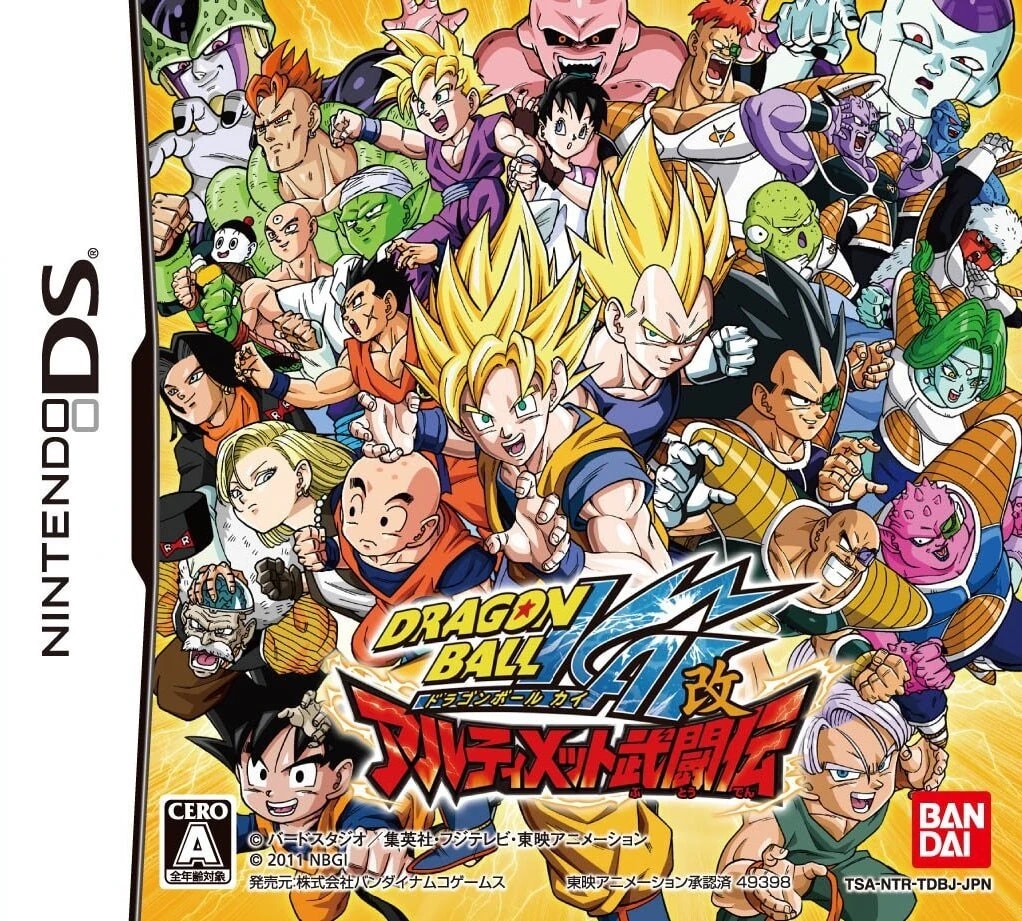
Dragon Ball Kai: Ultimate Butōden
GameDragon Ball Kai: Ultimate Butōden アルティメット武闘伝|Doragon Bōru Kai Arutimetto Butōden|lit. Dragon Ball Revised: Ultimate Armed Struggle Legend}} is a fighting video game based on the anime series Dragon Ball Kai. It was released only in Japan on February 3, 2011, for the Nintendo DS. Dragon Ball Kai: Ultimate Butōden features the return of the Butōden series since the 1997 game Dragon Ball GT: Final Bout.
Gameplay & Controls
Dragon Ball Kai: Ultimate Butoden is a two-dimensional fighting game for the Nintendo DS based on the Dragon Ball Kai anime. The game marks the return of the Butoden series to active development after a gap of over fourteen years since Dragon Ball GT: Final Bout. Combat mechanics depart from some fighting game conventions by removing the ability to manually charge ki; instead, the ki gauge fills passively over the course of a fight. Super and Ultimate attacks can be triggered either through touch screen input or by executing directional commands on the control pad, providing players with two distinct input methods.
Ultimate attacks are resolved through a timing-based mini-game that determines whether the attack succeeds or fails, adding a skill-based layer to the most powerful offensive options. The game features no in-battle character transformations, instead presenting each fighter as a single discrete form, but compensates with a large roster of characters drawn across the Dragon Ball Z timeline covered by Dragon Ball Kai. The default control scheme maps light and heavy combo strings, parry, grab-and-throw, energy blast, and ki management to separate buttons, with full customization available for players who prefer alternate configurations.
The Story Mode covers the Dragon Ball Z narrative from the beginning of the Saiyan Saga through the conclusion of the Kid Buu Saga, faithfully reproducing the arc structure of the Dragon Ball Kai broadcast. A Versus Mode supports both CPU and multiplayer matches, with Nintendo DS systems connected together to enable head-to-head play in one-versus-one, two-versus-two, and three-versus-three formats via DS Multi-Card Play.

Characters & Story Coverage
Dragon Ball Kai: Ultimate Butoden fields a roster of characters drawn from the Dragon Ball Z cast as presented in the Dragon Ball Kai adaptation, including Goku in base, Super Saiyan, Super Saiyan 2, and Super Saiyan 3 forms, alongside Vegeta, Gohan at multiple age stages, Future Trunks, Piccolo, and the supporting cast of Z Warriors. Villains include Raditz, Nappa, the Ginyu Force, Frieza, Android 16, Android 17, Android 18, Dr. Gero, Cell, Broly, Majin Buu, Super Buu, and Kid Buu, covering the full antagonist lineup of the Kai series. Fusion fighters Super Gogeta and Super Vegito appear as unlockable additions alongside special entries such as Bardock and King Kai.
The inclusion of King Kai as a playable character is a notable quirk of the roster, as the character is not typically a combatant in the source material. Overall, the character selection prioritizes coverage of the canonical Dragon Ball Kai storyline over the kind of extensive "what-if" roster expansion seen in some other Dragon Ball DS titles of the period, making it one of the more story-faithful rosters in the handheld Dragon Ball game library.
Development & Context
Dragon Ball Kai: Ultimate Butoden was released exclusively in Japan on February 3, 2011, with no Western localization produced. The game was developed to coincide with the ongoing Dragon Ball Kai broadcast, which ran from 2009 to 2011 and remastered the Dragon Ball Z anime with tighter pacing and updated visuals. The game's release timing capitalized on the renewed public interest in the Dragon Ball Z storyline generated by the Kai rebroadcast.
The title's significance in franchise history is tied to its role as the first Butoden series entry since the 1997 PlayStation era, reviving a fighting game sub-brand that had lain dormant for over a decade. Though it never left Japan, it demonstrated that portable hardware remained a viable platform for traditional fighting game experiences within the Dragon Ball franchise.
Related Reading
See all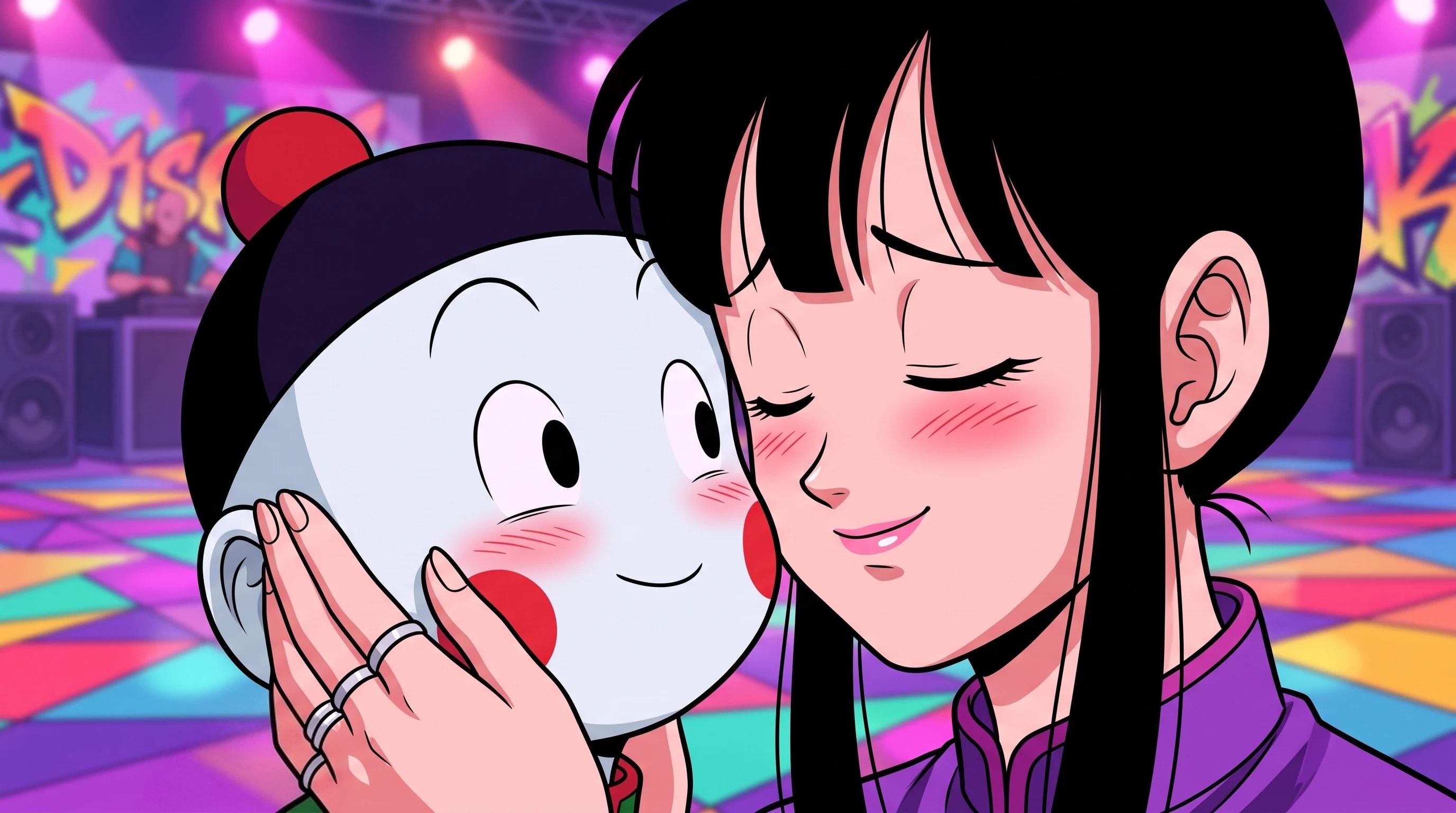
Chiaotzu is Chi-Chi's Boo: Why the Guy Who Never Wins Finally Wins
The least likely man in Dragon Ball just took the biggest win in our catalog. The story behind our R&B record about Chiaotzu, Chi-Chi, and a house Goku is never in....
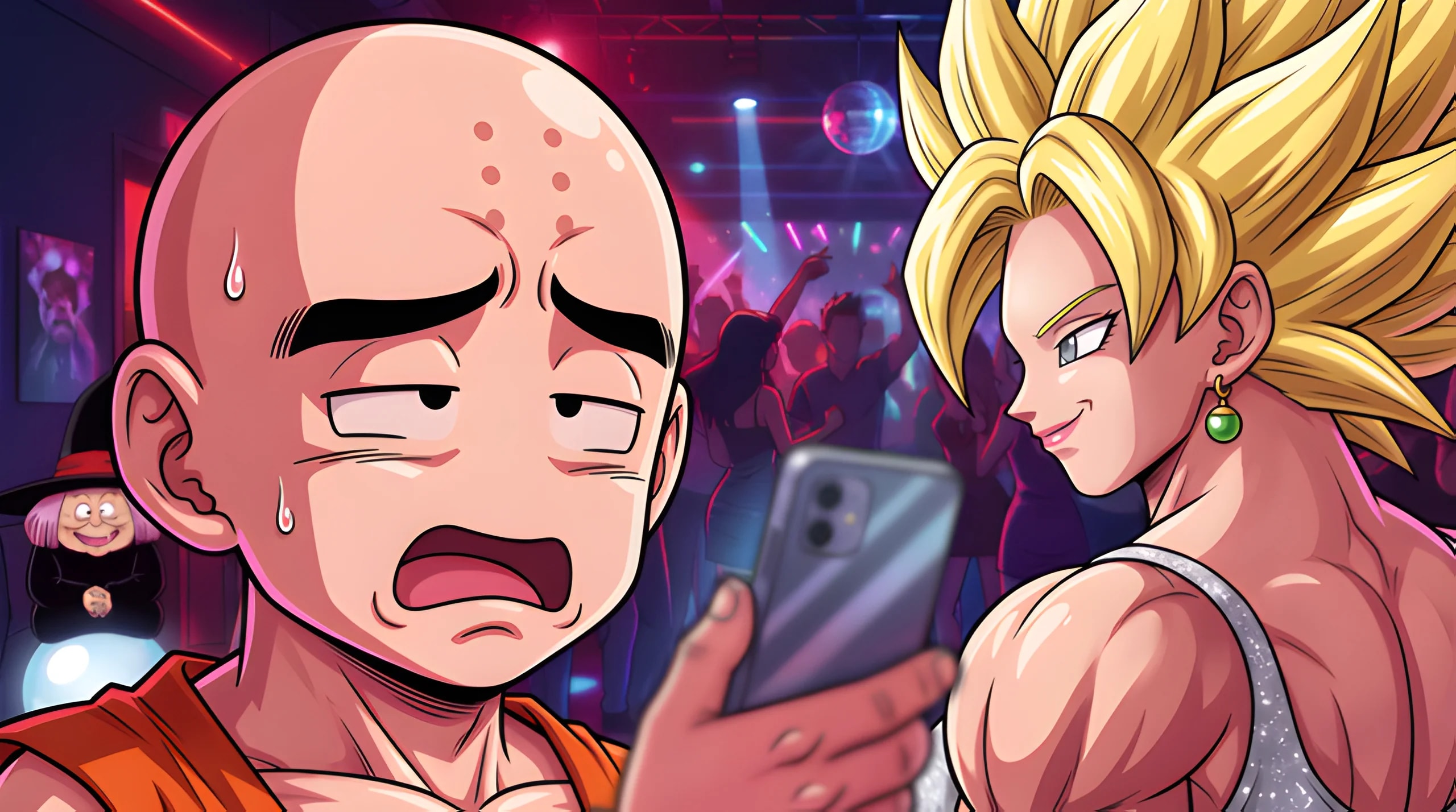
Krillin's on the Tinder: How the Ultimate Short King Survived the Height Filter
Tinder built a height filter. Dragon Ball built a five foot legend. What happened when we sent the ultimate short king into the modern dating hellscape....
Frequently Asked Questions
What is Dragon Ball Kai: Ultimate Butōden?
Dragon Ball Kai: lit. Dragon Ball Revised: Ultimate Armed Struggle Legend is a fighting video game based on the anime series Dragon Ball Kai. It was released only in Japan on February 3, 2011, for the Nintendo DS.
What is Dragon Ball Kai: Ultimate Butōden about?
Dragon Ball Kai: Ultimate Butoden is a two-dimensional fighting game for the Nintendo DS based on the Dragon Ball Kai anime. The game marks the return of the Butoden series to active development after a gap of over fourteen years since Dragon Ball GT: Final Bout. Combat mechanics depart from some fighting game conventions by removing the ability to manually charge ki; instead, the ki gauge fills passively over the course of a fight.
When was Dragon Ball Kai: Ultimate Butōden released?
Dragon Ball Kai: Ultimate Butōden was released in 2011. It was developed by Namco Bandai / Game Republic and published by Namco Bandai.
Who developed Dragon Ball Kai: Ultimate Butōden?
Dragon Ball Kai: Ultimate Butōden was developed by Namco Bandai / Game Republic. The game was published by Namco Bandai in 2011.
Who published Dragon Ball Kai: Ultimate Butōden?
Dragon Ball Kai: Ultimate Butōden was published by Namco Bandai. The game was developed by Namco Bandai / Game Republic and released in 2011.
Sources & Information
Looking for more on Dragon Ball Kai: Ultimate Butōden? The Dragon Ball Wiki on Fandom has a dedicated page with community notes.
View on FandomThis content is original writing by Daddy Jim Headquarters based on the Dragon Ball anime series, manga, and official materials. Episode and chapter references are cited where applicable.
Character and scene imagery on this site is original artwork by Daddy Jim Headquarters, not screenshots or licensed imagery. Official cover art is used on three types of pages for editorial commentary:
- Movie pages: theatrical posters and key visuals, credited to Toei Animation and Shueisha.
- Game pages: official box art, credited to Bandai Namco, Atari, and other publishers.
- Manga chapter pages: Jump Comics volume covers, credited to Shueisha and Akira Toriyama.
Browse our episode guides:
Official resources:
Help Us Keep This Wiki Accurate
Daddy Jim Headquarters maintains this encyclopedia. If you spot an error, a translation issue, or something that doesn't look right, let us know.