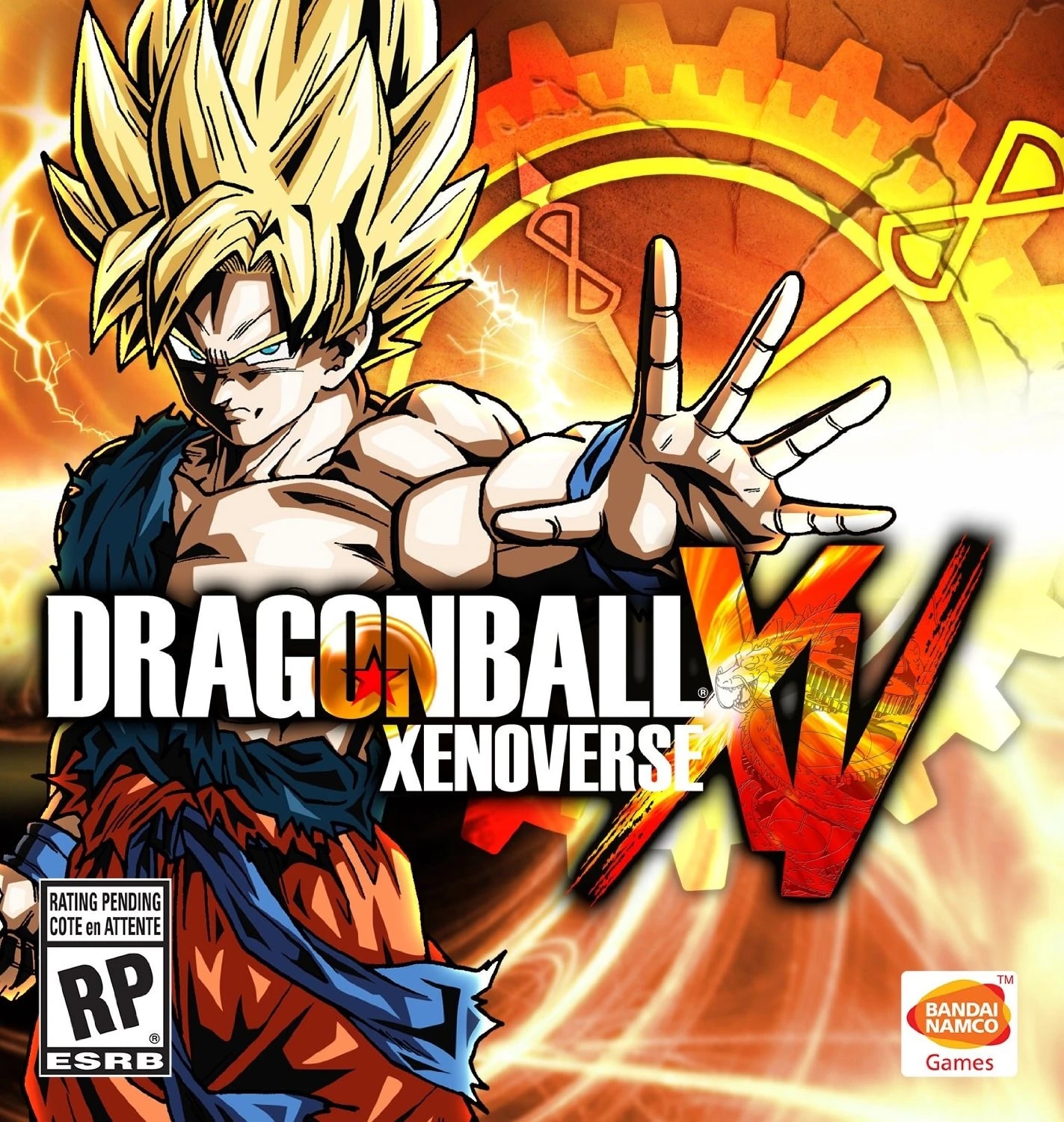
Dragon Ball Xenoverse
Gameis a fighting role-playing video game developed by Dimps and published by Bandai Namco Games. It is the first installment of the Xenoverse series and was released for PlayStation 3, PlayStation 4, Xbox 360, Xbox One, and Microsoft Windows (via ).
Combat Systems & World Structure
Dragon Ball Xenoverse is a fighting role-playing game developed by Dimps and published by Bandai Namco Games, released for PlayStation 3, PlayStation 4, Xbox 360, Xbox One, and PC via Steam. Players create a custom fighter from one of several available races, including Saiyan, Namekian, Majin, Earthling, and Frieza Race variants, and operate from the hub world of Toki Toki City as a Time Patroller tasked with preserving the integrity of Dragon Ball history. Battles take place across 3D destructible environments that allow free movement in very large arenas, with combat capable of transitioning from ground level into the air and underwater, reflecting the spatial flexibility of Dragon Ball Z's animated fights.
The combat supports up to 3-versus-3 encounters during certain parallel quests, with up to five characters potentially fielded on one side in specific scenarios. Characters run at high speed across environments, perform ki charge attacks, execute beam attacks and rush combos, and use ultimate techniques drawn from the Dragon Ball Z canon. Up to three skills and two ultimate attacks can be equipped at a time, allowing players to customize each character's move set for different combat scenarios. The game supports up to six players online simultaneously, creating a large-scale multiplayer environment within the Toki Toki City hub and mission framework.
The Parallel Quest mode provides a substantial catalog of replayable missions set within distorted versions of Dragon Ball history, each offering specific timeline scenarios and challenge conditions. Completing quests to specific standards unlocks additional characters, skills, and items, creating a progression system that rewards thorough engagement with the mission catalog. The Dragon Ball Pedometer feature tracks real-world steps to generate in-game rewards, integrating a physical activity component into the standard gaming loop.



Story Sagas & Original Narrative
Xenoverse covers a broad span of Dragon Ball Z and adjacent storylines through its Universe Mode, which presents distorted versions of canonical events that the player's custom Future Warrior must correct. The story progresses through nine primary sagas: the Saiyan Saga, the Return of the Saiyans Saga, the Ginyu Force Saga, the Frieza Saga, the Cell Saga, the Android Saga, the Majin Buu Saga, the God of Destruction Beerus Saga, and the Demon God Demigra Saga, with the Legendary Super Saiyan Saga as an additional arc. The Demigra Saga constitutes the game's original narrative contribution, introducing Demigra as a villain from the Time Realm who seeks to corrupt Dragon Ball history and escape his imprisonment, making him the primary antagonist of the game's story rather than a canonical Dragon Ball Z figure.
The time-travel framework allows the game to acknowledge Dragon Ball heroes as historical figures observed from the future rather than as present-day protagonists, creating a respectful distance between the player character and the iconic cast while still enabling meaningful interactions. The Future Warrior trains under mentors including Gohan, Piccolo, Krillin, and others, acquiring skills through these relationships that carry practical gameplay significance. The game's story maintains internal consistency with the Xenoverse universe's rules about timeline correction, which the sequel, Xenoverse 2, would subsequently build upon.
Launch Impact & Series Foundation
Dragon Ball Xenoverse launched in February 2015 and became one of the best-selling Dragon Ball games in franchise history, establishing the Xenoverse series as a commercially significant property alongside the Budokai and Budokai Tenkaichi lineages. The game's hybrid RPG and fighting structure, combined with its online multiplayer hub and deep character creation system, distinguished it from the more narrowly focused fighting games that had dominated the franchise's gaming output. The positive reception confirmed player appetite for Dragon Ball games with broader gameplay scope and persistent online components.
The original Xenoverse's commercial success directly motivated the development of Xenoverse 2, which expanded on essentially every system introduced in the first game. In retrospect, the original title is recognized as the foundation that established the conventions the sequel refined: the Time Patroller premise, Toki Toki City, the mentor system, the Parallel Quest structure, and the character creation framework all originated here. The game's multiplatform release across both the seventh and eighth console generations maximized its audience during a transitional hardware period, and its subsequent success on PC via Steam introduced the Xenoverse series to a significant audience that had not previously engaged with Dragon Ball games on console platforms.
Related Reading
See all
Krillin's on the Tinder: How the Ultimate Short King Survived the Height Filter
Tinder built a height filter. Dragon Ball built a five foot legend. What happened when we sent the ultimate short king into the modern dating hellscape....
Infinite Zeni Glitch: When Yamcha Never Pays and Mr. Popo Always Does
The internet found an infinite money glitch. So did Yamcha. A smooth R&B track about the easiest money in the Dragon Ball world and the one man who keeps paying for it....

Frequently Asked Questions
What is Dragon Ball Xenoverse?
is a fighting role-playing video game developed by Dimps and published by Bandai Namco Games. It is the first installment of the Xenoverse series and was released for PlayStation 3, PlayStation 4, Xbox 360, Xbox One, and Microsoft Windows (via ).
When was Dragon Ball Xenoverse released?
Dragon Ball Xenoverse was released in 2015. It was developed by Dimps and published by Bandai Namco.
What is Dragon Ball Xenoverse about?
Dragon Ball Xenoverse is a fighting role-playing game developed by Dimps and published by Bandai Namco Games, released for PlayStation 3, PlayStation 4, Xbox 360, Xbox One, and PC via Steam. Players create a custom fighter from one of several available races, including Saiyan, Namekian, Majin, Earthling, and Frieza Race variants, and operate from the hub world of Toki Toki City as a Time Patroller tasked with preserving the integrity of Dragon Ball history. Battles take place across 3D destructible environments that allow free movement in very large arenas, with combat capable of transitioning from ground level into the air and underwater, reflecting the spatial flexibility of Dragon Ball Z's animated fights.
Who developed Dragon Ball Xenoverse?
Dragon Ball Xenoverse was developed by Dimps. The game was published by Bandai Namco in 2015.
Who published Dragon Ball Xenoverse?
Dragon Ball Xenoverse was published by Bandai Namco. The game was developed by Dimps and released in 2015.
Sources & Information
Looking for more on Dragon Ball Xenoverse? The Dragon Ball Wiki on Fandom has a dedicated page with community notes.
View on FandomThis content is original writing by Daddy Jim Headquarters based on the Dragon Ball anime series, manga, and official materials. Episode and chapter references are cited where applicable.
Character and scene imagery on this site is original artwork by Daddy Jim Headquarters, not screenshots or licensed imagery. Official cover art is used on three types of pages for editorial commentary:
- Movie pages: theatrical posters and key visuals, credited to Toei Animation and Shueisha.
- Game pages: official box art, credited to Bandai Namco, Atari, and other publishers.
- Manga chapter pages: Jump Comics volume covers, credited to Shueisha and Akira Toriyama.
Browse our episode guides:
Official resources:
Help Us Keep This Wiki Accurate
Daddy Jim Headquarters maintains this encyclopedia. If you spot an error, a translation issue, or something that doesn't look right, let us know.