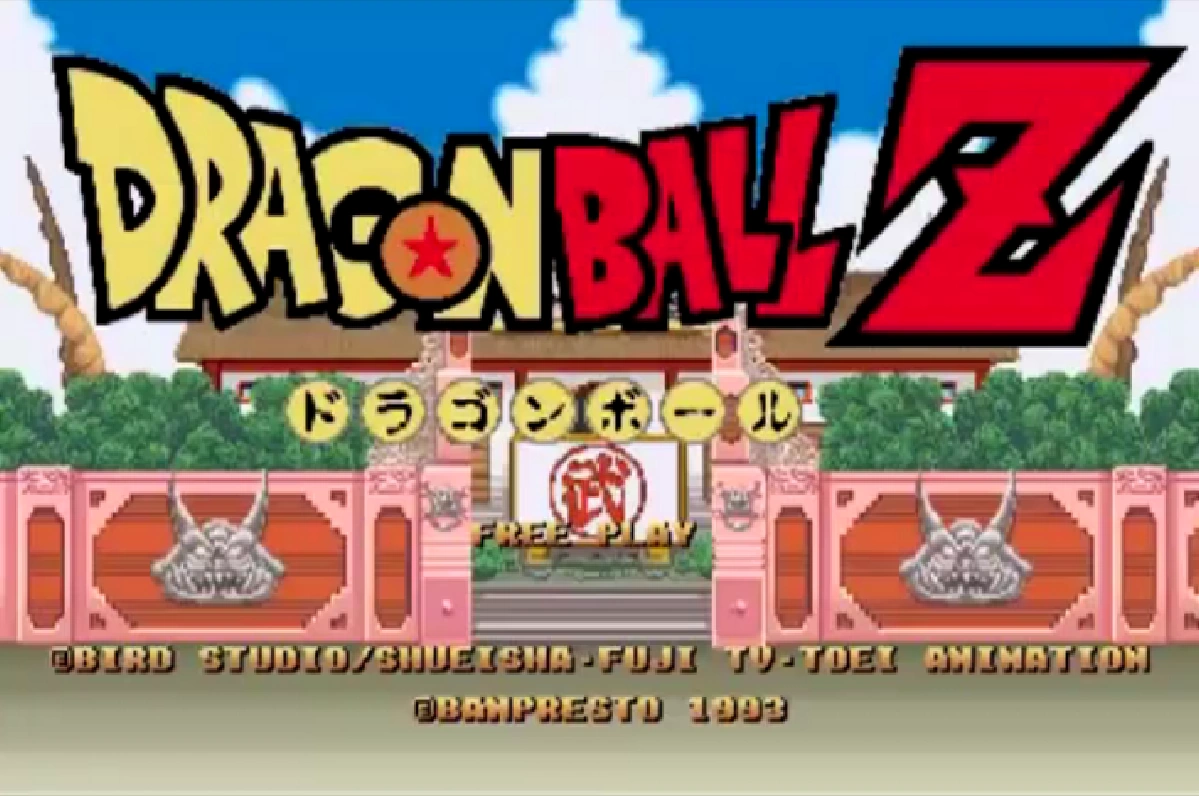
Cabinet Design & Combat System
Dragon Ball Z is a 1993 arcade fighting game designed and manufactured exclusively in Japan by Banpresto, representing the franchise's first dedicated arcade release and one of the earliest Dragon Ball Z interactive products available to consumers. The game's cabinet is visually distinctive, constructed in the shape of a robot with markings that reference Goku's orange gi, housing the monitor and control panel within this custom form factor. Four buttons and a joystick define the control scheme, producing a compact input vocabulary that maps to the game's attack, ki charge, and special move mechanics. This tactile setup delivers the responsive feedback expected of arcade hardware while keeping the learning curve accessible to players encountering Dragon Ball Z in interactive form for the first time.
Combat takes place across eight playable characters: Goku, Vegeta, Gohan, Piccolo, Frieza, Ginyu, Recoome, and Burter. A secret transformation mechanic unlocks Super Saiyan Goku as a bonus form when Goku wins five consecutive matches, at which point he remains transformed until the arcade machine resets or until he defeats Frieza in story mode. This unlock condition mirrors the logic of Goku's Super Saiyan transformation in the narrative, creating a moment of in-fiction resonance within the arcade mechanics. The eight-stage story mode traces the game's narrative through encounters set across locations spanning the series from the World Martial Arts Tournament to the surface of a dying Namek.
Battle stages include the World Martial Arts Tournament, the Lookout, Kame House, Gizard Wasteland, two Namek environments representing Moori's village and Guru's house, the interior and exterior of Frieza's spaceship, and the surface of dying Namek. This stage selection spans both the Earth and Namek arcs of Dragon Ball Z, providing environmental variety appropriate to the game's roster of characters drawn from both settings.


Characters & Story Content
The playable roster of Dragon Ball Z arcade reflects the Namek arc's roster of significant combatants, presenting the confrontation between Earth's heroes and the Ginyu Force and Frieza as the game's dramatic frame. Goku, Vegeta, Gohan, and Piccolo represent the Earth side, while Frieza, Ginyu, Recoome, and Burter stand in for the antagonist forces. The inclusion of Ginyu Force members Recoome and Burter as individual playable characters rather than lumping them into a single representative choice reflects an attention to the distinct visual and combat identities of the individual Ginyu Force members, making each a unique arcade fighter despite their shared organizational affiliation.
Non-playable characters populate the game's cutscenes and background interactions, including Chiaotzu, Tien Shinhan, Mr. Popo, Kami, Krillin, Turtle, Master Roshi, Yajirobe, various Namekian warriors, Moori, Dende, Cargo, Nail, and Frieza's soldiers. This supporting cast ensures narrative coherence between the stage-to-stage progression of the game's story mode, giving players context for why each fight is happening and who is present to witness or participate in the surrounding events. The Announcer character appears as a non-playable commentator presence, consistent with the World Martial Arts Tournament framing of the game's opening stages.


Historical Significance as First DBZ Arcade Game
The 1993 Dragon Ball Z arcade game holds historical significance as the franchise's inaugural arcade release, arriving at a moment when Dragon Ball Z was at the height of its popularity in Japanese popular culture and arcades were the primary venue for competitive and spectator gaming. Banpresto's choice to construct a custom robot-shaped cabinet rather than use a standard housing signals the commercial confidence the publisher had in the property's ability to draw attention in a crowded arcade environment, where visual distinction of the physical cabinet was as important as the quality of the game itself for attracting players.
The game predates the Budokai and Butoden console series that would come to define Dragon Ball Z gaming in subsequent years, making it a foundational artifact of the franchise's interactive history. Its limited Japanese release means that international awareness of the title is primarily among collectors and franchise historians rather than the broader gaming public, as the game never received a home console port or an international arcade distribution. Banpresto would follow this game with Dragon Ball Z 2: Super Battle in 1995, refining the arcade formula, but the 1993 original remains the starting point for Dragon Ball Z's presence in the Japanese arcade market.
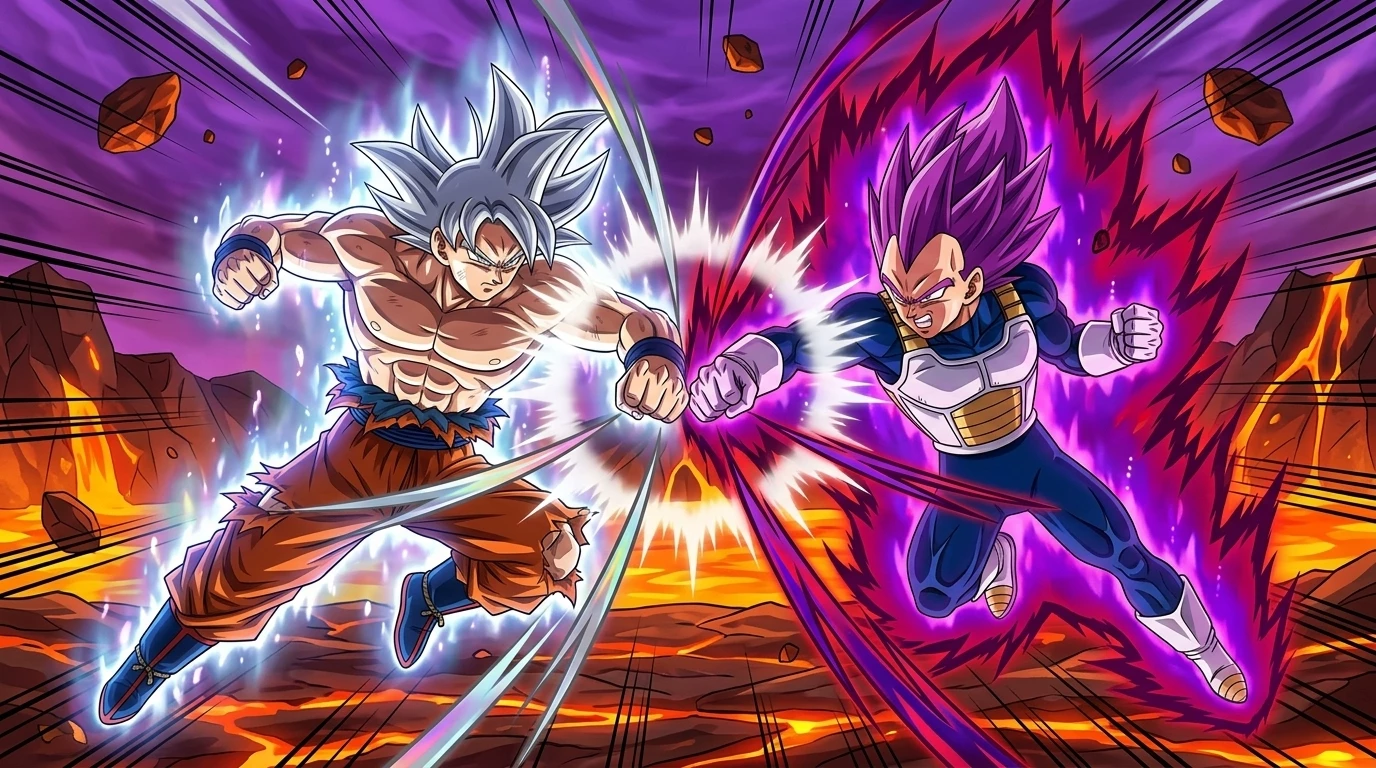
Sparking Zero May 26 Update Adds Demon World Stage and Reworks Transformation Healing
May 27, 2026Bandai Namco shipped a free Dragon Ball: Sparking Zero update on May 26, 2026 that introduces a new Demon World stage, overhauls transformation healing, and confirms the Daima Character Pack and Shallot DLC for release on June 27, 2026....
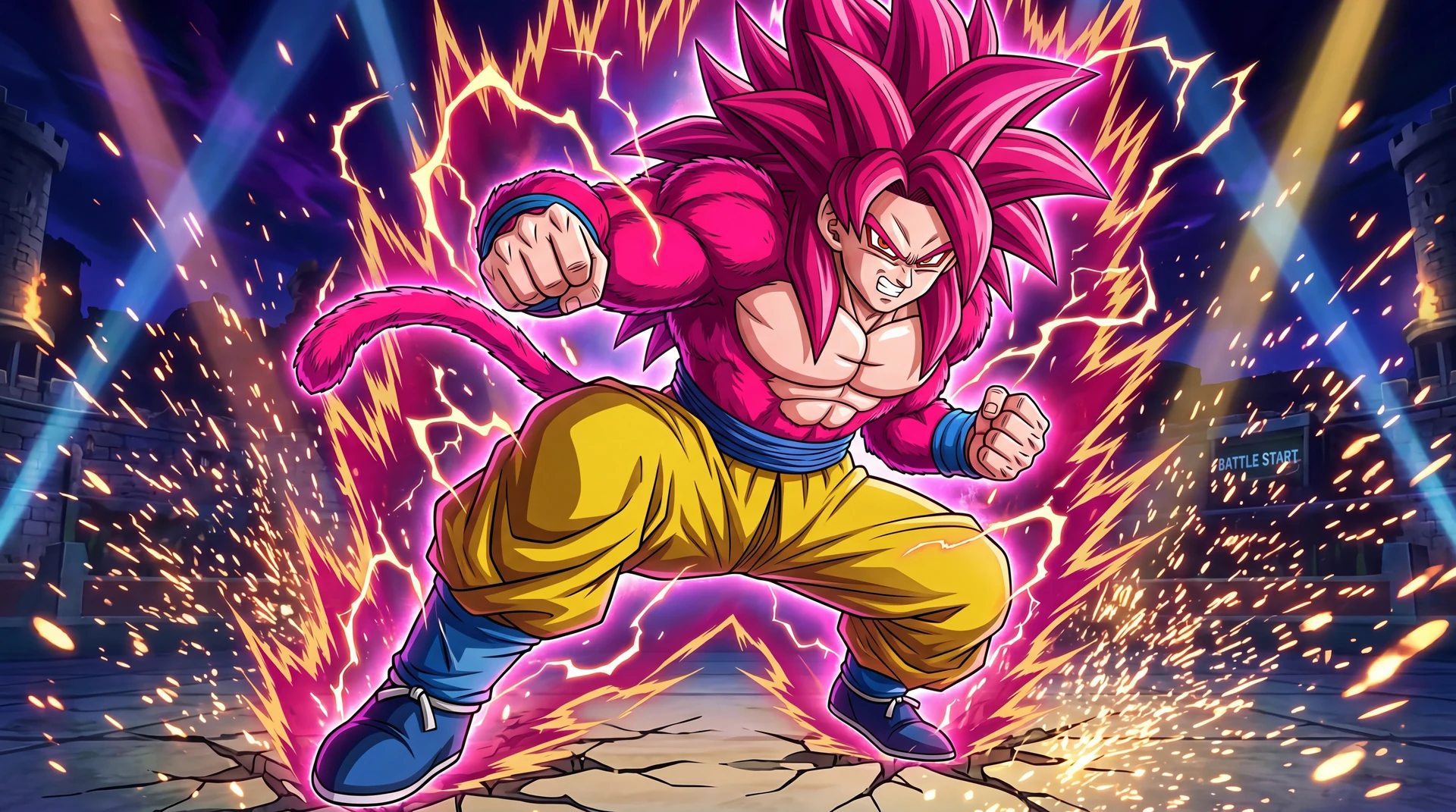
Dragon Ball FighterZ Adds Super Saiyan 4 Goku From Daima
May 25, 2026Dragon Ball FighterZ added Super Saiyan 4 Goku, the form featured in the Daima anime, as DLC on April 22, 2026. The 2018 fighting game is still getting new content nearly eight years on....
Dragon Ball Sparking Zero Super Limit-Breaking NEO DLC Adds 30 Plus Fighters for Summer 2026
Apr 20, 2026Bandai Namco and Spike Chunsoft unveiled the Super Limit-Breaking NEO expansion for Dragon Ball Sparking Zero at Battle Hour 2026. Summer 2026 release, 30 plus characters, four new stages, and a new solo mode....
Sources & Information
Looking for more on Dragon Ball Z (arcade game)? The Dragon Ball Wiki on Fandom has a dedicated page with community notes.
View on FandomThis content is original writing by Daddy Jim Headquarters based on the Dragon Ball anime series, manga, and official materials. Episode and chapter references are cited where applicable.
Character and scene imagery on this site is original artwork by Daddy Jim Headquarters, not screenshots or licensed imagery. Official cover art is used on three types of pages for editorial commentary:
- Movie pages: theatrical posters and key visuals, credited to Toei Animation and Shueisha.
- Game pages: official box art, credited to Bandai Namco, Atari, and other publishers.
- Manga chapter pages: Jump Comics volume covers, credited to Shueisha and Akira Toriyama.
Browse our episode guides:
Official resources:
Dragon Ball Music by Daddy Jim Headquarters
Come listen to some Dragon Ball R&B.
Help Us Keep This Wiki Accurate
Daddy Jim Headquarters maintains this encyclopedia across 13 languages. If you spot an error, a translation issue, or something that doesn't look right, let us know.