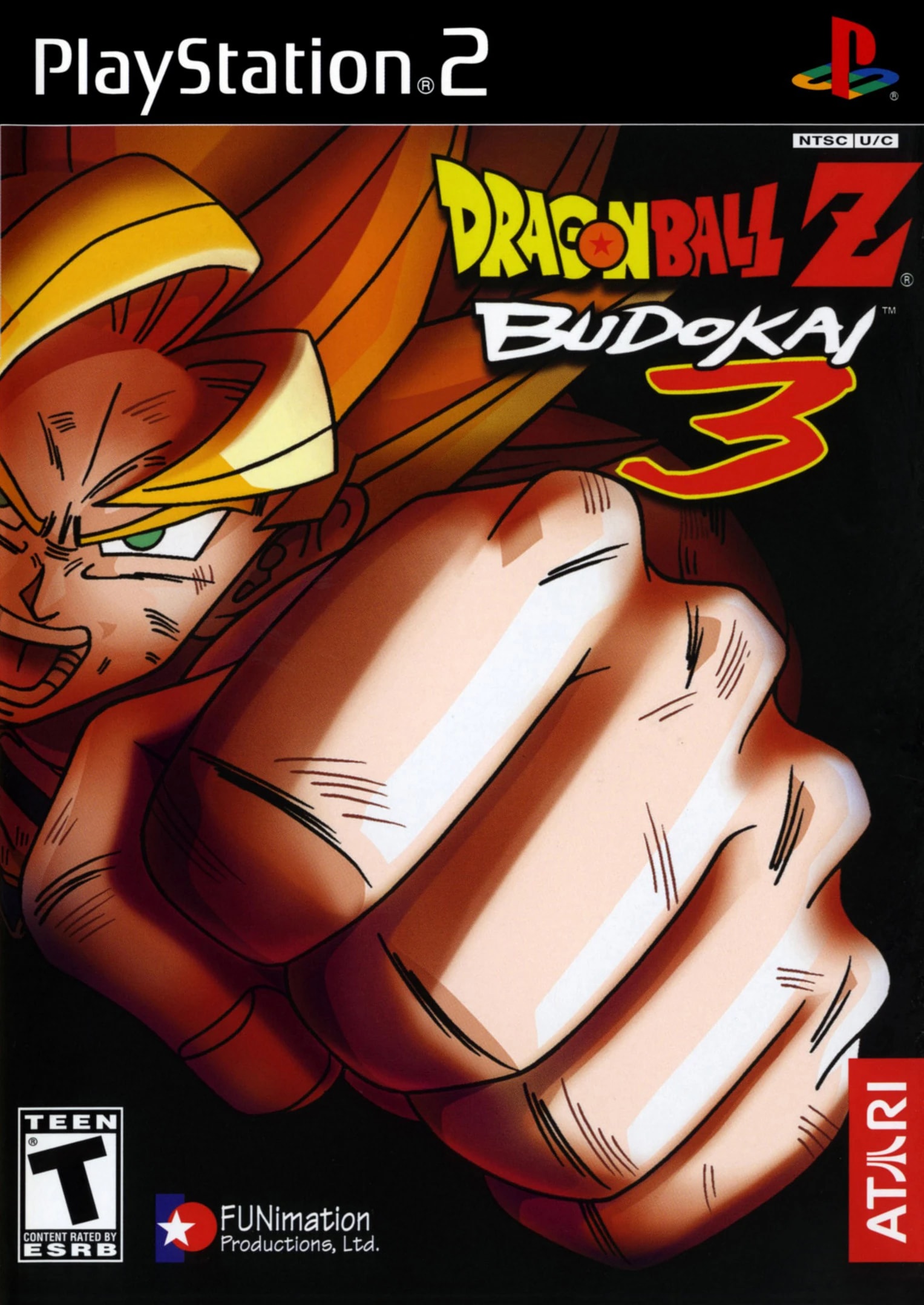
Dragon Ball Z: Budokai 3
GameDragon Ball Z: Budokai 3, released as Dragon Ball Z 3 in Japan, is a fighting video game based on the popular anime series Dragon Ball Z. It was developed by Dimps and published by Atari for the PlayStation 2, and released on November 16, 2004, in North America through standard release and a limited edition release, which included a DVD featuring a behind the scenes look on the game's development.
Gameplay
Dragon Ball Z: Budokai 3 is a fighting game developed by Dimps and published by Atari for PlayStation 2. The game uses cel-shaded graphics to replicate the visual style of the television series and introduces a substantially revised set of mechanics compared to its predecessors. The Ki system is rebuilt from the ground up: each character now has a base Ki level that the gauge naturally drifts toward, and exceeding it grants an attack bonus while falling below it provides a defense bonus. Transformations no longer drain Ki continuously but instead raise the base Ki level, making them more tactically stable.
Hyper Mode is a central new system engaged by pressing L2, turning the character red, cutting off the ability to block, and making them immune to weak melee attacks while slowly draining Ki. Hyper Mode gates access to Dragon Rushes and Ultimate Attacks. Dragon Rushes are three-stage chance encounters in which attacker and defender each select one of four buttons; if the defender matches the attacker's choice, the Rush ends early, but each stage reduces the number of available options. Ultimate Attacks require the player to stop a filling gauge at the right moment, with results ranging from a miss to full damage. Teleport Counters allow a character to vanish behind an attacker before impact at the cost of three Ki bars. Dodging replaces a portion of Ki to avoid attacks entirely when timed precisely. Free Flight adds vertical movement to backward dashes, opening aerial combat to all characters without requiring a knockback.
The story mode, Dragon Universe, places eleven selectable characters on a world map spanning Earth and Namek across the four main sagas. Choices made during each playthrough can alter subsequent runs, allowing Goku's Frieza fight to be replaced by a Cooler encounter or adding battles against Broly and Omega Shenron following the Buu arc. One hundred and eleven hidden Story Reenactment bonuses reward players who replicate specific in-universe conditions during non-optional battles.



Story and Content
Budokai 3 extends character and story coverage well beyond the previous two entries. Where Budokai 2 concluded with the Kid Buu Saga, Budokai 3 incorporates characters from the Dragon Ball films, Dragon Ball GT, and even the original Dragon Ball series. Super Saiyan 4 transformations for Goku and Vegeta are playable, and their respective ultimate attacks gain 10x Kamehameha and Final Shine Attack in that form, each hitting at 72 percent more power than the base versions. The fused Super Saiyan 4 Gogeta is also accessible.
Eleven characters are playable in Dragon Universe mode, each following their own path through the sagas. Completing certain story conditions unlocks additional characters, such as defeating Dr. Gero with Yamcha in the Android Saga to gain access to Gero himself. Once a playthrough is complete and all seven Dragon Balls are collected, Shenron grants the player a choice of Breakthrough Capsules, Memories Capsules, or Equipment Capsules. The World Tournament mode supports up to eight-player competition, with prize money scaled to match tournament difficulty and multiplied by Sparking Capsule bonuses.
The game's roster spans the full Dragon Ball franchise timeline. Kid Goku, original Dragon Ball fighters, GT-era characters, movie villains, and transformed variants from across the animated timeline are all present. Skill tray customization carries over from the previous entries, and items equipped from the tray can be used once per fight with various effects including health recovery and temporary Ki Blast immunity.

Reception and Legacy
Budokai 3 is widely regarded as the strongest entry in the Budokai series and one of the most accomplished Dragon Ball fighting games of its generation. Critics praised the revised Ki system, the depth of Dragon Universe's branching replayability, and the expanded roster as improvements that addressed the shortcomings of Budokai 2. The game sold well across all launch regions and received additional editions with expanded content, including alternate costumes and Japanese voice support, that were not present in the original North American release.
A Greatest Hits version incorporating these extras was subsequently published in North America. Both Budokai and Budokai 3 were remastered in HD as part of the 2012 Dragon Ball Z: Budokai HD Collection for PlayStation 3 and Xbox 360, which also replaced Kenji Yamamoto's original scores following a plagiarism dispute. Budokai 3 remains a touchstone for discussions of the fighting game franchise, frequently cited as the standard against which later Dragon Ball fighting games are measured.
Related Reading
See all
Krillin's on the Tinder: How the Ultimate Short King Survived the Height Filter
Tinder built a height filter. Dragon Ball built a five foot legend. What happened when we sent the ultimate short king into the modern dating hellscape....

Infinite Zeni Glitch: When Yamcha Never Pays and Mr. Popo Always Does
The internet found an infinite money glitch. So did Yamcha. A smooth R&B track about the easiest money in the Dragon Ball world and the one man who keeps paying for it....


Frequently Asked Questions
What is Dragon Ball Z: Budokai 3?
Dragon Ball Z: Budokai 3, released as Dragon Ball Z 3 in Japan, is a fighting video game based on the popular anime series Dragon Ball Z. It was developed by Dimps and published by Atari for the PlayStation 2, and released on November 16, 2004, in North America through standard release and a limited edition release, which included a DVD featuring a behind the scenes look on the game's development.
When was Dragon Ball Z: Budokai 3 released?
Dragon Ball Z: Budokai 3 was released in 2004. It was developed by Dimps and published by Bandai / Atari.
What is Dragon Ball Z: Budokai 3 about?
Dragon Ball Z: Budokai 3 is a fighting game developed by Dimps and published by Atari for PlayStation 2. The game uses cel-shaded graphics to replicate the visual style of the television series and introduces a substantially revised set of mechanics compared to its predecessors. The Ki system is rebuilt from the ground up: each character now has a base Ki level that the gauge naturally drifts toward, and exceeding it grants an attack bonus while falling below it provides a defense bonus.
Who developed Dragon Ball Z: Budokai 3?
Dragon Ball Z: Budokai 3 was developed by Dimps. The game was published by Bandai / Atari in 2004.
Who published Dragon Ball Z: Budokai 3?
Dragon Ball Z: Budokai 3 was published by Bandai / Atari. The game was developed by Dimps and released in 2004.
Sources & Information
Looking for more on Dragon Ball Z: Budokai 3? The Dragon Ball Wiki on Fandom has a dedicated page with community notes.
View on FandomThis content is original writing by Daddy Jim Headquarters based on the Dragon Ball anime series, manga, and official materials. Episode and chapter references are cited where applicable.
Character and scene imagery on this site is original artwork by Daddy Jim Headquarters, not screenshots or licensed imagery. Official cover art is used on three types of pages for editorial commentary:
- Movie pages: theatrical posters and key visuals, credited to Toei Animation and Shueisha.
- Game pages: official box art, credited to Bandai Namco, Atari, and other publishers.
- Manga chapter pages: Jump Comics volume covers, credited to Shueisha and Akira Toriyama.
Browse our episode guides:
Official resources:
Help Us Keep This Wiki Accurate
Daddy Jim Headquarters maintains this encyclopedia. If you spot an error, a translation issue, or something that doesn't look right, let us know.