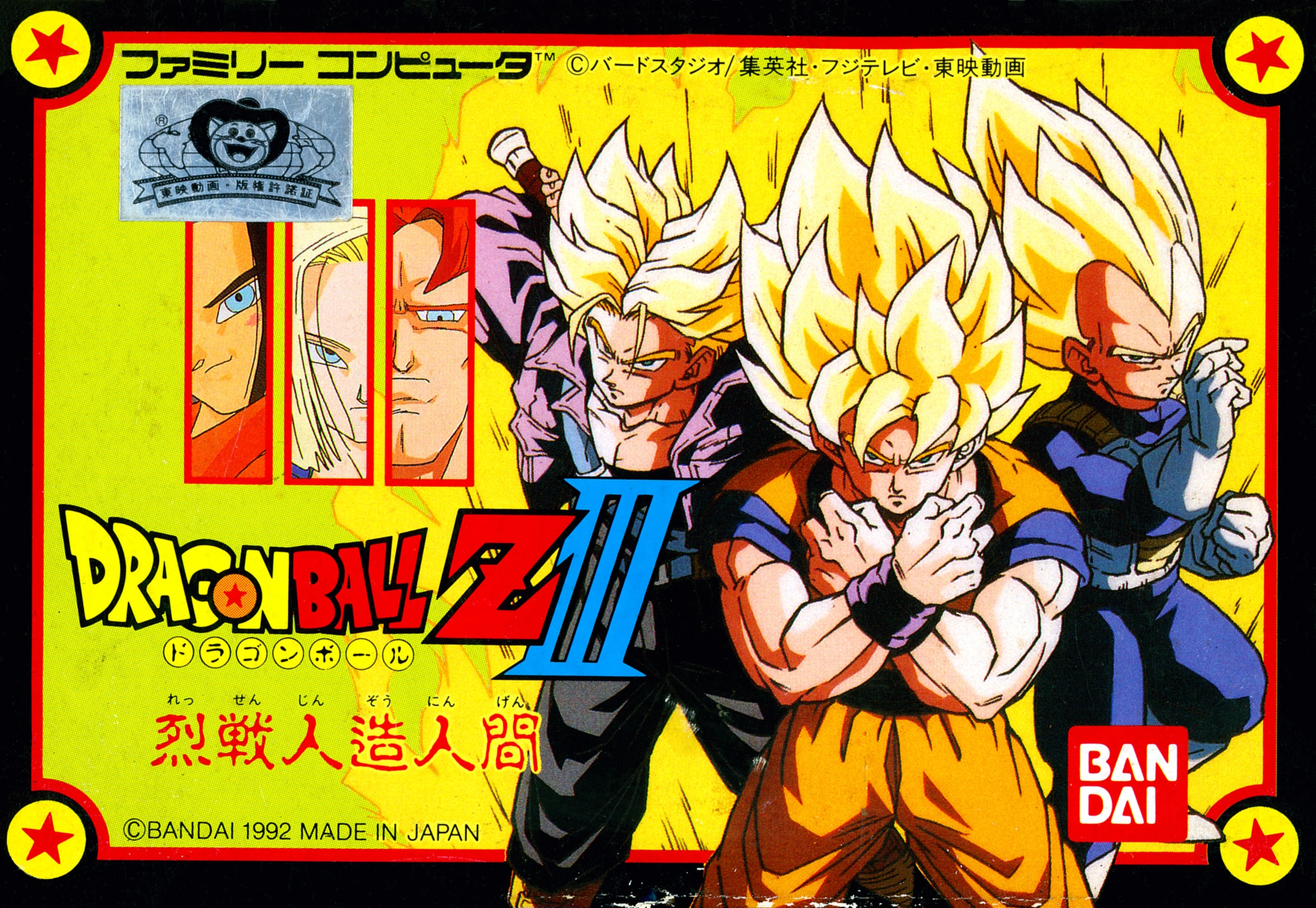
Dragon Ball Z III: Ressen Jinzōningen
Gameis a role playing video game based on the Dragon Ball series and released only in Japan by Bandai on August 7, 1992, for the .
Gameplay
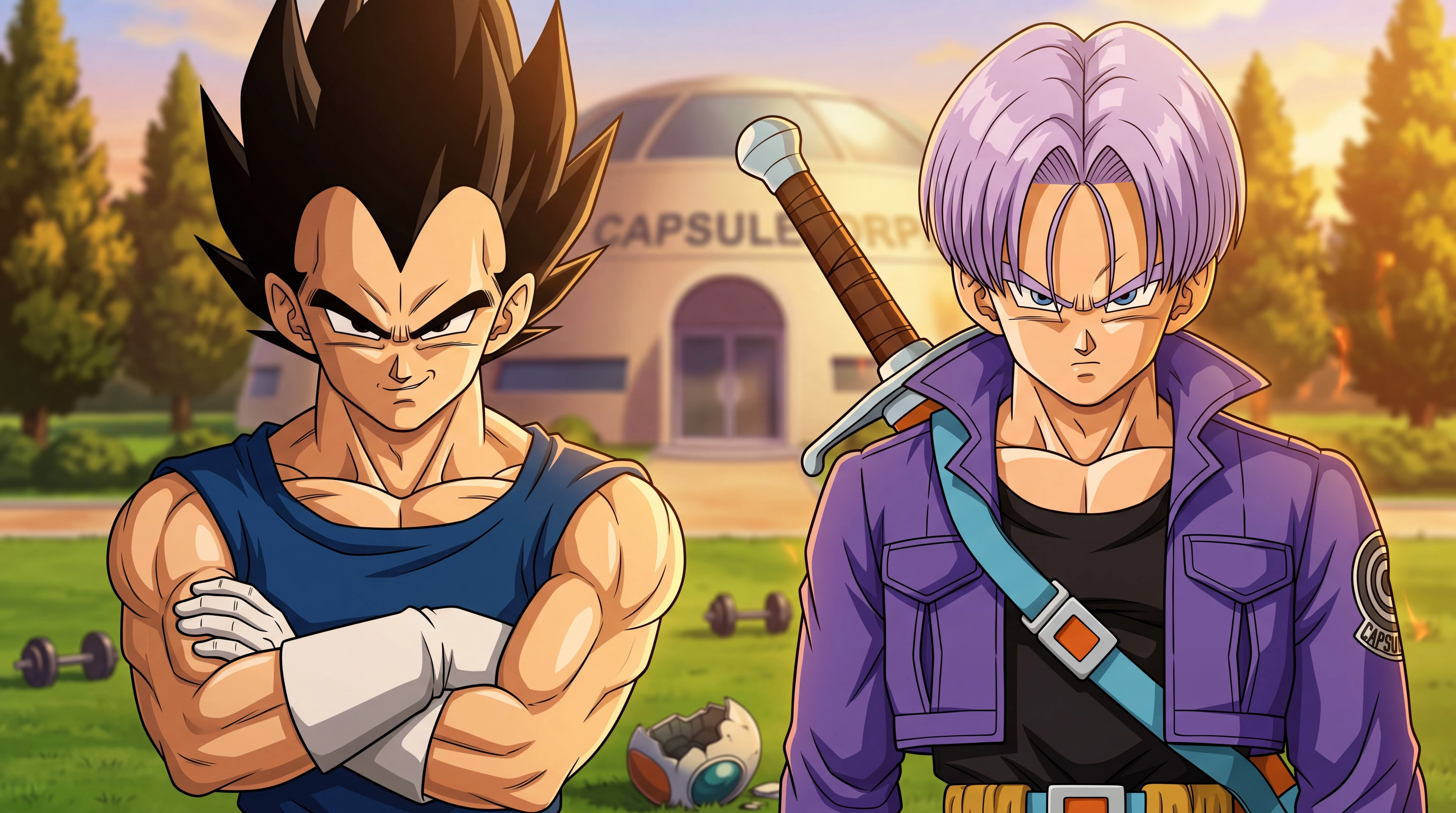
Dragon Ball Z III: Ressen Jinzoningen is a role-playing video game released exclusively in Japan by Bandai on August 7, 1992, for the Famicom. It is the third and final entry in the original Gokuden series, directly following Dragon Ball Z II: Gekishin Freeza. The playable roster expands to include Vegeta and Future Trunks in Super Saiyan form alongside the returning heroes from the previous games. Goku is also playable in both base and Super Saiyan states, reflecting his status at the opening of the game.
The narrative begins at the tail end of the Frieza Saga with Super Saiyan Goku in battle against Frieza's final form, then advances through the Trunks Saga and the Androids Saga before concluding at the Imperfect Cell Saga with Piccolo's battle against Imperfect Cell. Boss encounters progress from Frieza through Cooler and his Armored Squadron to the full Android lineup, culminating in Imperfect Cell. Enemy soldiers encountered throughout the game are original characters with unique designs and battle power ratings, filling the gaps between the named villains drawn from the anime and the Dragon Ball Z: Cooler's Revenge film.
Ressen Jinzoningen is the first game in the Gokuden series where power levels are not stated for the characters involved, marking a shift away from the numeric battle power framework that defined the earlier entries. Its sequel within the broader Gokuden lineage is Dragon Ball Z Side Story: Plan to Eradicate the Saiyans.


Story
The story of Ressen Jinzoningen opens with Goku confronting Frieza in his final form, providing immediate continuity from the conclusion of Gekishin Freeza. From there the narrative moves through the arrival of Future Trunks and the subsequent Android threat, introducing Mecha Frieza and King Cold as transitional antagonists before pivoting to the Android and early Cell arcs. The inclusion of characters from Dragon Ball Z: Cooler's Revenge, specifically Neizu, Dore, and Salza alongside Cooler himself, integrates film content into the main game's story.
Supporting characters Korin and King Kai appear at recurring intervals during the adventure, with Korin restoring the party's health at each visit and King Kai hosting a minigame segment. Dr. Gero appears alongside Android 19 but is not directly fought, consistent with his role in the anime as the architect of the Android project rather than a front-line combatant. Shenron and Porunga both appear as wish-granting elements at appropriate story junctures.

Legacy
Ressen Jinzoningen concluded the original Famicom Gokuden trilogy and represented the final Dragon Ball Z RPG produced for that hardware. Together with its two predecessors, it covered Dragon Ball Z from the Saiyan Saga through the early Cell Saga across three releases spanning 1990 to 1992, establishing an RPG serialization model that anticipated the episodic downloadable content strategies of later gaming eras. The inclusion of Cooler's Revenge material alongside the main anime storyline set a precedent for Dragon Ball games that would blend canonical and film content throughout subsequent console generations.
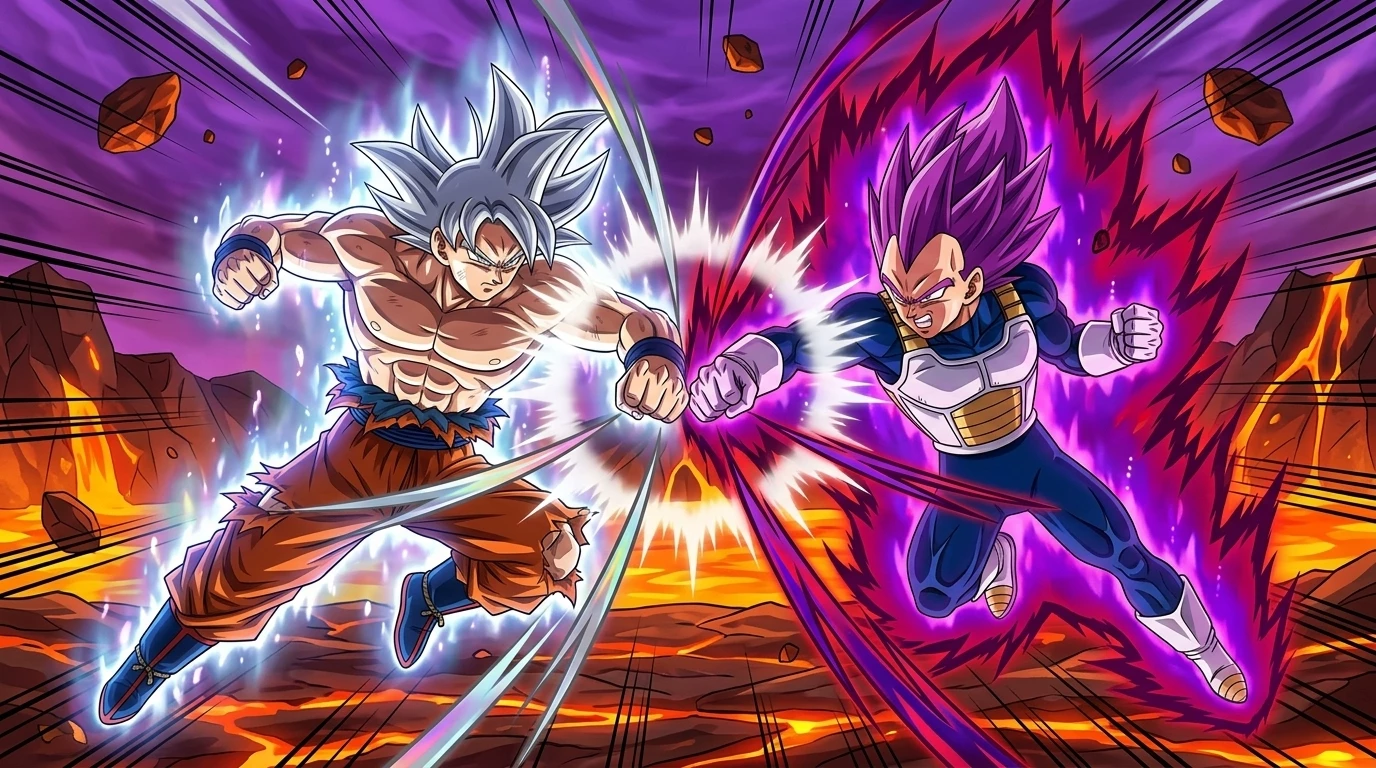
Sparking Zero May 26 Update Adds Demon World Stage and Reworks Transformation Healing
May 27, 2026Bandai Namco shipped a free Dragon Ball: Sparking Zero update on May 26, 2026 that introduces a new Demon World stage, overhauls transformation healing, and confirms the Daima Character Pack and Shallot DLC for release on June 27, 2026....
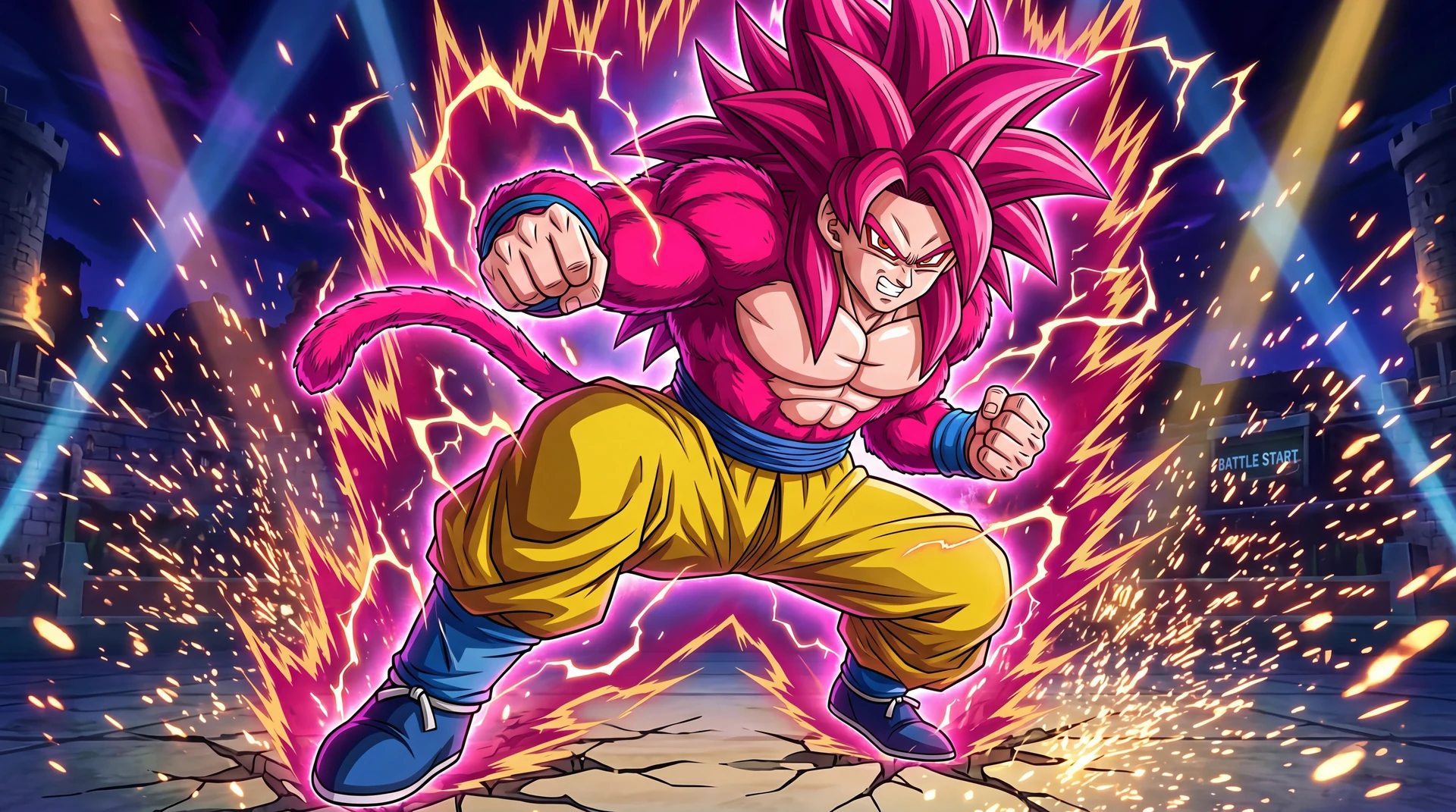
Dragon Ball FighterZ Adds Super Saiyan 4 Goku From Daima
May 25, 2026Dragon Ball FighterZ added Super Saiyan 4 Goku, the form featured in the Daima anime, as DLC on April 22, 2026. The 2018 fighting game is still getting new content nearly eight years on....
Dragon Ball Sparking Zero Super Limit-Breaking NEO DLC Adds 30 Plus Fighters for Summer 2026
Apr 20, 2026Bandai Namco and Spike Chunsoft unveiled the Super Limit-Breaking NEO expansion for Dragon Ball Sparking Zero at Battle Hour 2026. Summer 2026 release, 30 plus characters, four new stages, and a new solo mode....
Sources & Information
Looking for more on Dragon Ball Z III: Ressen Jinzōningen? The Dragon Ball Wiki on Fandom has a dedicated page with community notes.
View on FandomThis content is original writing by Daddy Jim Headquarters based on the Dragon Ball anime series, manga, and official materials. Episode and chapter references are cited where applicable.
Character and scene imagery on this site is original artwork by Daddy Jim Headquarters, not screenshots or licensed imagery. Official cover art is used on three types of pages for editorial commentary:
- Movie pages: theatrical posters and key visuals, credited to Toei Animation and Shueisha.
- Game pages: official box art, credited to Bandai Namco, Atari, and other publishers.
- Manga chapter pages: Jump Comics volume covers, credited to Shueisha and Akira Toriyama.
Browse our episode guides:
Official resources:
Dragon Ball Music by Daddy Jim Headquarters
Come listen to some Dragon Ball R&B.
Help Us Keep This Wiki Accurate
Daddy Jim Headquarters maintains this encyclopedia across 13 languages. If you spot an error, a translation issue, or something that doesn't look right, let us know.