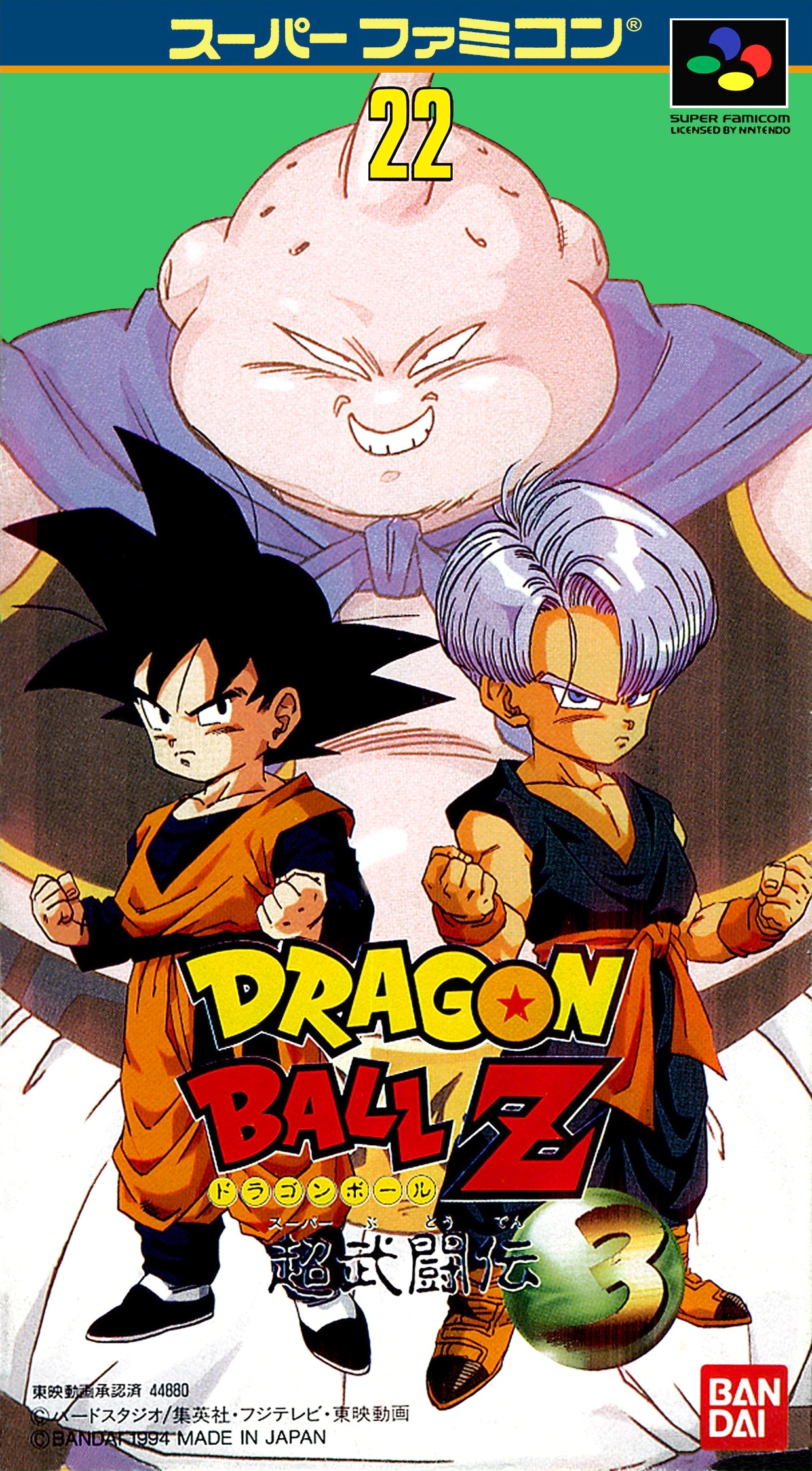
Dragon Ball Z: Super Butōden 3
GameDragon Ball Z: Super Butōden 3武闘伝3|Doragon Bōru Zetto Sūpā Butōden Surī|lit. Dragon Ball Z: Super Fighting Legend 3}}, called Dragon Ball Z: Ultime Menace in French and Dragon Ball Z: Chomutujeon in Korea, is a fighting game released for Super Famicom on September 29, 1994, in Japan and on January 25, 1995 in France and Spain. It is the third installment in the Butōden series.
Gameplay
Dragon Ball Z: Super Butoden 3 is a 2D fighting game released for the Super Famicom on September 29, 1994, in Japan and in January 1995 in France and Spain. It is the third installment in the Butoden series and features ten playable characters rooted in the Majin Buu Saga. Notable among the roster changes compared to the previous entry, the game includes characters such as Majin Buu, Dabura, Supreme Kai, Majin Vegeta, and Super Saiyan Goten, reflecting the story arc it draws from. A hidden tenth character, Future Trunks, is accessible through a cheat code.
Unlike its predecessors in the Butoden series, Super Butoden 3 does not include a dedicated Story Mode. The Tournament Mode effectively doubles as the game's narrative through-line, with completion by a given character triggering the credit sequence as though that fighter has been crowned champion of the tournament. This structural choice represents a significant departure from Super Butoden 2, which had built its reputation largely on its branching story content.
Ki charging is notably faster in Super Butoden 3 than in Super Butoden 2, requiring only a couple of seconds compared to the several seconds needed in the prior game. This change accelerates the pace of matches by reducing the time players spend in accumulation states, allowing fights to move more freely between offense and defense.


Content and Characters
Super Butoden 3's roster is built around the Majin Buu Saga cast, bringing characters from the later chapters of Dragon Ball Z into the Butoden fighting system for the first time. Super Saiyan Goku, Super Saiyan Goten, Majin Buu, Super Saiyan Trunks, Majin Vegeta, Super Saiyan Gohan, Supreme Kai, Dabura, and Android 18 make up the nine standard characters. The presence of characters like Dabura and Supreme Kai alongside fan favorites from earlier sagas gives the roster a distinctive flavor tied to the specific story arc it represents.
The game draws its characters from a period of Dragon Ball Z that had not yet concluded in Japan at the time of its release, as the Majin Buu Saga was still ongoing in the manga and anime. This meant Super Butoden 3 was providing interactive access to story content that audiences were still experiencing in serialized form, adding a sense of currency to its roster choices. The Tournament Mode framework, while simpler than the branching Story Mode of Super Butoden 2, still offers meaningful single-player progression through the character ladder.

Context and Legacy
Super Butoden 3 concludes the Super Famicom chapter of the Butoden series before the franchise moved to the Sega Saturn with Shin Butoden. Its French title, Dragon Ball Z: Ultime Menace, and Korean title, Dragon Ball Z: Chomutujeon, reflect the game's multi-territory release in Europe and Asia beyond its primary Japanese market. A brief animated introduction in which Goku and Vegeta exchange dialogue before their battle is referenced in Dragon Ball Super episode 70, giving the game a small piece of franchise legacy decades after its original release.
The decision to remove the Story Mode was a notable creative choice that defined Super Butoden 3 against the previous entry. While this made the game feel lighter in content, the faster ki charging and Majin Buu Saga roster gave it its own identity within the series. Super Butoden 3 is remembered as the end of an era for the Super Famicom Dragon Ball Z fighting games, closing out a three-game run that helped establish the franchise's fighting game tradition on Nintendo hardware.
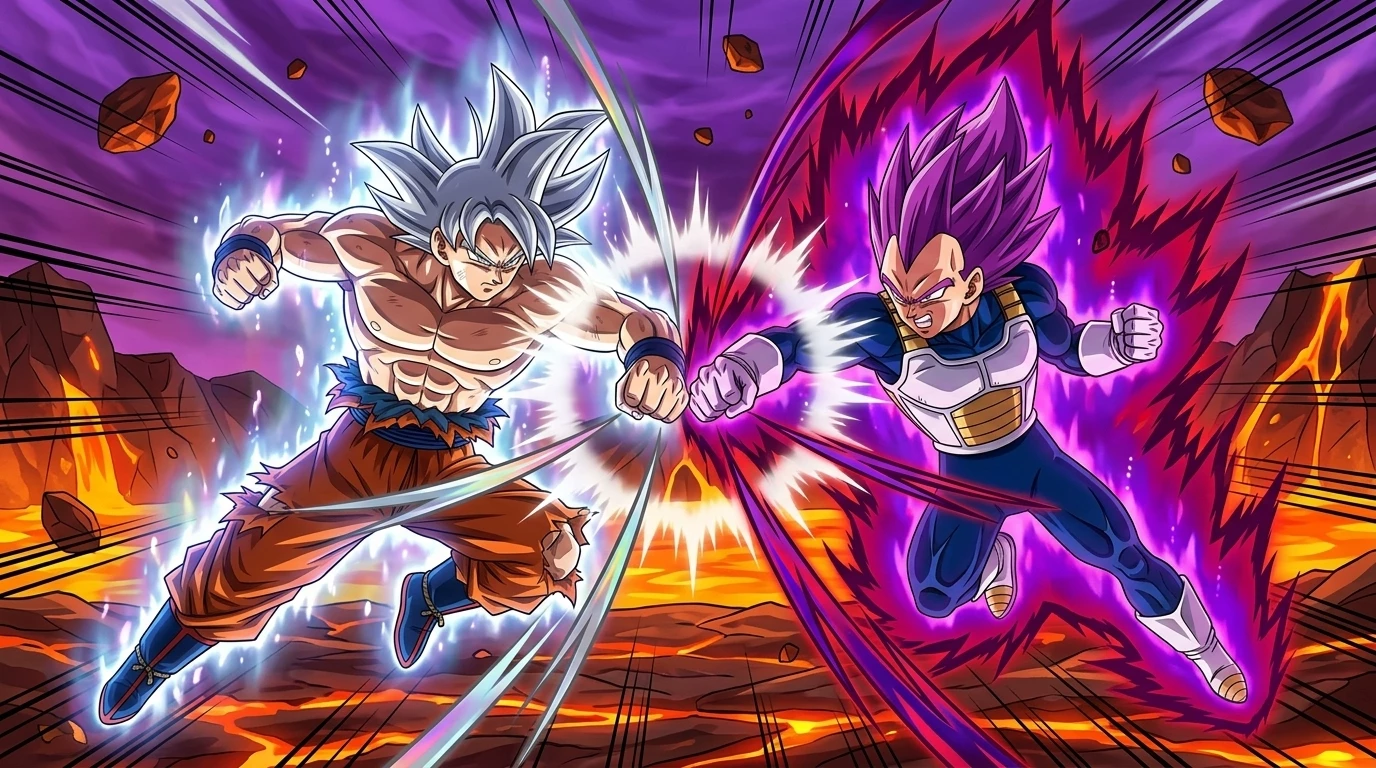
Sparking Zero May 26 Update Adds Demon World Stage and Reworks Transformation Healing
May 27, 2026Bandai Namco shipped a free Dragon Ball: Sparking Zero update on May 26, 2026 that introduces a new Demon World stage, overhauls transformation healing, and confirms the Daima Character Pack and Shallot DLC for release on June 27, 2026....
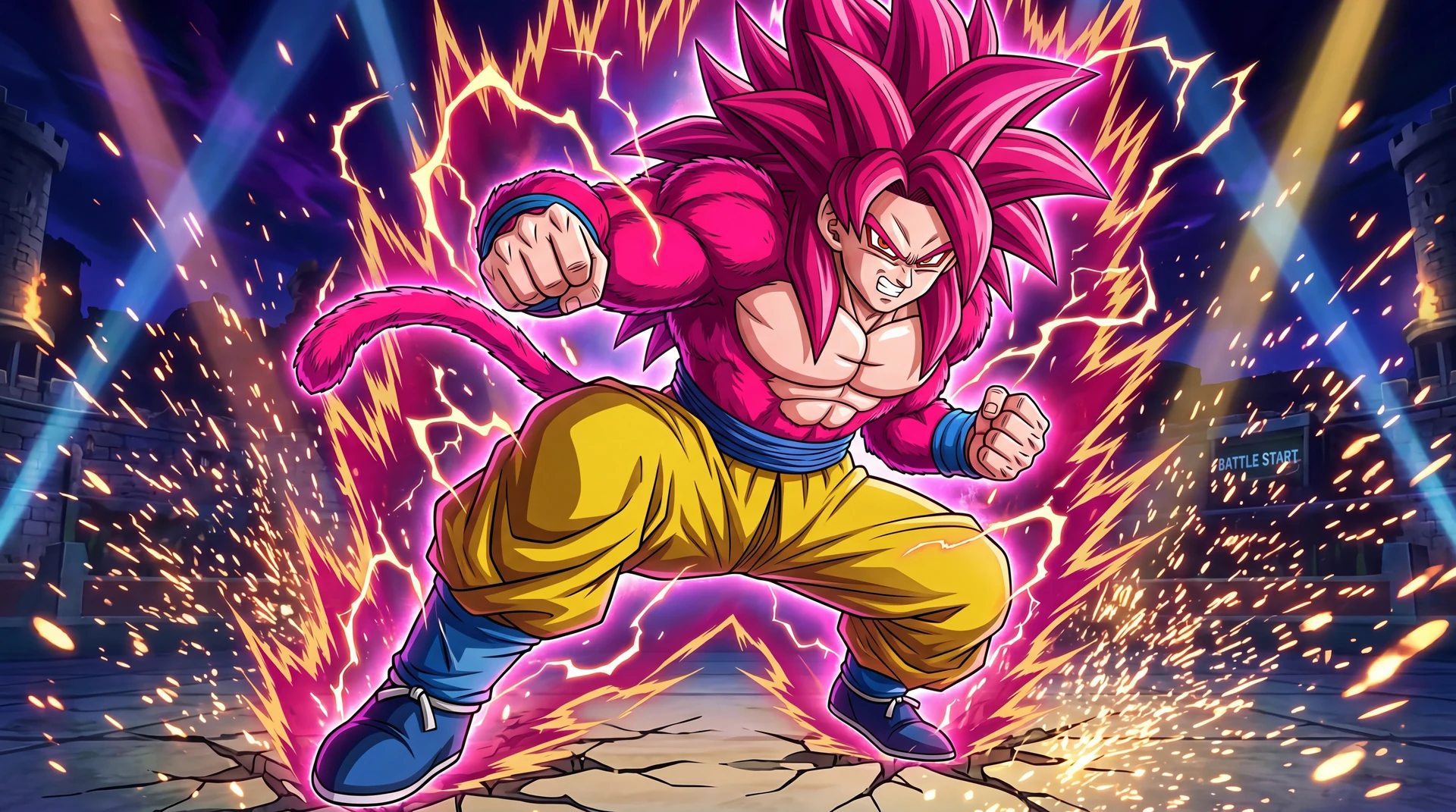
Dragon Ball FighterZ Adds Super Saiyan 4 Goku From Daima
May 25, 2026Dragon Ball FighterZ added Super Saiyan 4 Goku, the form featured in the Daima anime, as DLC on April 22, 2026. The 2018 fighting game is still getting new content nearly eight years on....
Dragon Ball Sparking Zero Super Limit-Breaking NEO DLC Adds 30 Plus Fighters for Summer 2026
Apr 20, 2026Bandai Namco and Spike Chunsoft unveiled the Super Limit-Breaking NEO expansion for Dragon Ball Sparking Zero at Battle Hour 2026. Summer 2026 release, 30 plus characters, four new stages, and a new solo mode....
Sources & Information
Looking for more on Dragon Ball Z: Super Butōden 3? The Dragon Ball Wiki on Fandom has a dedicated page with community notes.
View on FandomThis content is original writing by Daddy Jim Headquarters based on the Dragon Ball anime series, manga, and official materials. Episode and chapter references are cited where applicable.
Character and scene imagery on this site is original artwork by Daddy Jim Headquarters, not screenshots or licensed imagery. Official cover art is used on three types of pages for editorial commentary:
- Movie pages: theatrical posters and key visuals, credited to Toei Animation and Shueisha.
- Game pages: official box art, credited to Bandai Namco, Atari, and other publishers.
- Manga chapter pages: Jump Comics volume covers, credited to Shueisha and Akira Toriyama.
Browse our episode guides:
Official resources:
Dragon Ball Music by Daddy Jim Headquarters
Come listen to some Dragon Ball R&B.
Help Us Keep This Wiki Accurate
Daddy Jim Headquarters maintains this encyclopedia across 13 languages. If you spot an error, a translation issue, or something that doesn't look right, let us know.