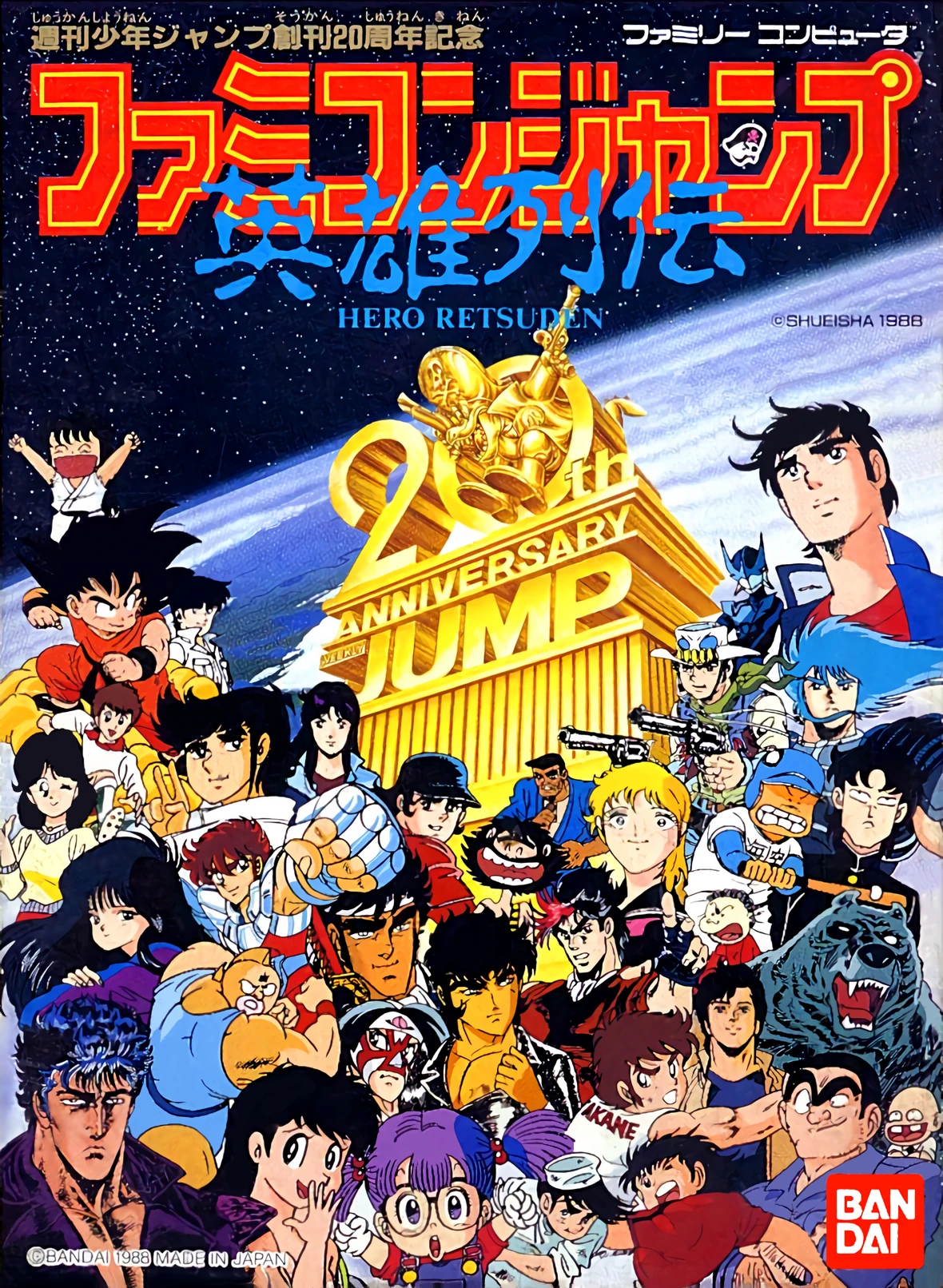
Famicom Jump: Hero Retsuden
GameFamicom Jump: Hero Retsuden is a Role-Playing Game for the published by Bandai on February 15, 1989. The game commemorates the twentieth anniversary of Shueisha's manga anthology Weekly Shōnen Jump. It is the first crossover video game that started to evolve the generation of crossover video games.
Gameplay
Famicom Jump: Hero Retsuden is a role-playing game developed for the Nintendo Famicom by Bandai and published on February 15, 1989. The game marks the twentieth anniversary of Shueisha's Weekly Shonen Jump and stands as one of the earliest crossover video games in the medium. Players navigate an overworld map where they encounter characters from across the Jump catalog, building a party and fighting enemies in turn-based battles.
Combat follows the conventions of classic RPGs, with the player selecting actions from a menu each turn. Heroes from different series carry their own unique signature abilities, allowing for varied strategies depending on the party composition. The central goal requires collecting all 16 heroic characters from the magazine's roster and deploying them against the assembled forces of Jump villainy. Exploration involves traveling between settings drawn from multiple serialized manga, each populated with NPCs and enemies rooted in their respective source material.
The game's battle system rewards knowledge of each hero's strengths and weaknesses, encouraging players to rotate party members strategically. Special moves tied to iconic attacks from series such as Dragon Ball and Fist of the North Star give combat a sense of spectacle tied to the source material. The overworld connects multiple themed areas, each serving as a compressed representation of the manga it references.


Story
The story brings together heroes and villains from the full breadth of Weekly Shonen Jump's publishing history, spanning both past and contemporary titles of the time. A single protagonist wanders a shared world and gradually unites the 16 iconic Jump heroes in order to stand against an alliance of the most powerful villains ever featured in the magazine. The central threat draws equally from the darkest corners of each represented series, forming a coalition that no single hero could defeat alone.
The narrative briefly follows the Commander Red Saga and the King Piccolo Saga from Dragon Ball, situating Son Goku within the broader crossover conflict. Other plotlines weave through sagas from additional Shonen Jump manga, giving each series a moment of focus within the shared story. Ryo Saeba of City Hunter and Goku share a notable encounter with a Battle Jacket Set early in the adventure, illustrating the collaborative spirit at the heart of the game. The resolution demands that all 16 heroes fight side by side against the combined villain faction.

Legacy
Famicom Jump: Hero Retsuden is widely recognized as the first major crossover video game to bring together characters from multiple serialized manga properties. Its release in 1989 established a template for the Jump crossover game subgenre that would continue for decades. The concept of assembling heroes from disparate series into a single playable roster has remained a defining feature of all subsequent Jump-branded titles.
Of the 16 playable heroes, Goku and Momotaro Tsurugi are the only two to return in the direct sequel, Famicom Jump II: Saikyō no Shichinin. Several characters, including Goku, Arale Norimaki, and Ryotsu Kankichi, would appear again in later crossover titles such as Jump Super Stars and Jump Ultimate Stars. The game is regarded as a historical milestone in both the Dragon Ball video game catalog and the broader history of licensed crossover gaming.
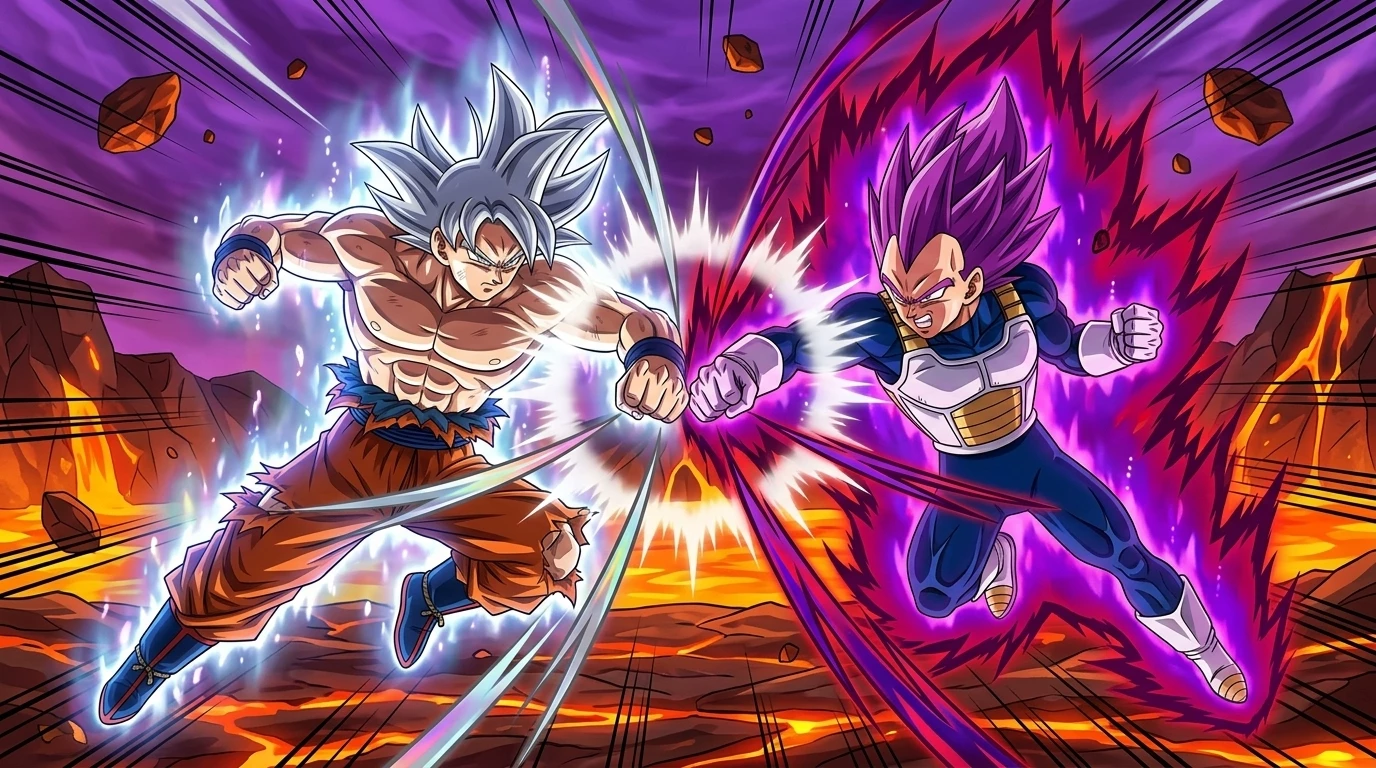
Sparking Zero May 26 Update Adds Demon World Stage and Reworks Transformation Healing
May 27, 2026Bandai Namco shipped a free Dragon Ball: Sparking Zero update on May 26, 2026 that introduces a new Demon World stage, overhauls transformation healing, and confirms the Daima Character Pack and Shallot DLC for release on June 27, 2026....
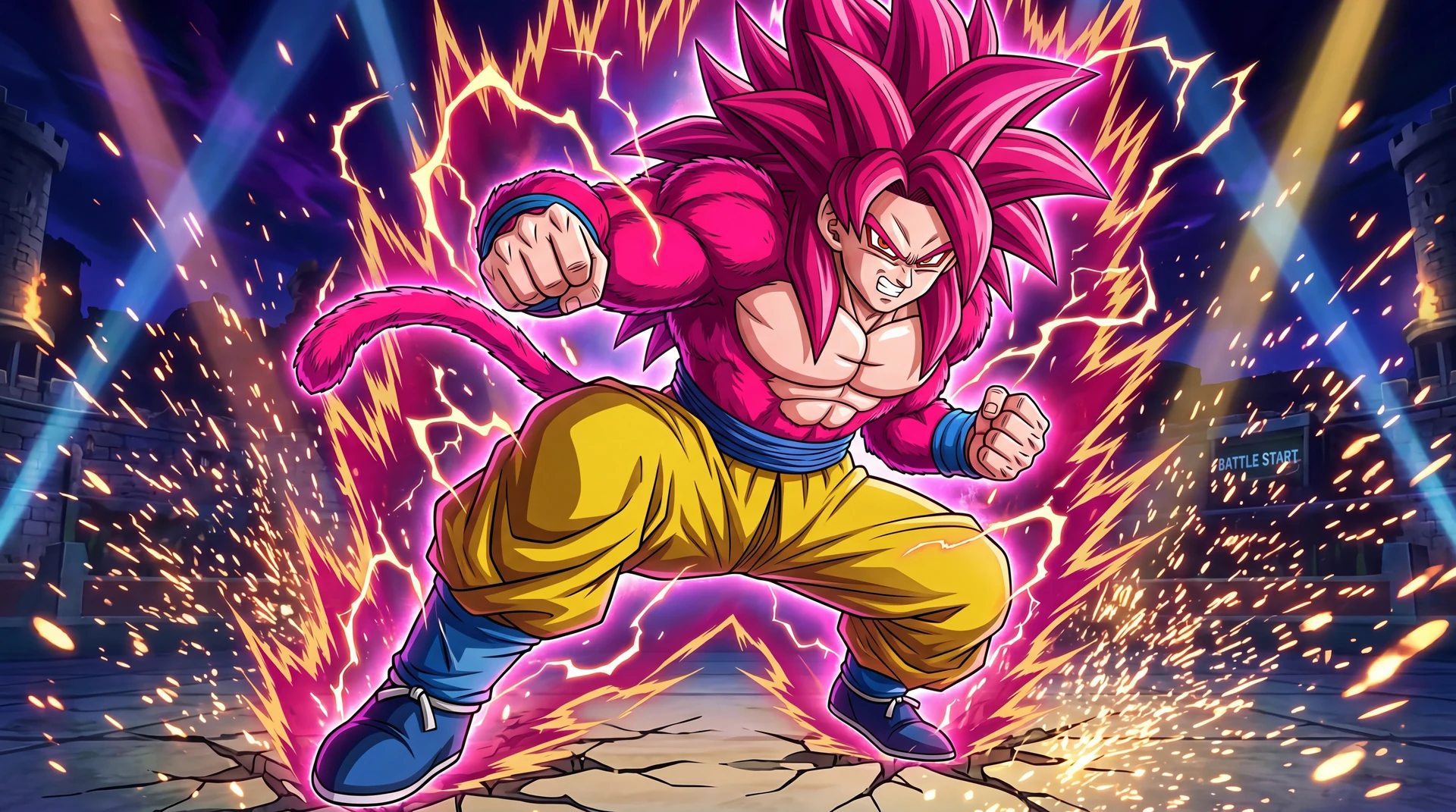
Dragon Ball FighterZ Adds Super Saiyan 4 Goku From Daima
May 25, 2026Dragon Ball FighterZ added Super Saiyan 4 Goku, the form featured in the Daima anime, as DLC on April 22, 2026. The 2018 fighting game is still getting new content nearly eight years on....
Dragon Ball Sparking Zero Super Limit-Breaking NEO DLC Adds 30 Plus Fighters for Summer 2026
Apr 20, 2026Bandai Namco and Spike Chunsoft unveiled the Super Limit-Breaking NEO expansion for Dragon Ball Sparking Zero at Battle Hour 2026. Summer 2026 release, 30 plus characters, four new stages, and a new solo mode....
Sources & Information
Looking for more on Famicom Jump: Hero Retsuden? The Dragon Ball Wiki on Fandom has a dedicated page with community notes.
View on FandomThis content is original writing by Daddy Jim Headquarters based on the Dragon Ball anime series, manga, and official materials. Episode and chapter references are cited where applicable.
Character and scene imagery on this site is original artwork by Daddy Jim Headquarters, not screenshots or licensed imagery. Official cover art is used on three types of pages for editorial commentary:
- Movie pages: theatrical posters and key visuals, credited to Toei Animation and Shueisha.
- Game pages: official box art, credited to Bandai Namco, Atari, and other publishers.
- Manga chapter pages: Jump Comics volume covers, credited to Shueisha and Akira Toriyama.
Browse our episode guides:
Official resources:
Dragon Ball Music by Daddy Jim Headquarters
Come listen to some Dragon Ball R&B.
Help Us Keep This Wiki Accurate
Daddy Jim Headquarters maintains this encyclopedia across 13 languages. If you spot an error, a translation issue, or something that doesn't look right, let us know.