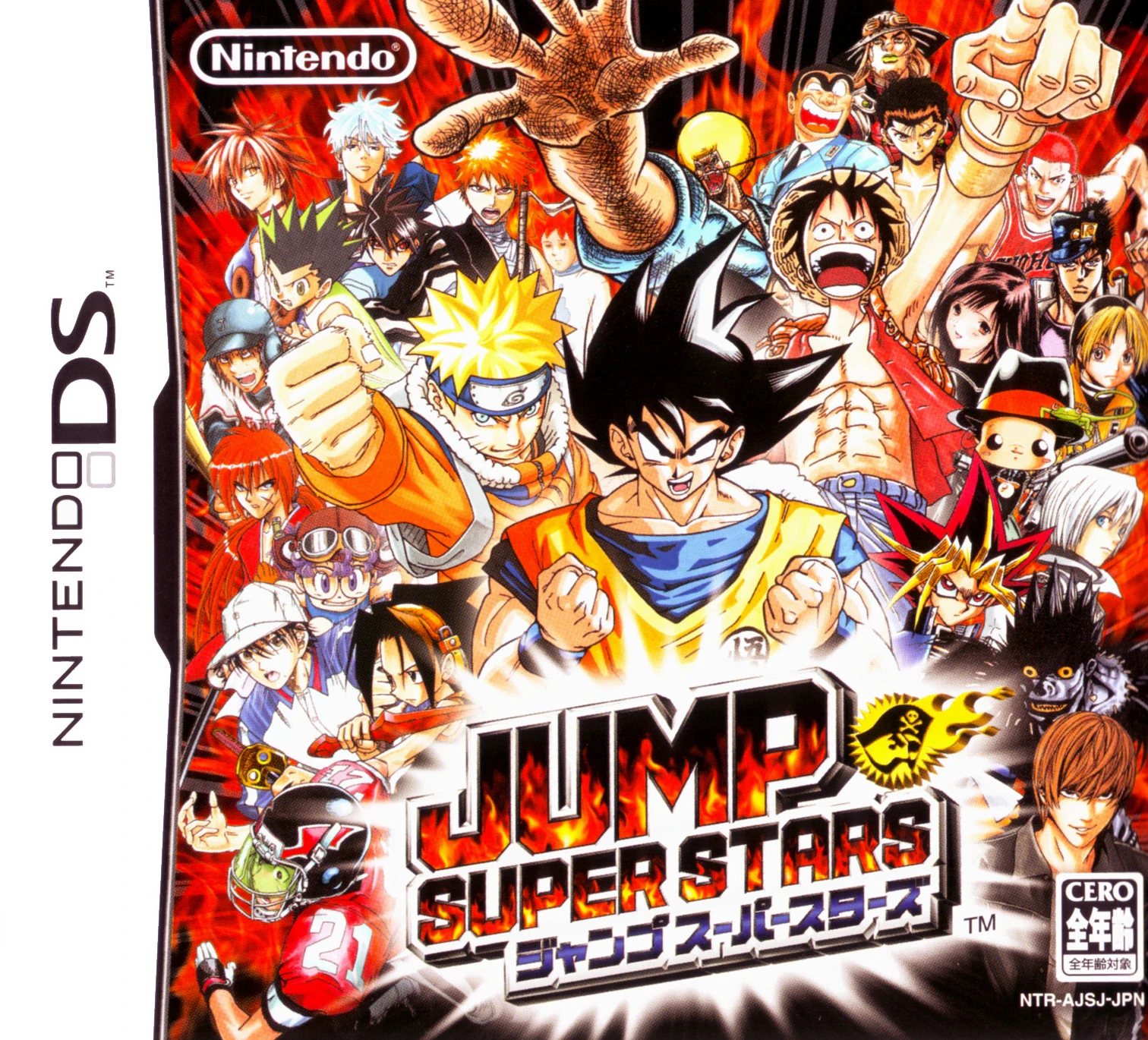
Jump Super Stars
GameJump Super Stars is a 2D fighting game developed by Ganbarion and published by Nintendo for the . The game was released on August 8, 2005, only in Japan and accompanied the release of a red Nintendo DS. Its sequel, Jump Ultimate Stars, was released in Japan on November 23, 2006.
Gameplay
Jump Super Stars is a 2D platform fighting game developed by Ganbarion and published by Nintendo for the Nintendo DS, released exclusively in Japan on August 8, 2005. The game features 160 characters from the Weekly Shonen Jump manga magazine, 34 of whom are fully playable in battle. Dragon Ball characters available include Goku, Vegeta, Gohan, Piccolo, Gotenks, Krillin, Goten, Trunks, Bulma, Kami, Nail, Dende, and Master Roshi. The gameplay draws heavy influence from the Super Smash Bros. series, with players competing on platform stages and knocking opponents off the screen to score eliminations.
The core mechanical innovation of Jump Super Stars is the koma deck system, operated on the Nintendo DS touch screen. Koma are panels representing characters, each occupying one to seven squares on a four-by-five grid at the bottom of the screen. Three types of koma exist: help koma, which occupy one square and provide passive stat boosts; support koma, which occupy two to three squares and briefly enter the battle to perform specific actions like attacking or healing; and battle koma, which occupy four to seven squares and represent the characters directly controlled by the player during combat. A valid deck requires at least one of each type, and players can store up to ten custom decks.
Adjacent koma placement creates ally boost effects, where compatible characters placed next to each other in the deck gain enhanced attributes. Battle koma characters can receive longer health bars or increased special gauge capacity through these pairings. Players can exchange decks with friends via DS wireless communication, though received decks cannot be edited. The game supports two to four players in multiplayer and includes over 75 single-player missions. On its first week of sale, the game moved over 220,000 copies in Japan.


Content
Jump Super Stars draws its roster from 27 different Weekly Shonen Jump series, offering characters from Dragon Ball, Bleach, Naruto, One Piece, Yu-Gi-Oh!, YuYu Hakusho, Hunter x Hunter, JoJo's Bizarre Adventure, Dr. Slump, and many additional titles. Each series contributes both playable battle koma characters and a variety of support and help koma representing secondary characters and iconic moments from that manga. The Dragon Ball series is among the most heavily represented, with multiple battle characters and a supporting cast of familiar faces available as lower-tier koma.
The game includes 32 stage locations, each designed around one of the represented manga series and featuring visual and mechanical elements drawn from that source material. These stages range from iconic Dragon Ball settings to environments from Naruto, One Piece, and other series. Each stage hosts its own distinct hazards and platform configurations. The breadth of represented series makes Jump Super Stars a comprehensive survey of Weekly Shonen Jump's catalog at the time of its release in 2005, covering titles from multiple decades of the magazine's history.

Legacy
Jump Super Stars was accompanied by the release of a special red Nintendo DS bundle, underlining its status as a marquee first-party Nintendo event title despite being a third-party developed game. Its sales performance, reaching nearly 464,000 copies by the end of 2005 and ranking as the 19th best-selling game in Japan for that year, demonstrated strong audience interest in the crossover concept on portable hardware. The game was a Japan-exclusive release throughout its commercial life, primarily due to the complexity of securing international licensing for its large multi-franchise roster.
A direct sequel, Jump Ultimate Stars, was released in Japan in November 2006 and expanded the formula substantially with more series, more characters, and refined mechanics. The koma deck system introduced in Jump Super Stars became the structural foundation for that follow-up. Together the two titles represent the peak of the Nintendo DS-era Jump crossover game format and remain influential touchstones for the crossover fighting subgenre.
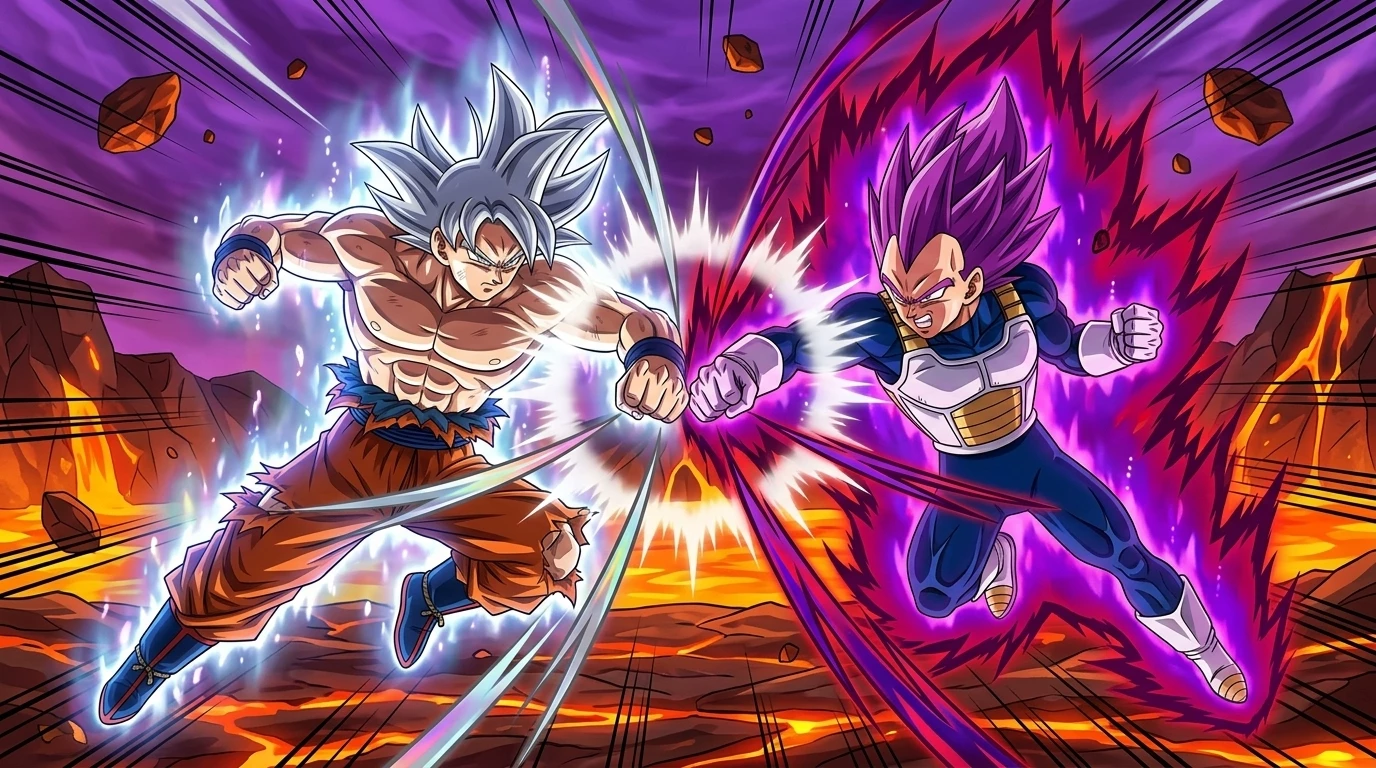
Sparking Zero May 26 Update Adds Demon World Stage and Reworks Transformation Healing
May 27, 2026Bandai Namco shipped a free Dragon Ball: Sparking Zero update on May 26, 2026 that introduces a new Demon World stage, overhauls transformation healing, and confirms the Daima Character Pack and Shallot DLC for release on June 27, 2026....
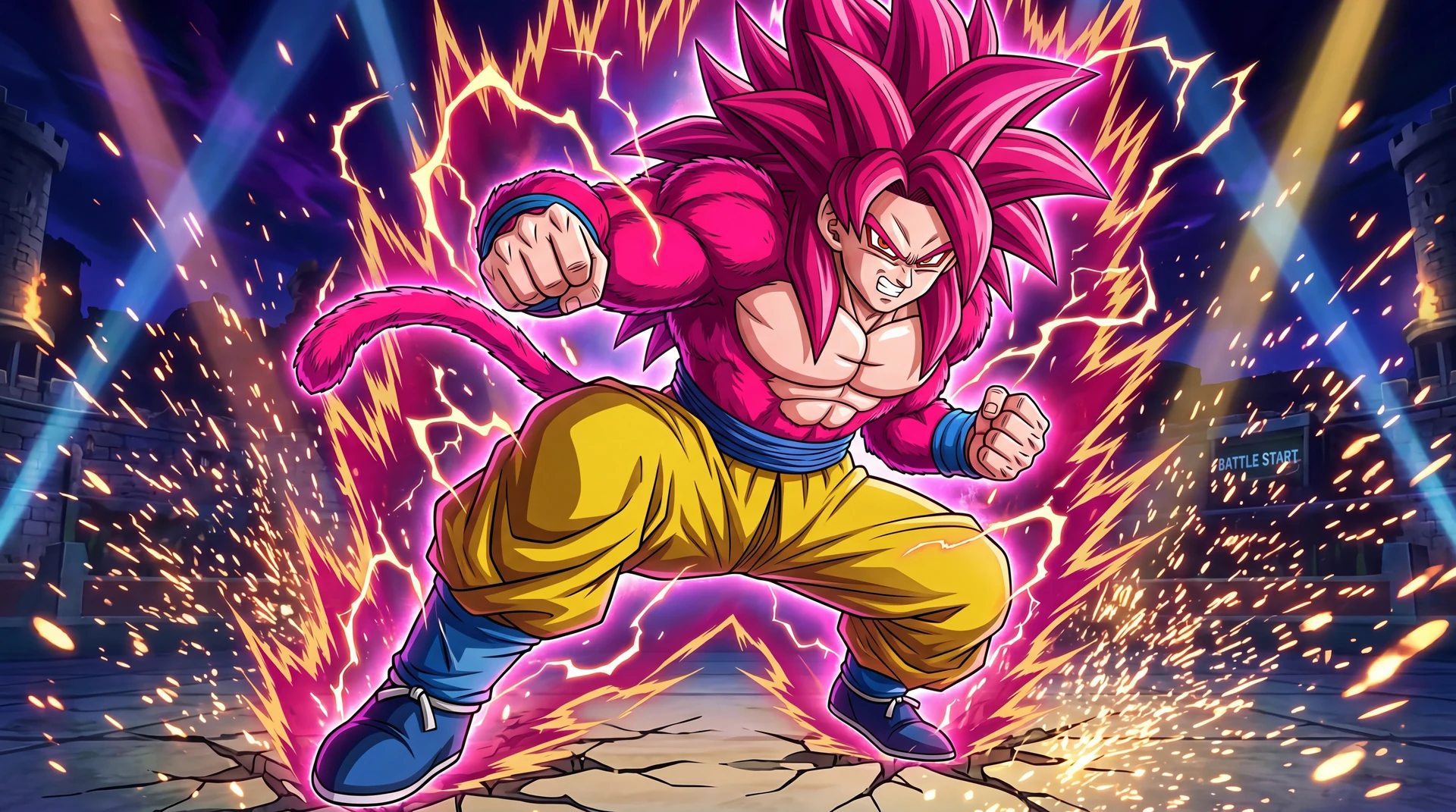
Dragon Ball FighterZ Adds Super Saiyan 4 Goku From Daima
May 25, 2026Dragon Ball FighterZ added Super Saiyan 4 Goku, the form featured in the Daima anime, as DLC on April 22, 2026. The 2018 fighting game is still getting new content nearly eight years on....
Dragon Ball Sparking Zero Super Limit-Breaking NEO DLC Adds 30 Plus Fighters for Summer 2026
Apr 20, 2026Bandai Namco and Spike Chunsoft unveiled the Super Limit-Breaking NEO expansion for Dragon Ball Sparking Zero at Battle Hour 2026. Summer 2026 release, 30 plus characters, four new stages, and a new solo mode....
Sources & Information
Looking for more on Jump Super Stars? The Dragon Ball Wiki on Fandom has a dedicated page with community notes.
View on FandomThis content is original writing by Daddy Jim Headquarters based on the Dragon Ball anime series, manga, and official materials. Episode and chapter references are cited where applicable.
Character and scene imagery on this site is original artwork by Daddy Jim Headquarters, not screenshots or licensed imagery. Official cover art is used on three types of pages for editorial commentary:
- Movie pages: theatrical posters and key visuals, credited to Toei Animation and Shueisha.
- Game pages: official box art, credited to Bandai Namco, Atari, and other publishers.
- Manga chapter pages: Jump Comics volume covers, credited to Shueisha and Akira Toriyama.
Browse our episode guides:
Official resources:
Dragon Ball Music by Daddy Jim Headquarters
Come listen to some Dragon Ball R&B.
Help Us Keep This Wiki Accurate
Daddy Jim Headquarters maintains this encyclopedia across 13 languages. If you spot an error, a translation issue, or something that doesn't look right, let us know.