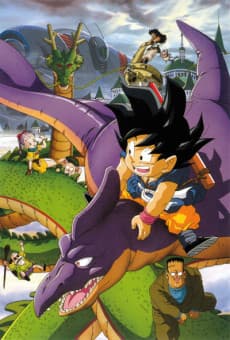
Dragon Ball: The Path to Power
MovieA lavish retelling of Goku's earliest adventures, condensing his first meeting with Bulma, the Red Ribbon Army conflict, and the gathering of the Dragon Balls into a single cinematic narrative produced for the franchise's tenth anniversary in 1996.
The Wish That Started Everything
On the forested slopes of Mount Paozu, a boy with a monkey tail lives in total isolation, his only companion a glowing orange sphere he believes to be the spirit of his late grandfather. That solitude ends the day a speeding car nearly runs him down, and he meets Bulma, a brilliant teenage inventor on a quest for the seven Dragon Balls. She explains that gathering all seven will summon the Eternal Dragon, Shenron, who grants a single wish. Reluctant at first, Goku agrees to join the journey after Bulma promises it will make him stronger.
Bandits, Shapeshifters, and the Open Road
The pair's travels quickly attract trouble. A shapeshifting pig named Oolong tries to con them, and the desert bandit Yamcha ambushes them for capsules and money. Yamcha proves a skilled fighter, trading blows evenly with Goku until Bulma wakes from a nap and her mere presence sends the girl-phobic bandit into a panicked retreat. Together with Oolong, the growing party pushes northward, following the Dragon Radar's signal toward the next sphere.
Inside Muscle Tower
The signal leads them to a frozen wasteland dominated by a massive steel structure: Muscle Tower, a Red Ribbon Army stronghold. Goku storms the building alone, dismantling Sergeant Metallic (a robot disguised as a soldier) and plowing through wave after wave of troops until he reaches General White's command room. White activates the tower's ultimate weapon, Android 8, but the gentle android refuses to kill on command. When White threatens to detonate the bomb implanted inside him, Goku intervenes, saves Android 8, and nicknames him "Eighter." The two become instant friends, celebrating their victory with a snowball fight while the defeated soldiers look on.
The Turtle Hermit's Gift and the Red Ribbon Siege
A chance encounter with a lost sea turtle earns the group a meeting with Master Roshi, the Turtle Hermit. When Roshi's first reward, the Immortal Phoenix, turns out to have died from food poisoning, he summons the Flying Nimbus instead. Only pure-hearted Goku can ride the magic cloud, giving him the mobility he needs for the battles ahead. Roshi also possesses a Dragon Ball, which he parts with after Bulma unwittingly fulfills his embarrassing bargain.
General Blue arrives with a naval armada, forcing Roshi to unleash his legendary MAX Power Kamehameha and destroy an entire fleet. Goku, watching closely, replicates the technique on the spot, obliterating a squadron of submarines. But a missile knocks him unconscious, and Blue captures Bulma, Oolong, Roshi, Yamcha, and Puar, hauling them to a prison near Red Ribbon Headquarters.
A Boy Against an Army
Goku wakes alone on the beach, the Dragon Radar beeping insistently. He sets off toward headquarters, tearing through the entire Red Ribbon military. Inside the command center, Commander Red and Staff Officer Black retreat with their six Dragon Balls. When Black learns that Red's true wish is simply to become taller, he shoots his commander dead and declares the dawn of the Black Ribbon Army. Black climbs into the Battle Jacket, a towering mech suit armed with a devastating laser cannon that carves a swath of destruction across the landscape.
The Battle Jacket overwhelms Goku, and he collapses. Android 8 arrives to protect the boy, absorbing punishment far beyond his limits. Parts fly from his frame as he shields Goku with his own body, and he finally crumbles beside his friend. Goku watches the android die in his arms. Grief and fury unlock a new depth of power within the boy. The ground shakes with his screams, and Black makes the fatal mistake of taunting him. Goku responds with a colossal Kamehameha that obliterates the Battle Jacket entirely.
A Wish Worth Making
With all seven Dragon Balls gathered, Shenron rises into the sky. Bulma and Yamcha realize they no longer need their original wishes. Goku steps forward with a wish of his own: bring Android 8 back to life and remove the bomb inside him. The dragon grants it, and Eighter opens his eyes to a world where he is finally free. It is the perfect ending to a story about a boy who never fought for himself, only for the people he loved.

A Boy, A Cloud, and a Whole Lot of Explosions
Path to Power condenses dozens of manga chapters into a single 80-minute feature, which means the action rarely pauses for breath. The film's standout sequences deliver some of the most polished animation the original Dragon Ball series ever received.
Goku vs. Yamcha: The Desert Ambush
Yamcha's ambush is the film's first real fight, and it establishes the tone perfectly. The desert bandit fights Goku to a near-standstill, mixing Wolf Fang Fist strikes with acrobatic evasion, until Bulma steps out of the vehicle and his paralyzing fear of women shuts him down completely. The scene is brief, but its choreography is sharp and its comedic timing flawless.
The Kamehameha Debut
Master Roshi's MAX Power Kamehameha against General Blue's fleet is the first true display of godlike power in the film. Roshi swells to his maximum muscular form and fires a beam that erases an entire naval armada in a single blast. The moment carries real weight because the audience understands it costs Roshi everything he has. Even more impressive is what follows: young Goku, having watched the technique exactly once, replicates it against Blue's submarine squadron. This moment captures the core appeal of the character. He does not study, he does not train for years. He sees it, and he does it.
The Battle Jacket Assault
Staff Officer Black's Battle Jacket is the film's climactic threat, a skyscraper-sized mech whose laser cannon carves a trench across the landscape. Goku's initial attempts to bring it down are inventive but desperate, knocking it onto its stomach and detonating the cannon barrel. The real emotional punch comes when Android 8 sacrifices himself, his mechanical body torn apart piece by piece as he shields Goku from crushing blows. The sequence builds to Goku's rage-fueled final Kamehameha, which is animated with a level of intensity that surpasses most of the Dragon Ball Z theatrical films released before it.
Shenron's Arrival
The summoning of Shenron is treated with appropriate grandeur. The sky darkens, the seven orbs pulse with golden light, and the Eternal Dragon coils upward through the clouds. What makes this scene special is the wish itself. Every character present has a selfish desire they could voice, but Goku, without hesitation, asks for his friend's life. The simplicity of the moment is what gives it power.
Related Reading
See all
Namek Has No Women, and Piccolo Pulls Anyway
There are no women on Namek. That isn't an oversight, it's the biology. Why we handed Piccolo the one thing his own species rules out, and why it had to be trap soul....
1000 Times Over: Who Is John Dragon Ball Singing To?
Dragon Ball handed us a protagonist with no history and the internet named him John Dragon Ball. So we built him somebody to talk to....
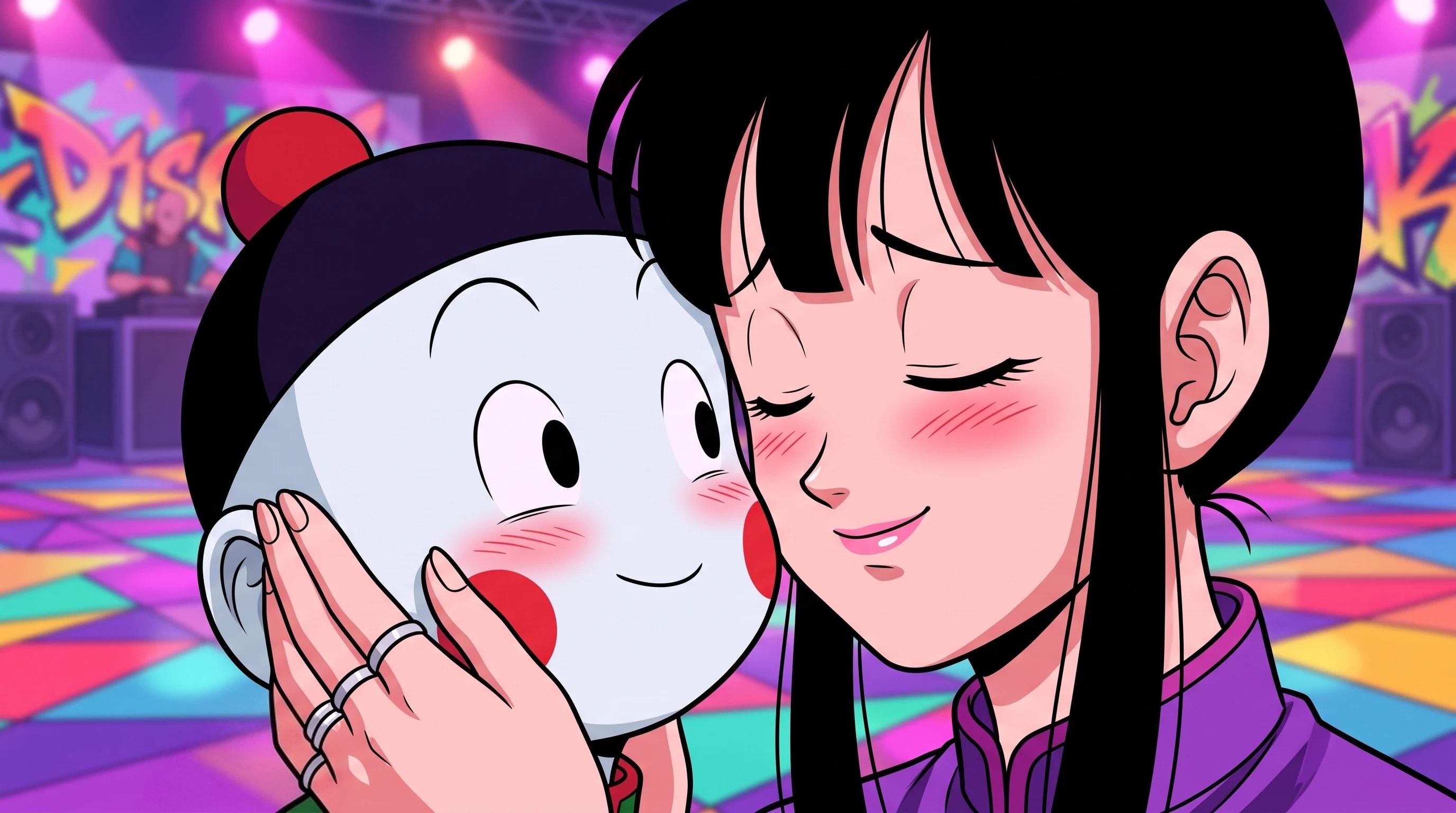
Ten Years in Eighty Minutes
Dragon Ball: The Path to Power was produced by Toei Animation to celebrate the tenth anniversary of Akira Toriyama's Dragon Ball franchise in 1996. Directed by Shigeyasu Yamauchi with a screenplay by Aya Matsui, the film arrived at a unique moment in the series' history. Dragon Ball Z had concluded its theatrical run with Wrath of the Dragon in 1995, and GT was already airing on television. Path to Power was a deliberate look backward, a chance to revisit Goku's humble origins with modern production values.
A Condensed Origin
The film compresses the Emperor Pilaf Saga and the Red Ribbon Army Saga into a single continuous narrative, cutting characters like Emperor Pilaf, Launch, and Tien entirely. This radical condensation gives the story a tighter pace than the original anime, though longtime fans noted the absence of several beloved subplots. The decision to make Android 8 the emotional centerpiece was a smart one, giving the film a clear throughline that the sprawling original arcs sometimes lacked.
Animation Quality
As an anniversary production, Path to Power received a significantly higher animation budget than a typical Toei film of the era. The results are visible in every frame: fluid character animation, detailed backgrounds, and action sequences that hold up decades later. The Battle Jacket fight in particular showcases dynamic camera work and explosive effects that were ahead of their time for a Dragon Ball production.
Release and Reception
The film premiered in Japanese theaters on March 2, 1996, earning approximately 1 billion yen at the box office. Funimation released an English dub on April 29, 2003. While the film was well received by fans who appreciated the visual upgrade and tighter pacing, some critics felt the condensation sacrificed too much character development. Regardless, Path to Power remains a beloved entry in the franchise as a polished love letter to where the entire Dragon Ball saga began.
Frequently Asked Questions
Is Dragon Ball the path to power canon?
Dragon Ball: The Path to Power is a theatrical film from the Dragon Ball era. It was released on March 2, 1996.
What is Dragon Ball: The Path to Power?
A lavish retelling of Goku's earliest adventures, condensing his first meeting with Bulma, the Red Ribbon Army conflict, and the gathering of the Dragon Balls into a single cinematic narrative produced for the franchise's tenth anniversary in 1996. Goku, a boy living alone on Mount Paozu, meets Bulma after she nearly hits him with her car.
What happens in Dragon Ball: The Path to Power?
Goku, a boy living alone on Mount Paozu, meets Bulma after she nearly hits him with her car. She explains the Dragon Balls to him, and they set off together to find all seven. Along the way, they meet Oolong, Yamcha, Puar, and Master Roshi, and encounter the Red Ribbon Army, which is also hunting for the Dragon Balls.
When was Dragon Ball: The Path to Power released?
Dragon Ball: The Path to Power was released on March 2, 1996. It is a theatrical film in the Dragon Ball era.
Who is the main villain in Dragon Ball: The Path to Power?
The main antagonist of Dragon Ball: The Path to Power is Emperor Pilaf and the Red Ribbon Army. Goku, a boy living alone on Mount Paozu, meets Bulma after she nearly hits him with her car.
Sources & Information
Looking for more on Dragon Ball: The Path to Power? The Dragon Ball Wiki on Fandom has a dedicated page with community notes.
View on FandomThis content is original writing by Daddy Jim Headquarters based on the Dragon Ball anime series, manga, and official materials. Episode and chapter references are cited where applicable.
Rights holders
- Created byAkira Toriyama
- Published byShueisha
- Animated byToei Animation
All rights belong to their respective owners.
Character and scene imagery on this site is original artwork by Daddy Jim Headquarters, not screenshots or licensed imagery. Official cover art is used on three types of pages for editorial commentary:
- Movie pages: theatrical posters and key visuals, credited to Toei Animation and Shueisha.
- Game pages: official box art, credited to Bandai Namco, Atari, and other publishers.
- Manga chapter pages: Jump Comics volume covers, credited to Shueisha and Akira Toriyama.
Browse our episode guides:
Official resources:
Help Us Keep This Wiki Accurate
Daddy Jim Headquarters maintains this encyclopedia. If you spot an error, a translation issue, or something that doesn't look right, let us know.