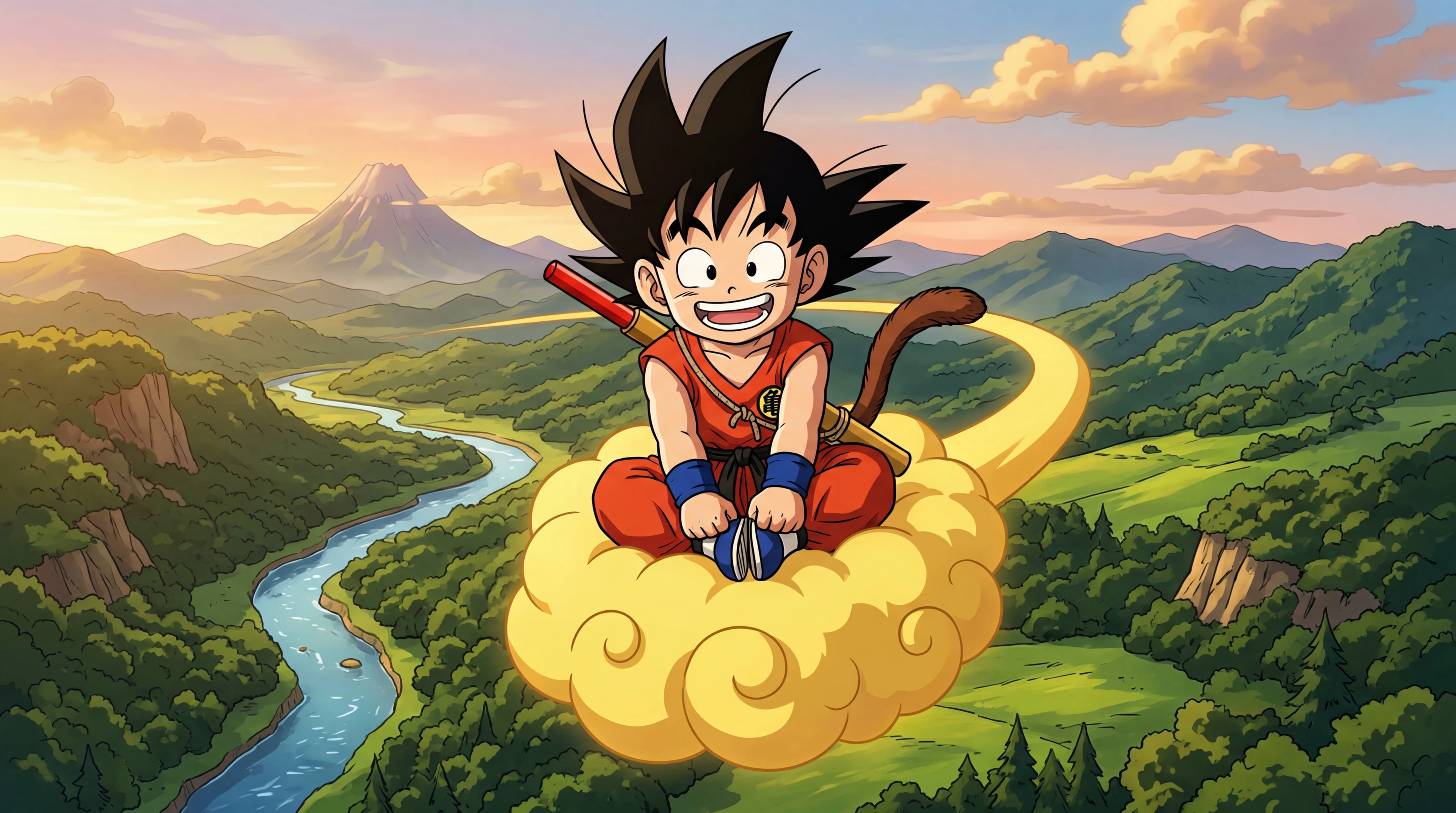
Eternal Dragon
RaceEternal Dragons are divine wish-granting beings summoned through sets of Dragon Balls. From the planet-spanning Shenron to the galaxy-sized Super Shenron, these creatures are central to the Dragon Ball franchise, serving as both narrative engines and symbols of the series' core theme: that extraordinary power comes with rules and consequences.
Wish Granted, With Conditions
Eternal Dragons are divine constructs, beings created through a combination of Namekian magic and fragments of the Super Dragon Balls. They are not naturally occurring species but crafted entities tied to specific sets of Dragon Balls, dormant until summoned by gathering all orbs in a set and speaking the correct invocation. Their physical forms are serpentine and enormous, with each Eternal Dragon dwarfing whatever landscape it appears above. Most share common features: elongated bodies, whiskers, antler-like horns, and glowing eyes that radiate divine energy.
Every Eternal Dragon operates under a strict set of rules determined by its creator's power. Shenron, Earth's dragon, was originally limited to granting a single wish and could not grant wishes that exceeded the power of his creator, Kami. After Dende became Earth's Guardian and upgraded the Dragon Balls, Shenron could grant two wishes (later expanded to three). Porunga, the Namekian Eternal Dragon, could grant three wishes from the start but initially could only resurrect one person per wish. These limitations are not arbitrary; they reflect the fundamental principle that wish-granting power is bounded by the strength and skill of the Namekian Dragon Clan member who shaped the Balls.
The Hierarchy of Dragons
At the top of the hierarchy sits Super Shenron, the first Eternal Dragon, created by the Dragon God Zalama alongside the Super Dragon Balls. Super Shenron is so vast that his body stretches across galaxies, and his wish-granting power appears to have no limitations whatsoever. Below him are the Namekian-crafted dragons: Porunga on Namek, Shenron on Earth, Toronbo on Cereal, and others created by Dragon Clan members who settled on various worlds throughout Universe 7. The Demon Realm contains its own variants, including Mr. Poko Poko and Demon Realm Porunga.
Every Wish Has a Story
Shenron's first summoning in the series came during the Emperor Pilaf Saga, when Oolong famously interrupted Pilaf's wish for world domination by shouting out a wish for a pair of women's underwear. This absurd moment established the tone for how Dragon Ball would treat its most powerful plot device: with a mix of reverence and comedy. Over the course of the series, the Dragon Balls and their Eternal Dragons would be used to resurrect fallen friends, restore destroyed planets, erase memories, and undo catastrophic events.
Porunga entered the story during the Namek Saga, where the Z Fighters raced against Frieza to gather the Namekian Dragon Balls. Unlike Shenron, Porunga required wishes to be spoken in the Namekian language, adding an additional layer of difficulty. The wishes made on Namek were among the most consequential in the series: reviving Piccolo, transporting him to Namek, and later moving the entire Namekian population to Earth after their planet's destruction.
The Super Dragon Balls became central during Dragon Ball Super's Universe 6 vs. Universe 7 tournament and the subsequent Tournament of Power. Beerus and Champa wagered the Super Dragon Balls between their universes, and the winning wish was to restore Earth in Universe 6. Later, Android 17 used the Super Dragon Balls' unlimited wish power to restore all the universes that had been erased during the Tournament of Power, a wish that no lesser Eternal Dragon could have fulfilled.
Corrupted Wishes and Shadow Dragons
Dragon Ball GT explored the concept that wishes are not free. Every wish granted by Shenron generated a small amount of negative energy that accumulated inside the Dragon Balls over time. After decades of frequent use, this negative energy reached critical mass and spawned the Shadow Dragons, seven corrupted Eternal Dragons that each embodied the negative consequences of a specific wish. Each Shadow Dragon absorbed one of the seven Dragon Balls, and their combined threat represented the ultimate cost of the heroes' reliance on wish-granting to solve their problems.
Notable Eternal Dragons include Shenron, Earth's guardian dragon who has been the franchise's most iconic recurring figure; Porunga, the muscular Namekian dragon who grants three wishes; Super Shenron, the galaxy-spanning original whose power is limitless; Ultimate Shenron, who appeared in Dragon Ball GT connected to the Black Star Dragon Balls; and the various demon realm dragons like Mr. Poko Poko. The Dark Dragon Balls from Super Dragon Ball Heroes created their own corrupted entities, further expanding the concept of Eternal Dragons as tools that can be twisted by dark forces.
The Eternal Dragons stand as perhaps the most important recurring element in the franchise. They are the reason the Dragon Balls are worth pursuing, the mechanism by which death is reversible, and the narrative device that allows Dragon Ball to maintain emotional stakes while providing a safety net for its characters. Their existence defines the rules of the universe and, as the Shadow Dragons proved, the consequences of bending those rules too often.
Related Reading
See all
Krillin's on the Tinder: How the Ultimate Short King Survived the Height Filter
Tinder built a height filter. Dragon Ball built a five foot legend. What happened when we sent the ultimate short king into the modern dating hellscape....
Infinite Zeni Glitch: When Yamcha Never Pays and Mr. Popo Always Does
The internet found an infinite money glitch. So did Yamcha. A smooth R&B track about the easiest money in the Dragon Ball world and the one man who keeps paying for it....
Frequently Asked Questions
What is the Eternal Dragon in Dragon Ball?
Eternal Dragons are divine wish-granting beings summoned through sets of Dragon Balls. From the planet-spanning Shenron to the galaxy-sized Super Shenron, these creatures are central to the Dragon Ball franchise, serving as both narrative engines and symbols of the series' core theme: that extraordinary power comes with rules and consequences. Varies greatly in size but all are enormous serpentine dragons.
Who are the notable members of the Eternal Dragon?
Notable members of the Eternal Dragon include Shenron (Earth), Porunga (Namek), Super Shenron (Super Dragon Balls), Ultimate Shenron (Black Star Dragon Balls), and Toronbo (Cereal). Eternal Dragons are divine wish-granting beings summoned through sets of Dragon Balls.
What is the homeworld of the Eternal Dragon?
The Eternal Dragon originate from Earth. The Dragon Balls and their Eternal Dragons were created by Namekians. Earth's Shenron was created by Kami (later maintained by Dende), Namek's Porunga by Grand Elder Guru, and the Super Dragon Balls by the dragon god Zalama.
What do the Eternal Dragon look like?
Varies greatly in size but all are enormous serpentine dragons. Shenron is green with red eyes, Porunga is more muscular and green, and the Super Shenron is planet-sized.
What abilities do the Eternal Dragon have?
Wish granting within the limits of their creator's power. Stronger dragons (like Porunga or Super Shenron) can grant more powerful wishes. They cannot grant wishes that exceed their creator's abilities.
Sources & Information
Looking for more on Eternal Dragon? The Dragon Ball Wiki on Fandom has a dedicated page with community notes.
View on FandomThis content is original writing by Daddy Jim Headquarters based on the Dragon Ball anime series, manga, and official materials. Episode and chapter references are cited where applicable.
Character and scene imagery on this site is original artwork by Daddy Jim Headquarters, not screenshots or licensed imagery. Official cover art is used on three types of pages for editorial commentary:
- Movie pages: theatrical posters and key visuals, credited to Toei Animation and Shueisha.
- Game pages: official box art, credited to Bandai Namco, Atari, and other publishers.
- Manga chapter pages: Jump Comics volume covers, credited to Shueisha and Akira Toriyama.
Browse our episode guides:
Official resources:
Help Us Keep This Wiki Accurate
Daddy Jim Headquarters maintains this encyclopedia. If you spot an error, a translation issue, or something that doesn't look right, let us know.