Broly Saga (Dragon Ball Z)
SagaA trilogy of Dragon Ball Z films centered on Broly, the Legendary Super Saiyan. Spanning three movies from 1993 to 1994, the saga follows the Z Fighters as they repeatedly confront a berserker Saiyan whose power has no ceiling.
Born Screaming at Ten Thousand
The Dragon Ball Z Broly Saga encompasses three theatrical films: Broly, The Legendary Super Saiyan (1993), Broly, Second Coming (1994), and Bio-Broly (1994). Together they form one of the most commercially successful and culturally enduring storylines in Dragon Ball's film history, even though none of them were considered canon to the manga.
The first film introduced Broly as a Saiyan born with a power level of 10,000, an unprecedented number that terrified King Vegeta into ordering the infant's execution. Broly and his father Paragus survived, and decades later, Paragus lured Vegeta to a fabricated "New Planet Vegeta" under the pretense of needing help against the Legendary Super Saiyan. The real plan was revenge against the Vegeta bloodline for the attempted murder.
Broly's trigger was Goku. The two had been placed in adjacent incubation pods as infants, and baby Kakarot's relentless crying had traumatized Broly so deeply that the mere sight of Goku as an adult sent him into a violent frenzy. Once unleashed into his Legendary Super Saiyan form, a towering green-aura transformation unique to him, Broly proved unstoppable. He shrugged off attacks from Goku, Gohan, Future Trunks, Vegeta, and Piccolo simultaneously. Only when the other fighters channeled their remaining energy into Goku could a single empowered punch bring Broly down.


Second Coming and the Clone
Broly survived. The second film, Second Coming, revealed that he had crash-landed on Earth in an ice sheet, frozen but alive, kept in stasis until the cries of young Goten awakened him. This time, Gohan was the primary defender, joined by the child duo of Goten and Trunks and, briefly, Videl. Broly was as relentless as ever. Even Super Saiyan 2 Gohan could not match the Legendary Super Saiyan's raw output.
The climax brought Goku back from Other World, appearing just long enough to help Gohan and Goten launch a combined Family Kamehameha that pushed Broly into the sun. It was a crowd-pleasing finale that reinforced the film series' formula: Broly is overwhelming, everyone gets beaten down, and the heroes win through a last-second collaborative effort.
Bio-Broly, the third entry, is widely regarded as the weakest of the trilogy. Lord Jaguar, a wealthy industrialist, used Broly's DNA to create a clone that mutated into a grotesque, culture fluid-covered monster. Goten, Trunks, Android 18, and Krillin handled the threat without Goku or Vegeta, and the clone was ultimately dissolved in seawater. The film lacked the spectacle of its predecessors, but it completed the trilogy and demonstrated that even a degraded copy of Broly's power was a serious danger.
The Muscle That Built a Legacy
The Z-era Broly became one of Dragon Ball's most iconic characters through sheer visual and visceral impact rather than narrative depth. His motivation, a grudge rooted in a crying baby, was paper-thin. His personality amounted to screaming Goku's Saiyan name while destroying everything in sight. And yet he resonated enormously with audiences, particularly in the West.
The reason was presence. The Legendary Super Saiyan form, with its massive physique, blank white eyes, and sickly green aura, looked fundamentally different from every other transformation in the series. Broly did not fight with technique or strategy. He walked through attacks, tanked Kamehamehas, and broke the heroes not through cleverness but through the terrifying simplicity of having more power than anyone could handle. In a franchise built on escalating power levels, Broly represented the logical extreme: what happens when someone is simply too strong.
His popularity persisted for over two decades, spawning video game appearances, merchandise lines, and fan demand so consistent that Akira Toriyama eventually redesigned the character for the 2018 Dragon Ball Super film. The Z-era Broly may have been replaced in canon, but his impact on the franchise is permanent. He proved that a Dragon Ball villain did not need a complex backstory or sympathetic motivation. Sometimes, all it took was the right design, the right power fantasy, and a transformation that made audiences' jaws drop.
Related Reading
See all
Chiaotzu is Chi-Chi's Boo: Why the Guy Who Never Wins Finally Wins
The least likely man in Dragon Ball just took the biggest win in our catalog. The story behind our R&B record about Chiaotzu, Chi-Chi, and a house Goku is never in....
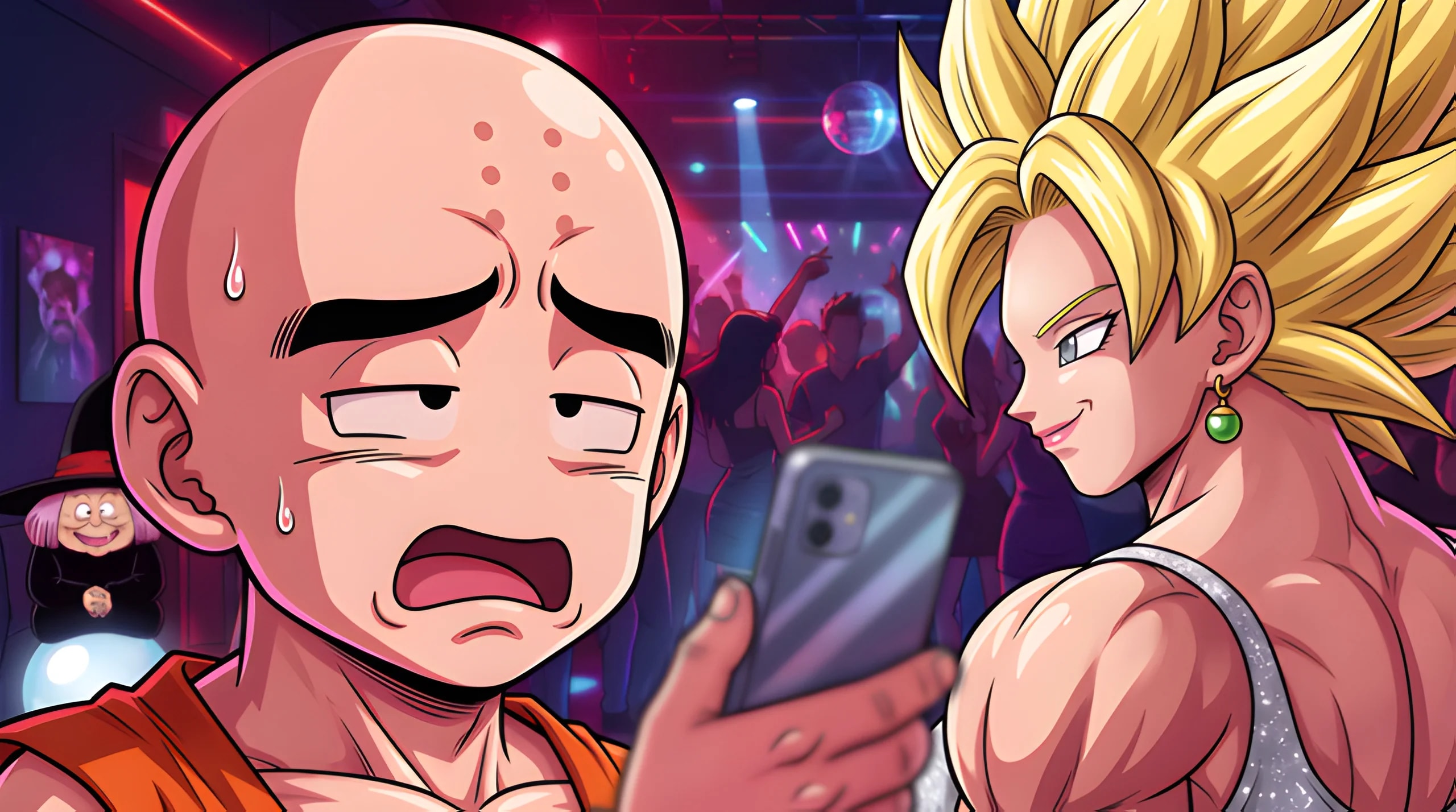
Krillin's on the Tinder: How the Ultimate Short King Survived the Height Filter
Tinder built a height filter. Dragon Ball built a five foot legend. What happened when we sent the ultimate short king into the modern dating hellscape....
Frequently Asked Questions
What episode does the Broly saga start?
The Broly Saga (Dragon Ball Z) covers Films. A trilogy of Dragon Ball Z films centered on Broly, the Legendary Super Saiyan.
What is the Broly Saga (Dragon Ball Z) in Dragon Ball?
A trilogy of Dragon Ball Z films centered on Broly, the Legendary Super Saiyan. Spanning three movies from 1993 to 1994, the saga follows the Z Fighters as they repeatedly confront a berserker Saiyan whose power has no ceiling.
What happens in the Broly Saga (Dragon Ball Z)?
Broly returns in 'Broly: Second Coming,' having survived the destruction of the planet from the first film. Frozen in ice, he is awakened by Goten's crying (which resembles baby Goku's). Broly fights Gohan, Goten, and Videl.
Who is the main villain of the Broly Saga (Dragon Ball Z)?
The main villain of the Broly Saga (Dragon Ball Z) is Broly. A trilogy of Dragon Ball Z films centered on Broly, the Legendary Super Saiyan.
What series is the Broly Saga (Dragon Ball Z) from?
The Broly Saga (Dragon Ball Z) appears in Dragon Ball Z (Broly films). A trilogy of Dragon Ball Z films centered on Broly, the Legendary Super Saiyan.
Sources & Information
Looking for more on Broly Saga (Dragon Ball Z)? The Dragon Ball Wiki on Fandom has a dedicated page with community notes.
View on FandomThis content is original writing by Daddy Jim Headquarters based on the Dragon Ball anime series, manga, and official materials. Episode and chapter references are cited where applicable.
Character and scene imagery on this site is original artwork by Daddy Jim Headquarters, not screenshots or licensed imagery. Official cover art is used on three types of pages for editorial commentary:
- Movie pages: theatrical posters and key visuals, credited to Toei Animation and Shueisha.
- Game pages: official box art, credited to Bandai Namco, Atari, and other publishers.
- Manga chapter pages: Jump Comics volume covers, credited to Shueisha and Akira Toriyama.
Browse our episode guides:
Official resources:
Help Us Keep This Wiki Accurate
Daddy Jim Headquarters maintains this encyclopedia. If you spot an error, a translation issue, or something that doesn't look right, let us know.