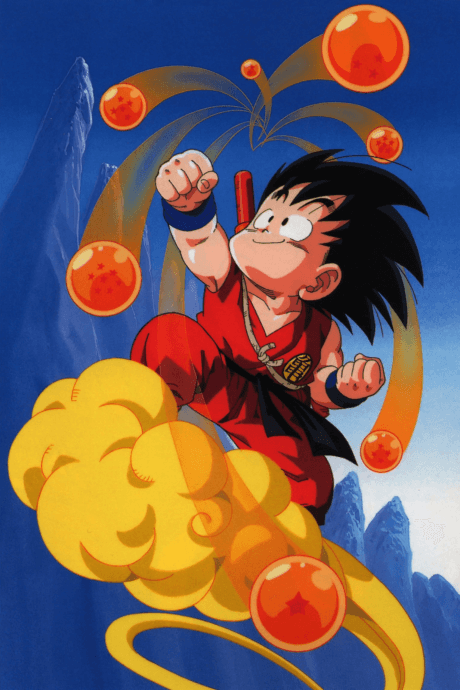
Fortuneteller Baba Saga
SagaAfter toppling the Red Ribbon Army, Goku seeks Fortuneteller Baba to locate the final Dragon Ball. To earn her help, he and his friends must defeat her five mysterious warriors in combat. The saga culminates in a tearful reunion with Goku's deceased grandfather and sets the stage for the 22nd World Martial Arts Tournament.
The Price of a Prophecy
With six Dragon Balls in hand but the seventh hidden from his radar, Goku follows Master Roshi's advice and travels to Fortuneteller Baba's Palace. He brings along Upa, the young boy from Korin Tower, who hopes to use the Dragon Balls to resurrect his father Bora, killed by the assassin Tao Pai Pai during the Red Ribbon Army conflict. Joined by Yamcha, Krillin, and Puar, the group discovers that Baba's services come with a staggering price none of them can afford. The alternative: defeat her five champion warriors in succession.
Five Fighters, Five Arenas
Baba's tournament unfolds across creative battlegrounds that push each fighter out of their comfort zone. Krillin falls first to Fangs the Vampire, who drains his blood mid-combat, but Upa and Puar team up to defeat the vampire using garlic breath and a crucifix imitation. Yamcha takes on See-Through the Invisible Man, an impossible opponent until Krillin devises a hilariously crude solution: pulling off Bulma's shirt in front of Master Roshi, whose resulting nosebleed splashes across the invisible fighter and reveals his location. Yamcha quickly finishes what Krillin's scheme made possible.
Bandages the Mummy proves too much for Yamcha, ensnaring him in crushing wraps and nearly dropping him into the acid-filled Devil's Toilet. Goku rescues Yamcha with his Power Pole and takes over, defeating the mummy with a single devastating punch. Spike the Devil Man presents a deadlier threat, wielding the Devilmite Beam, a technique that amplifies the target's inner evil until their heart explodes. Roshi and Baba watch in horror, knowing the technique has never failed. But Goku, pure of heart, stands untouched. The beam has nothing to amplify. Spike, stunned and desperate, falls to a single kick that embeds him into the ceiling.
The Masked Fighter
Baba's final champion wears a fox mask and fights with a familiarity that unsettles everyone. He matches Goku blow for blow, even producing a Kamehameha wave. Just when Goku gains the upper hand, the masked fighter grabs his tail, exploiting Goku's one weakness. As Goku writhes in pain but refuses to surrender, Master Roshi quietly reveals what he has suspected: the fighter is Grandpa Gohan, Goku's deceased adoptive grandfather, brought back from the Other World for one day by Baba's power.
Gohan accidentally rips out Goku's tail entirely, freeing him from the weakness forever. He then surrenders, removes his mask, and the reunion that follows is one of Dragon Ball's most emotionally tender moments. Goku bursts into tears and throws himself at his grandfather, who holds him and congratulates him on how strong he has become. Gohan explains that he is content in the afterlife and does not wish to be resurrected, telling Upa not to feel guilty about wishing his own father back. After a final farewell, Gohan returns to the Other World.
The Final Dragon Ball and Training on the Road
Baba reveals that the last Dragon Ball is in Emperor Pilaf's possession, hidden inside a radar-proof box. Goku catches up with the Pilaf Gang, who challenge him to battle in robot suits while trying to exploit his tail weakness, only to discover it is gone. Defeated and humiliated, they surrender the ball. Goku travels to Bora's grave at Korin Tower, summons Shenron, and Upa tearfully wishes his father back to life. As the balls scatter, Goku snatches his grandfather's Four-Star Ball before it can fly away.
Master Roshi assigns Goku a new form of training: three years of traveling the world on foot, without the Flying Nimbus, seeking real-world challenges. Along the way, Goku saves villages, defeats criminals, befriends a con artist named Konkichi, and encounters Tien Shinhan and Chiaotzu for the first time, running a scam involving a trained monster. These adventures harden Goku's skills and broaden his understanding of the world, preparing him for the 22nd World Martial Arts Tournament that awaits at the saga's end.


Baba's Gauntlet and the Devilmite Beam
The five-fighter gauntlet format gives the Fortuneteller Baba Saga a structure distinct from both the free-form adventure of the Pilaf Saga and the formal brackets of the Tournament Saga. Each arena presents unique environmental hazards, from the acid pool of the Devil's Toilet to the confined fighting ring above it, and each opponent tests a different skill. The saga rewards the full cast with individual moments of brilliance: Krillin's tactical thinking against the Invisible Man, Yamcha's brave if outmatched stand against Bandages, and Goku's pure heart nullifying the Devilmite Beam.
A Heart Too Pure to Explode
Spike the Devil Man's Devilmite Beam is one of Dragon Ball's most conceptually terrifying attacks. The idea that inner evil can be weaponized to kill raises the stakes beyond physical combat, and the tension in the room as Baba and Roshi watch the technique strike Goku is palpable. When nothing happens, it is not just a victory for Goku; it is a definitive statement about his character. In a franchise that will eventually measure strength in power levels and transformation tiers, this moment declares that Goku's greatest asset is not his fists but his goodness.
Grandfather and Grandson
The masked fighter reveal is the saga's emotional centerpiece. The fight itself is excellent, with Gohan's familiar techniques creating a mystery that builds with each exchange. But the moment Gohan removes his mask and Goku realizes who he has been fighting, the saga transcends its action framework entirely. This is a story about grief, love, and the bonds that death cannot sever, wrapped inside a martial arts tournament. Goku's tears are among the most genuine emotional expressions in the entire franchise.
The Bridge Between Arcs
The Fortuneteller Baba Saga occupies a unique position in Dragon Ball's structure, serving as both the conclusion to the Red Ribbon Army storyline and the setup for the next major tournament arc. The resolution of Goku's Dragon Ball quest, with Upa's wish restoring Bora to life, provides satisfying closure to a goal that has driven the series since its first chapter. Meanwhile, Goku's three years of solo training introduce the concept of growth through real-world experience rather than formal instruction, foreshadowing the training philosophies that will define later arcs.
Seeds Planted for the Future
The brief encounter with Tien Shinhan and Chiaotzu, shown running a scam in a small village, is a masterful piece of foreshadowing. These two characters will become central to the next saga, and seeing them introduced as morally ambiguous con artists makes their eventual redemption more meaningful. The saga also permanently removes Goku's tail weakness, a practical storytelling decision that frees future fights from a vulnerability that had been exploited repeatedly.
The concept of Fortuneteller Baba bridging the living and dead worlds adds a spiritual dimension to Dragon Ball that enriches the franchise's cosmology. The rules governing Gohan's one-day visit establish the boundaries between life and death that the series will continue to explore through the Other World, King Yemma, and the various afterlife locations that become increasingly important in Dragon Ball Z. In this way, a saga built around finding a single Dragon Ball quietly lays groundwork that supports decades of storytelling to come.
Related Reading
See all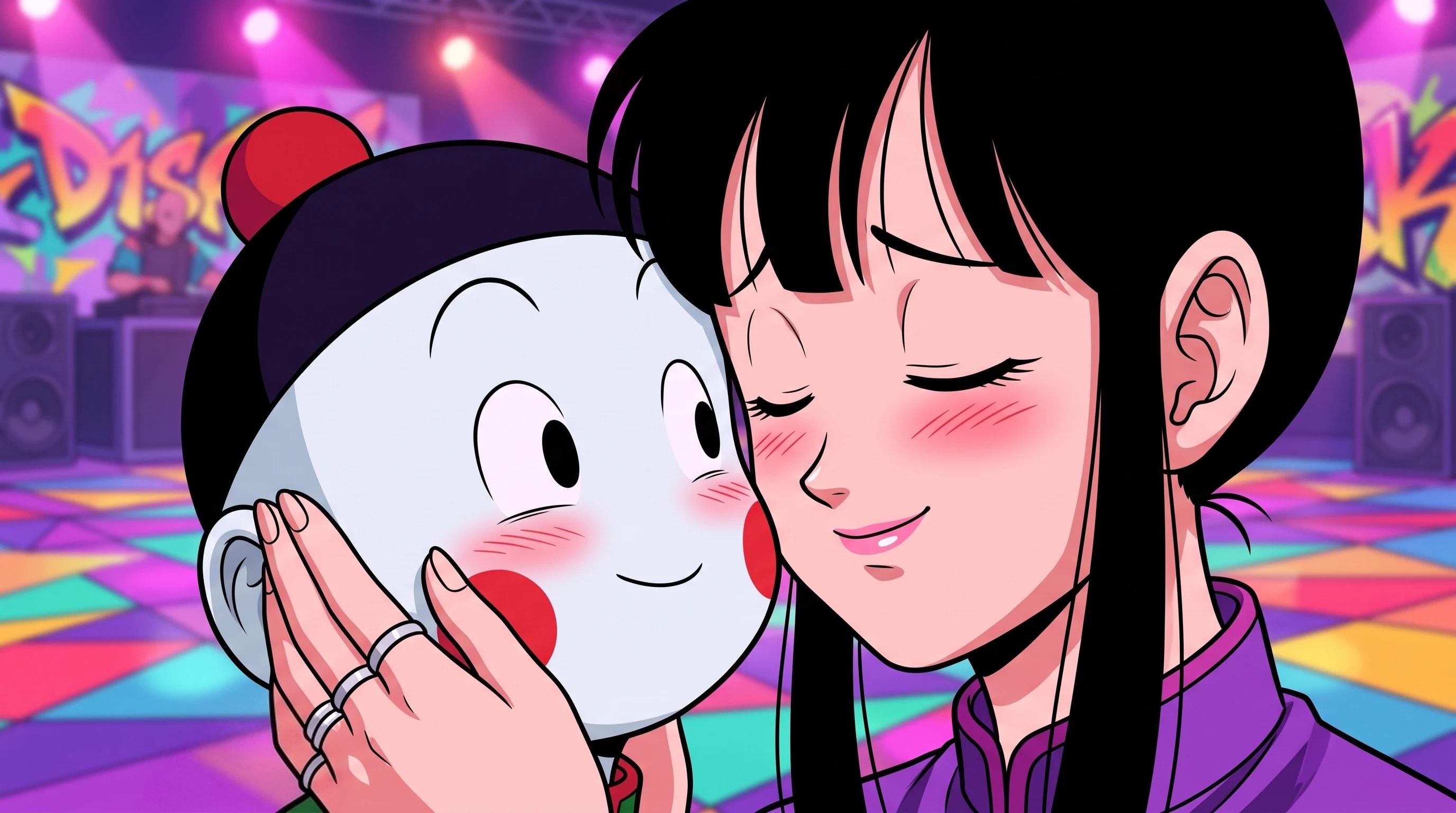
Chiaotzu is Chi-Chi's Boo: Why the Guy Who Never Wins Finally Wins
The least likely man in Dragon Ball just took the biggest win in our catalog. The story behind our R&B record about Chiaotzu, Chi-Chi, and a house Goku is never in....

Krillin's on the Tinder: How the Ultimate Short King Survived the Height Filter
Tinder built a height filter. Dragon Ball built a five foot legend. What happened when we sent the ultimate short king into the modern dating hellscape....
Frequently Asked Questions
Who is the Fortuneteller Baba episode?
The Fortuneteller Baba Saga spans episodes 68-83. After toppling the Red Ribbon Army, Goku seeks Fortuneteller Baba to locate the final Dragon Ball.
What is the Fortuneteller Baba Saga in Dragon Ball?
After toppling the Red Ribbon Army, Goku seeks Fortuneteller Baba to locate the final Dragon Ball. To earn her help, he and his friends must defeat her five mysterious warriors in combat. The saga culminates in a tearful reunion with Goku's deceased grandfather and sets the stage for the 22nd World Martial Arts Tournament.
What happens in the Fortuneteller Baba Saga?
With one Dragon Ball still missing, Goku visits Fortuneteller Baba, Master Roshi's older sister. She demands an enormous fee or, alternatively, that her visitors defeat five fighters in succession. Goku, Yamcha, Krillin, and Puar take on the challenge.
Who is the main villain of the Fortuneteller Baba Saga?
The main villain of the Fortuneteller Baba Saga is None (tournament-style saga). After toppling the Red Ribbon Army, Goku seeks Fortuneteller Baba to locate the final Dragon Ball.
What series is the Fortuneteller Baba Saga from?
The Fortuneteller Baba Saga appears in Dragon Ball. After toppling the Red Ribbon Army, Goku seeks Fortuneteller Baba to locate the final Dragon Ball.
Sources & Information
Looking for more on Fortuneteller Baba Saga? The Dragon Ball Wiki on Fandom has a dedicated page with community notes.
View on FandomThis content is original writing by Daddy Jim Headquarters based on the Dragon Ball anime series, manga, and official materials. Episode and chapter references are cited where applicable.
Character and scene imagery on this site is original artwork by Daddy Jim Headquarters, not screenshots or licensed imagery. Official cover art is used on three types of pages for editorial commentary:
- Movie pages: theatrical posters and key visuals, credited to Toei Animation and Shueisha.
- Game pages: official box art, credited to Bandai Namco, Atari, and other publishers.
- Manga chapter pages: Jump Comics volume covers, credited to Shueisha and Akira Toriyama.
Browse our episode guides:
Official resources:
Help Us Keep This Wiki Accurate
Daddy Jim Headquarters maintains this encyclopedia. If you spot an error, a translation issue, or something that doesn't look right, let us know.