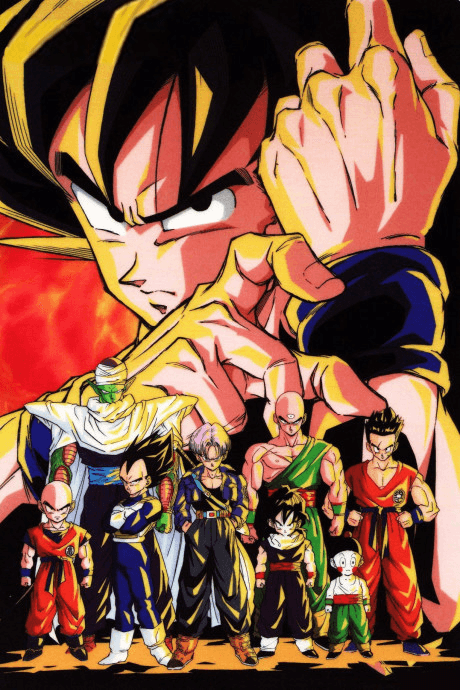
High School Saga
SagaAn alternate name for the Great Saiyaman Saga as referenced in Daizenshuu 2. Covers teenage Gohan's enrollment at Orange Star High School in Satan City, his creation of the Great Saiyaman superhero persona, and his efforts to live a normal life seven years after the Cell Games.
Gohan Enters Orange Star High
The High School Saga, as cataloged in the Daizenshuu guidebooks, covers the same ground as the Great Saiyaman Saga under an alternate title. It follows Gohan's transition from isolated mountain scholar to urban high school student in Satan City, seven years after the Cell Games. Chi-Chi has insisted that her son get a proper education, and Gohan enrolls at Orange Star High School, named after the region's most famous resident, Mr. Satan.
A Saiyan Among Civilians
Gohan's struggle to conceal his abilities forms the comedic backbone of the saga. On his very first day commuting by flying, he stops a crime in progress and is spotted by the media. This leads him to create the Great Saiyaman disguise, an elaborate superhero costume complete with a helmet and choreographed poses. His attempts to maintain a dual identity while sitting next to the perceptive Videl in class create a constant stream of close calls and comic tension.
The high school setting gives Dragon Ball Z something it rarely explores: Gohan interacting with ordinary humans his own age. Sharpner and Erasa, his classmates, provide a window into how the non-fighter population sees the world. They idolize Mr. Satan, have no concept of ki or Saiyans, and view the Great Saiyaman as either a hero or a weirdo depending on the day. Gohan navigates this social landscape with the same awkwardness that makes him such an endearing character.

Crime-Fighting and Close Calls
Gohan's crime-fighting activities as the Great Saiyaman provide the saga's action beats. He intercepts bank robberies, car chases, and hostage situations with absurd ease, dispatching criminals while delivering theatrical speeches and striking poses. The criminals of Satan City are comically outmatched, but the real tension comes from Videl's investigation. She tracks the Great Saiyaman's appearances, cross-references them with Gohan's absences from class, and steadily narrows the list of suspects.
Videl's Discovery
When Videl finally uncovers Gohan's secret, she leverages the information rather than exposing him. Her deal, flying lessons and tournament entry in exchange for silence, establishes a dynamic of mutual benefit that deepens into genuine friendship and eventually romance. The saga's treatment of their relationship is refreshingly grounded for Dragon Ball, built on shared experiences and earned trust rather than narrative convenience.
The Daizenshuu Distinction
The High School Saga title, drawn from the Daizenshuu 2 guidebook, emphasizes the setting rather than the superhero persona. It highlights that the saga's true focus is not the Great Saiyaman's heroics but Gohan's experience as a high school student: making friends, attending class, dealing with homework, and navigating the social hierarchies of teenage life while hiding the fact that he could destroy the building with a sneeze.
Whether called the High School Saga or the Great Saiyaman Saga, this stretch of Dragon Ball Z remains one of its most charming and character-focused arcs. It demonstrates that the franchise can thrive on slice-of-life storytelling when it gives its characters room to breathe between the explosions.
Related Reading
See all
Krillin's on the Tinder: How the Ultimate Short King Survived the Height Filter
Tinder built a height filter. Dragon Ball built a five foot legend. What happened when we sent the ultimate short king into the modern dating hellscape....
Infinite Zeni Glitch: When Yamcha Never Pays and Mr. Popo Always Does
The internet found an infinite money glitch. So did Yamcha. A smooth R&B track about the easiest money in the Dragon Ball world and the one man who keeps paying for it....
Frequently Asked Questions
What is Saga Club in high school?
An alternate name for the Great Saiyaman Saga as referenced in Daizenshuu 2. Covers teenage Gohan's enrollment at Orange Star High School in Satan City, his creation of the Great Saiyaman superhero persona, and his efforts to live a normal life seven years after the Cell Games.
What happens in the High School Saga?
This is the same arc as the Great Saiyaman Saga, following teenage Gohan as he navigates Orange Star High School, creates the Great Saiyaman persona to fight crime, and prepares for the 25th World Martial Arts Tournament. Videl discovers his secret identity, Goku arranges his one-day return, and Goten and Trunks are revealed as child Super Saiyans. The saga focuses on comedy and character development before the darker Buu Saga begins.
What series is the High School Saga from?
The High School Saga appears in Dragon Ball Z. An alternate name for the Great Saiyaman Saga as referenced in Daizenshuu 2.
What episodes cover the High School Saga?
The High School Saga spans episodes 200-209. An alternate name for the Great Saiyaman Saga as referenced in Daizenshuu 2.
What manga chapters cover the High School Saga?
The High School Saga covers manga chapters 421-431. An alternate name for the Great Saiyaman Saga as referenced in Daizenshuu 2.
Sources & Information
Looking for more on High School Saga? The Dragon Ball Wiki on Fandom has a dedicated page with community notes.
View on FandomThis content is original writing by Daddy Jim Headquarters based on the Dragon Ball anime series, manga, and official materials. Episode and chapter references are cited where applicable.
Character and scene imagery on this site is original artwork by Daddy Jim Headquarters, not screenshots or licensed imagery. Official cover art is used on three types of pages for editorial commentary:
- Movie pages: theatrical posters and key visuals, credited to Toei Animation and Shueisha.
- Game pages: official box art, credited to Bandai Namco, Atari, and other publishers.
- Manga chapter pages: Jump Comics volume covers, credited to Shueisha and Akira Toriyama.
Browse our episode guides:
Official resources:
Help Us Keep This Wiki Accurate
Daddy Jim Headquarters maintains this encyclopedia. If you spot an error, a translation issue, or something that doesn't look right, let us know.