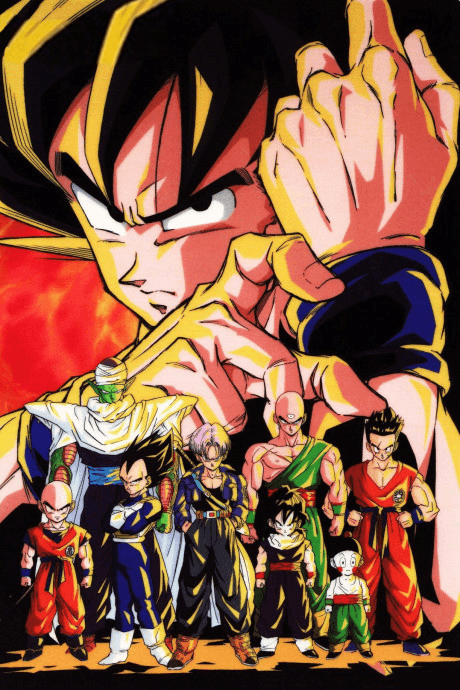
Peaceful World Saga
SagaThe epilogue of Dragon Ball Z, set ten years after Kid Buu's defeat. The Z Fighters reunite at the 28th World Martial Arts Tournament, where Goku discovers Uub, the human reincarnation of Kid Buu. Goku leaves his family to train the boy, flying off into a sunset that closes the original series.
Ten Years of Peace, One Last Tournament
The Peaceful World Saga is the final chapter of Dragon Ball Z, a brief epilogue spanning just four episodes. It takes place ten years after the defeat of Kid Buu, and the world it depicts has changed in quiet, domestic ways. Gohan has retired from fighting to become a scholar and married Videl; their daughter Pan is a spirited young girl who idolizes her grandfather. Bulma and Vegeta have a daughter named Bulla. Goten and Trunks have grown into teenagers. The Z Fighters, once the only thing standing between the planet and annihilation, have settled into something approaching normal life.
Goku and the Pterosaur Eggs
Six months after Kid Buu's defeat, Chi-Chi, Gohan, and Goten prepare for a barbecue at Capsule Corporation to celebrate the victory. Goku is nowhere to be found. While Chi-Chi's frustration builds, Goku is in the wilderness, sitting vigil over four pterosaur eggs about to hatch. Danger arrives in the form of predators, and Goku spends the day protecting the eggs with the same earnest determination he brings to world-ending battles. It is a distinctly Goku moment: even without a threat to the universe, his instinct is to protect life.
He arrives at the party just as it ends, and Chi-Chi and Bulma set everything back up so he can enjoy it. The episode closes with everyone gathered around, listening to Goku talk about the baby pterosaurs with childlike enthusiasm. It is a scene of pure warmth, the kind Dragon Ball rarely pauses for.
The 28th World Martial Arts Tournament
Ten years later, the full cast gathers at the World Martial Arts Tournament. Goku is searching for someone specific: a boy named Uub, a ten-year-old from a remote village with enormous untapped potential. Goku engineered the matchup by having Good Buu rig the bracket. In the ring, Goku tests Uub by taunting him, insulting his family and his village, deliberately provoking the boy's anger to draw out his power. The strategy works. Uub's energy spikes violently with each insult, confirming what Goku suspected: this boy is the human reincarnation of Kid Buu, born from the wish Goku made at the end of their final battle.

A Farewell at the Tournament's Edge
The fight between Goku and Uub is short but revealing. Uub's power is immense but completely unrefined. He throws wild punches backed by staggering energy but has no technique, no discipline, and no understanding of how to control what lives inside him. Goku sees exactly what he hoped to see: a diamond in the rough that could one day surpass every fighter alive.
The Decision
Goku cuts the match short. He tells Uub that he wants to train him, to take the boy back to his village and teach him how to fight properly. It is an offer that redefines Goku's role in the story. He is no longer the strongest fighter protecting the world; he is a teacher passing on everything he has learned so that someone new can carry the responsibility. The audience watches a man who has spent his entire life fighting make the choice to spend his remaining years teaching.
Before leaving, Goku bids farewell to his family and friends. He hugs Pan. He tells Goten and Trunks to keep training. He tells Vegeta he looks forward to another fight someday. Vegeta forgives the implied insult of being abandoned and acknowledges that any battle between them would need its own planet. Chi-Chi watches him go with the resigned understanding of a woman who has spent decades loving someone who cannot stay still.
The tournament is technically cancelled because Goku and Uub never finished their match, but the younger generation picks up the slack. Trunks, Goten, and Pan spar in the ring, with Pan defeating Goten in a playful display that proves the next generation is ready.
Related Reading
See all
Namek Has No Women, and Piccolo Pulls Anyway
There are no women on Namek. That isn't an oversight, it's the biology. Why we handed Piccolo the one thing his own species rules out, and why it had to be trap soul....
1000 Times Over: Who Is John Dragon Ball Singing To?
Dragon Ball handed us a protagonist with no history and the internet named him John Dragon Ball. So we built him somebody to talk to....
The Sky Where the Story Ends
The final image of Dragon Ball Z is Goku and Uub flying side by side toward Uub's village, growing smaller against the sky. It is the perfect ending for a character who has always been defined by forward motion. Goku does not retire. He does not sit still. He finds someone new to train and flies toward that future without hesitation.
The Circle Closes
Uub's existence brings the Buu saga full circle. The wish Goku made while destroying Kid Buu, that his enemy might be reborn as a good person so they could fight again, was not idle sentiment. It was a plan. Ten years later, that plan bears fruit in the form of a shy, powerful boy from a village so poor that the prize money from the tournament could transform his family's life. The cruelty of Kid Buu becomes the potential of Uub, and Goku's optimism is vindicated.
The Peaceful World Saga also serves as a bridge to what comes after. Dragon Ball Super's entire timeline fits between the defeat of Kid Buu and the 28th tournament, meaning this epilogue is both an ending and a frame that contains years of additional story. The Dragon Ball Super: Super Hero film takes place almost immediately before the tournament begins, and Dragon Ball GT branches off from this point in its own continuity. What seems like a simple farewell is actually a crossroads where multiple futures diverge.
For the original audience in 1996, though, none of that mattered. What mattered was Goku, the boy who once rode a cloud across the wilderness looking for adventure, choosing to spend his future helping someone else grow strong. It is the most Goku ending possible, and it is exactly right.
Frequently Asked Questions
How long is the Peaceful World Saga?
The epilogue of Dragon Ball Z, set ten years after Kid Buu's defeat. The Z Fighters reunite at the 28th World Martial Arts Tournament, where Goku discovers Uub, the human reincarnation of Kid Buu. Goku leaves his family to train the boy, flying off into a sunset that closes the original series.
Which episodes cover the Peaceful World Saga?
The Peaceful World Saga spans episodes 288-291 of Dragon Ball Z. The epilogue of Dragon Ball Z, set ten years after Kid Buu's defeat. The Z Fighters reunite at the 28th World Martial Arts Tournament, where Goku discovers Uub, the human reincarnation of Kid Buu.
Who is the main villain of the Peaceful World Saga?
The main villain of the Peaceful World Saga is None. The epilogue of Dragon Ball Z, set ten years after Kid Buu's defeat. The Z Fighters reunite at the 28th World Martial Arts Tournament, where Goku discovers Uub, the human reincarnation of Kid Buu.
What are the key events of the Peaceful World Saga?
Key events in the Peaceful World Saga include Ten-year timeskip, 28th World Tournament, Goku meets Uub, Goku takes Uub as a student, Goku departs to train Uub, and Dragon Ball Z concludes. The epilogue of Dragon Ball Z, set ten years after Kid Buu's defeat.
Where does the Peaceful World Saga fall in the Dragon Ball saga order?
The Peaceful World Saga is the 19th saga in Dragon Ball Z. The epilogue of Dragon Ball Z, set ten years after Kid Buu's defeat. The Z Fighters reunite at the 28th World Martial Arts Tournament, where Goku discovers Uub, the human reincarnation of Kid Buu.
Sources & Information
Looking for more on Peaceful World Saga? The Dragon Ball Wiki on Fandom has a dedicated page with community notes.
View on FandomThis content is original writing by Daddy Jim Headquarters based on the Dragon Ball anime series, manga, and official materials. Episode and chapter references are cited where applicable.
Rights holders
- Created byAkira Toriyama
- Published byShueisha
- Animated byToei Animation
All rights belong to their respective owners.
Character and scene imagery on this site is original artwork by Daddy Jim Headquarters, not screenshots or licensed imagery. Official cover art is used on three types of pages for editorial commentary:
- Movie pages: theatrical posters and key visuals, credited to Toei Animation and Shueisha.
- Game pages: official box art, credited to Bandai Namco, Atari, and other publishers.
- Manga chapter pages: Jump Comics volume covers, credited to Shueisha and Akira Toriyama.
Browse our episode guides:
Official resources:
Help Us Keep This Wiki Accurate
Daddy Jim Headquarters maintains this encyclopedia. If you spot an error, a translation issue, or something that doesn't look right, let us know.