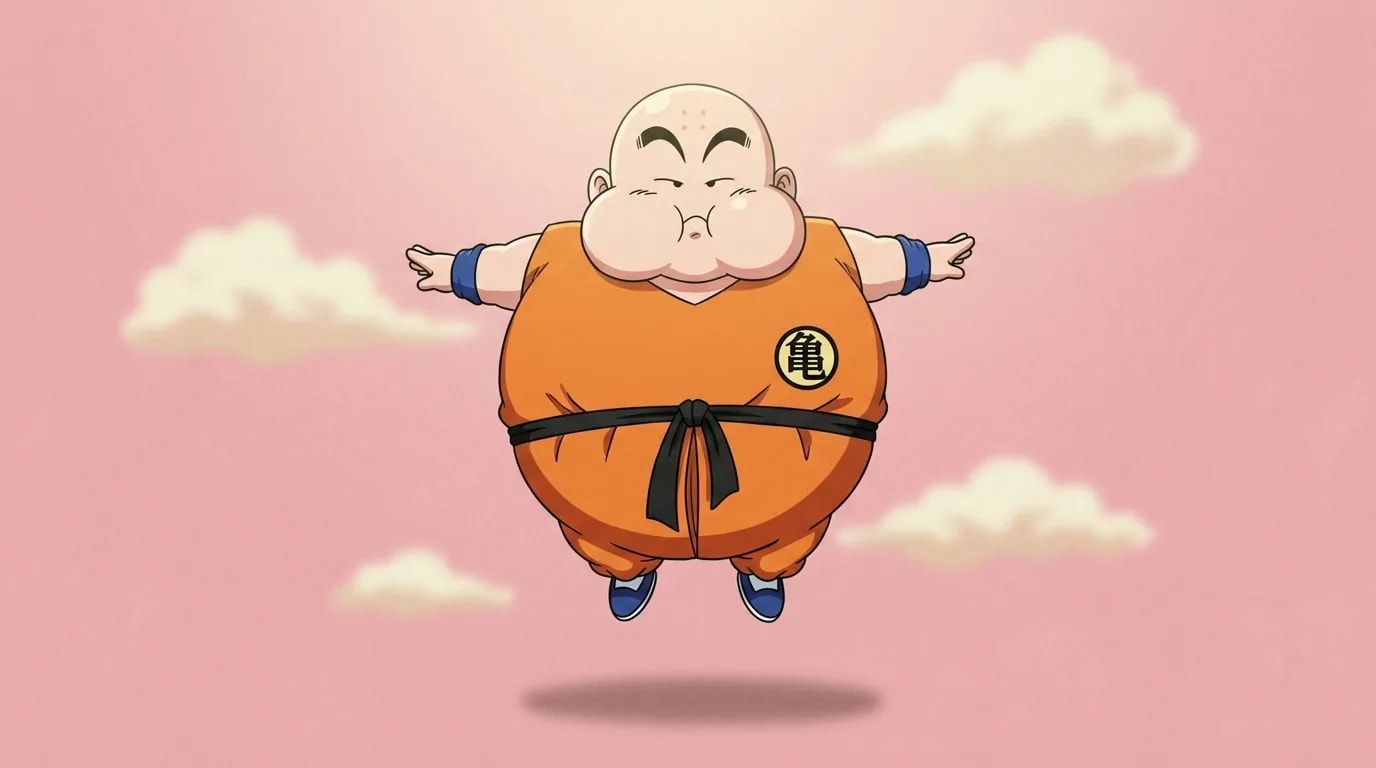
Balloon Technique
TechniqueA comedic defensive technique where Krillin inhales a massive amount of air to inflate his body like a balloon, slowing his fall and disrupting an opponent's timing.
Mechanics
Krillin takes in a huge breath of air, puffing up his body to several times its normal size. The inflated state dramatically increases his air resistance, slowing his descent when falling. The sudden change in his body shape and falling speed can throw off an opponent's attack timing, causing strikes aimed at his predicted position to miss entirely.


Usage
Krillin deploys this technique during his match against Goku at the 22nd World Martial Arts Tournament. When Goku launches a kick timed to Krillin's fall trajectory, Krillin inflates himself mid-air, changing his speed and position enough that Goku's attack whiffs completely. It is a purely situational trick that relies on surprise value rather than any real combat power, and Krillin never uses it again after this single appearance.
Legacy
The Balloon Technique is one of many creative, unconventional moves from the original Dragon Ball era that reflect the series' martial arts comedy roots. Alongside techniques like Krillin's shoe throw and Goku's Rock-Paper-Scissors attack, it represents a time when battles relied on clever tricks and improvisation rather than raw power escalation. The technique appears in the Daizenshuu reference guides as an officially cataloged ability.
Related Reading
See all
Krillin's on the Tinder: How the Ultimate Short King Survived the Height Filter
Tinder built a height filter. Dragon Ball built a five foot legend. What happened when we sent the ultimate short king into the modern dating hellscape....

Infinite Zeni Glitch: When Yamcha Never Pays and Mr. Popo Always Does
The internet found an infinite money glitch. So did Yamcha. A smooth R&B track about the easiest money in the Dragon Ball world and the one man who keeps paying for it....
Frequently Asked Questions
What is the balloon technique?
A comedic defensive technique where Krillin inhales a massive amount of air to inflate his body like a balloon, slowing his fall and disrupting an opponent's timing. Krillin takes in a huge breath of air, puffing up his body to several times its normal size.
How does the Balloon Technique work?
Krillin takes in a huge breath of air, puffing up his body to several times its normal size. The inflated state dramatically increases his air resistance, slowing his descent when falling. The sudden change in his body shape and falling speed can throw off an opponent's attack timing, causing strikes aimed at his predicted position to miss entirely.
Who invented the Balloon Technique?
The Balloon Technique was invented by Krillin. A comedic defensive technique where Krillin inhales a massive amount of air to inflate his body like a balloon, slowing his fall and disrupting an opponent's timing.
Who has used the Balloon Technique?
Krillin deploys this technique during his match against Goku at the 22nd World Martial Arts Tournament. When Goku launches a kick timed to Krillin's fall trajectory, Krillin inflates himself mid-air, changing his speed and position enough that Goku's attack whiffs completely. It is a purely situational trick that relies on surprise value rather than any real combat power, and Krillin never uses it again after this single appearance.
When does the Balloon Technique first appear?
The Balloon Technique first appears in Dragon Ball Episode 95. A comedic defensive technique where Krillin inhales a massive amount of air to inflate his body like a balloon, slowing his fall and disrupting an opponent's timing.
Sources & Information
Looking for more on Balloon Technique? The Dragon Ball Wiki on Fandom has a dedicated page with community notes.
View on FandomThis content is original writing by Daddy Jim Headquarters based on the Dragon Ball anime series, manga, and official materials. Episode and chapter references are cited where applicable.
Character and scene imagery on this site is original artwork by Daddy Jim Headquarters, not screenshots or licensed imagery. Official cover art is used on three types of pages for editorial commentary:
- Movie pages: theatrical posters and key visuals, credited to Toei Animation and Shueisha.
- Game pages: official box art, credited to Bandai Namco, Atari, and other publishers.
- Manga chapter pages: Jump Comics volume covers, credited to Shueisha and Akira Toriyama.
Browse our episode guides:
Official resources:
Help Us Keep This Wiki Accurate
Daddy Jim Headquarters maintains this encyclopedia. If you spot an error, a translation issue, or something that doesn't look right, let us know.