Double Sunday
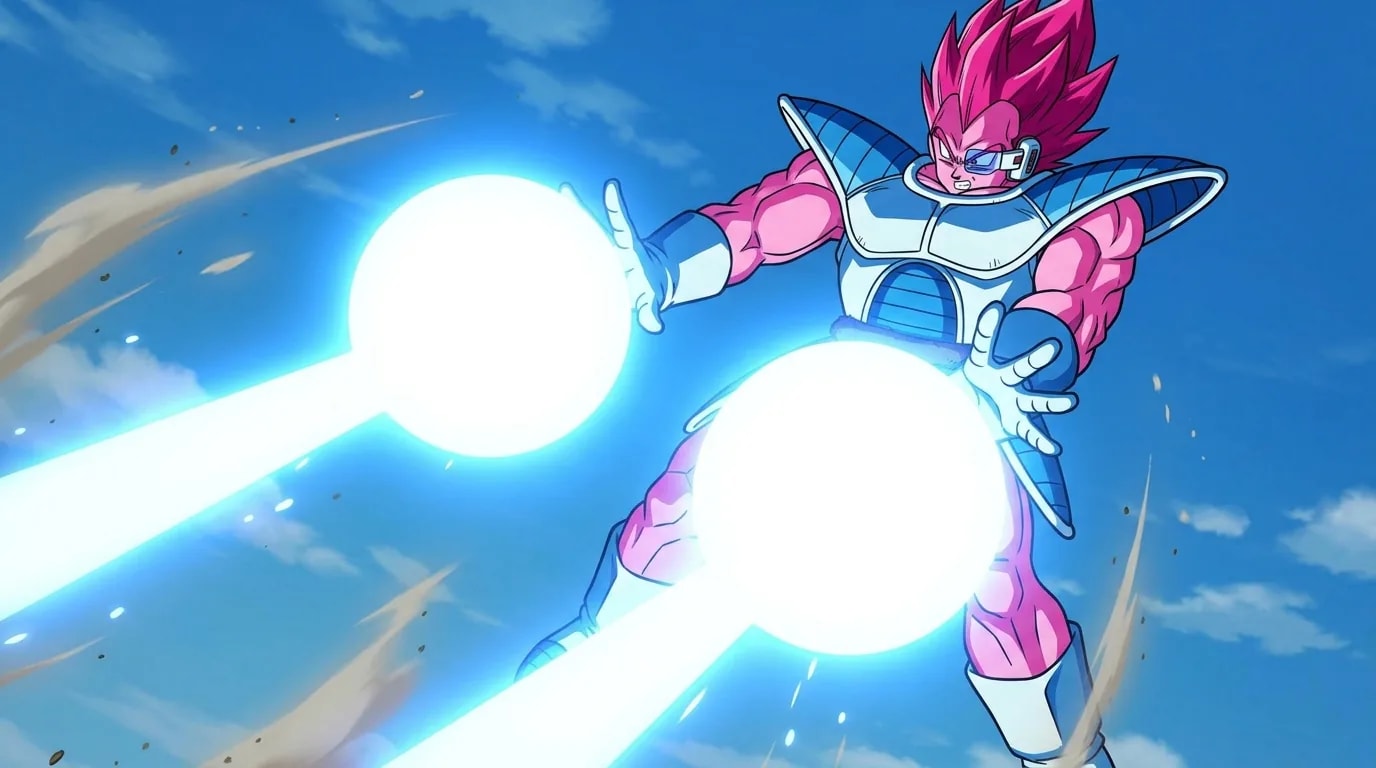
TechniqueRaditz's signature dual energy wave, fired from both hands simultaneously. It famously cost Piccolo his left arm during the Saiyan's first clash with Goku and Piccolo on Earth.
How It Works
Raditz raises both arms skyward and gathers crackling purple energy into each palm, forming twin spheres of concentrated ki. With a violent forward thrust, he releases both spheres as parallel energy waves that barrel toward his target. The sheer spread of the attack makes it difficult to dodge entirely, and the combined destructive force of two simultaneous blasts can be devastating.
The Battle That Introduced the Saiyans
Double Sunday made its mark during the very first major battle of Dragon Ball Z. When Raditz squared off against Goku and Piccolo, the two warriors found themselves completely outmatched. During the struggle, Raditz launched the Double Sunday at the pair. Goku managed to throw himself clear, but Piccolo was not so fortunate. The blast tore his left arm clean off, leaving the Namekian in agonizing pain. Piccolo would later regenerate the limb after the fight, but the moment established Raditz as a terrifying opponent and set the tone for the escalating power levels to come.
Variations and Legacy
Raditz also possesses a single-handed version of the attack known as Begone!, as well as the stronger Weekend variant. Despite Raditz's relatively short time in the series, Double Sunday has become one of the most recognizable Saiyan techniques in Dragon Ball games, appearing throughout the Budokai, Tenkaichi, Xenoverse, and Legends series. In many of these games, other Saiyan characters like Nappa, Bardock, and Turles can learn the technique through customization. The attack's name follows Raditz's weekday naming convention, alongside its powered-up counterpart Weekend.
Related Reading
See all
Krillin's on the Tinder: How the Ultimate Short King Survived the Height Filter
Tinder built a height filter. Dragon Ball built a five foot legend. What happened when we sent the ultimate short king into the modern dating hellscape....
Infinite Zeni Glitch: When Yamcha Never Pays and Mr. Popo Always Does
The internet found an infinite money glitch. So did Yamcha. A smooth R&B track about the easiest money in the Dragon Ball world and the one man who keeps paying for it....
Frequently Asked Questions
What is the Double Sunday in Dragon Ball?
Raditz's signature dual energy wave, fired from both hands simultaneously. It famously cost Piccolo his left arm during the Saiyan's first clash with Goku and Piccolo on Earth.
How does the Double Sunday work?
Raditz raises both arms skyward and gathers crackling purple energy into each palm, forming twin spheres of concentrated ki. With a violent forward thrust, he releases both spheres as parallel energy waves that barrel toward his target. The sheer spread of the attack makes it difficult to dodge entirely, and the combined destructive force of two simultaneous blasts can be devastating.
Who invented the Double Sunday?
The Double Sunday was invented by Raditz. Raditz's signature dual energy wave, fired from both hands simultaneously.
Who has used the Double Sunday?
Double Sunday made its mark during the very first major battle of Dragon Ball Z. When Raditz squared off against Goku and Piccolo, the two warriors found themselves completely outmatched. During the struggle, Raditz launched the Double Sunday at the pair.
When does the Double Sunday first appear?
The Double Sunday first appears in Piccolo's Plan (DBZ Episode 3). In the manga, it debuts in the Nothing Up My Sleeve... arc. Raditz's signature dual energy wave, fired from both hands simultaneously.
Sources & Information
Looking for more on Double Sunday? The Dragon Ball Wiki on Fandom has a dedicated page with community notes.
View on FandomThis content is original writing by Daddy Jim Headquarters based on the Dragon Ball anime series, manga, and official materials. Episode and chapter references are cited where applicable.
Character and scene imagery on this site is original artwork by Daddy Jim Headquarters, not screenshots or licensed imagery. Official cover art is used on three types of pages for editorial commentary:
- Movie pages: theatrical posters and key visuals, credited to Toei Animation and Shueisha.
- Game pages: official box art, credited to Bandai Namco, Atari, and other publishers.
- Manga chapter pages: Jump Comics volume covers, credited to Shueisha and Akira Toriyama.
Browse our episode guides:
Official resources:
Help Us Keep This Wiki Accurate
Daddy Jim Headquarters maintains this encyclopedia. If you spot an error, a translation issue, or something that doesn't look right, let us know.