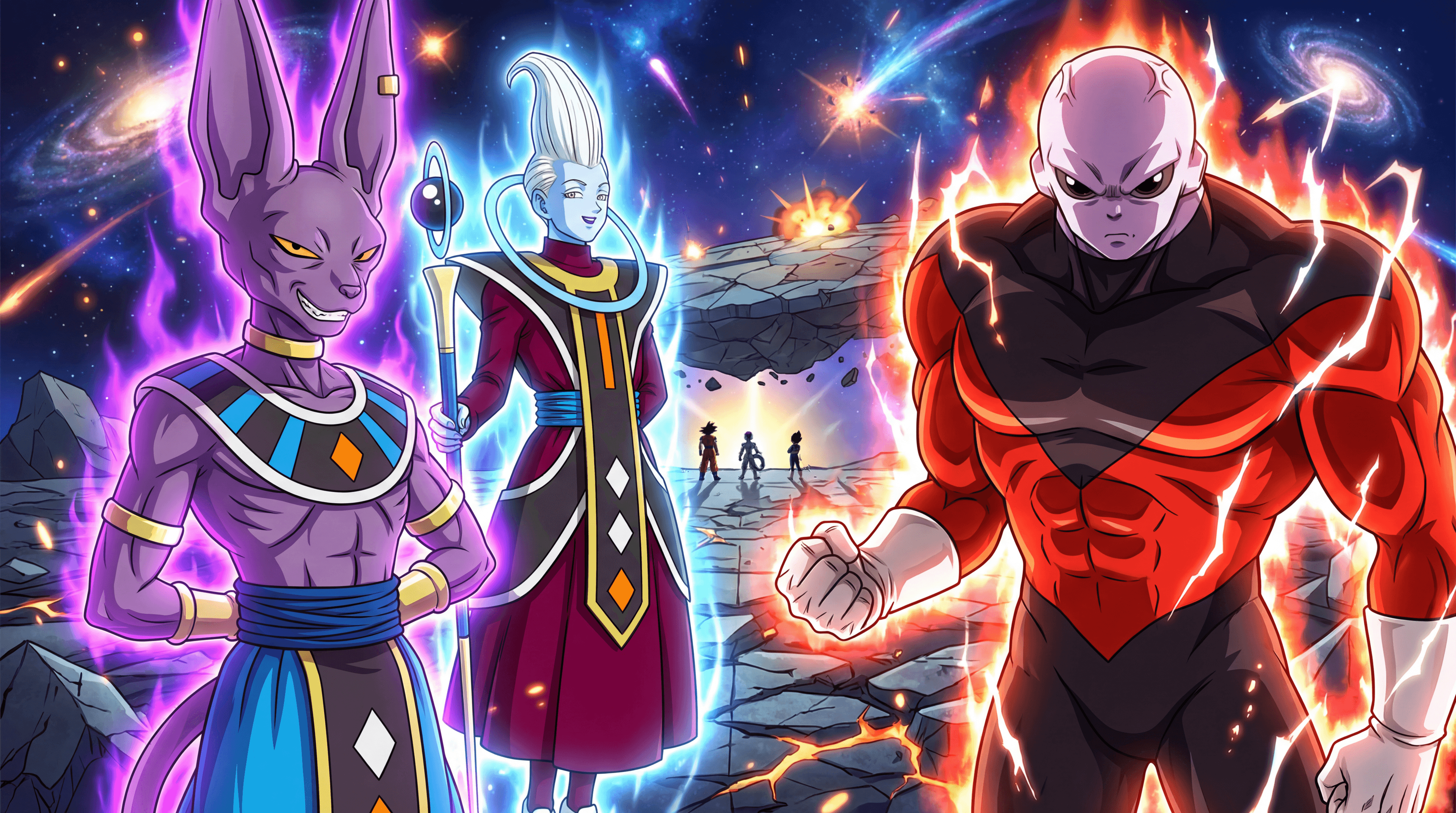
The world invention conference becomes a battleground when Dr. Mashirito unleashes a hyper-energized Arale on the attendees. Vegeta and Goku both struggle against the gag-powered android girl, and only Beerus can put an end to the mayhem.
When Gag Logic Meets Dragon Ball
At the World Invention Conference in West City, Dr. Norimaki wins the award for his Reality Machine #2, a device capable of creating anything imagined. Goku is working security at the event while Bulma and Vegeta attend as guests. The ceremony is interrupted by the ghost of Dr. Mashirito, who has escaped from the afterlife and drugged Arale and the Gatchans with Playtine-X, a chemical that amplifies their desire to play a hundredfold.
Arale's playful rampage demolishes the venue. Vegeta confronts her first, dismissing her as an undisciplined child, but she sends him flying through the building with a casual shove. Vegeta lands several hits that would devastate any normal opponent, but Arale treats each one as part of a game, even circling the entire globe after being knocked away and attacking him from behind. Vegeta, breaking the fourth wall, declares that common sense simply does not apply to gag manga characters.
Goku recognizes Arale from their childhood encounter and transforms into Super Saiyan Blue to match her. Their clash of Kamehameha versus N'cha Cannon threatens to destroy the planet. The crisis is resolved through creative teamwork: Trunks and Dr. Norimaki use poop conjured by the Reality Machine to distract Arale, while Bulma broadcasts the conference worldwide and channels everyone's food fantasies through the machine. This irresistible food lure wakes Beerus, who arrives, destroys Mashirito's ghost with Hakai, and nearly attacks Arale before a stomachache sends him home.

Crossover Comedy at Its Finest
This episode is a love letter to Akira Toriyama's earlier work, Dr. Slump, and it works precisely because it commits fully to the absurdity. Vegeta's fourth-wall-breaking frustration is the comedic highlight, as the proud Saiyan prince is forced to acknowledge that he exists in a world where narrative logic can override raw power. His closing declaration that he will never fight a gag character again echoes a similar line from his cameo in the Nekomajin manga.
The episode also reveals that Beerus's Hakai can destroy anything, including ghosts and souls. This is played for laughs here, but it establishes an important precedent about the scope of a Destroyer's power that becomes relevant in later arcs.
Related Reading
See all
Namek Has No Women, and Piccolo Pulls Anyway
There are no women on Namek. That isn't an oversight, it's the biology. Why we handed Piccolo the one thing his own species rules out, and why it had to be trap soul....
1000 Times Over: Who Is John Dragon Ball Singing To?
Dragon Ball handed us a protagonist with no history and the internet named him John Dragon Ball. So we built him somebody to talk to....
Legacy of a Legendary Crossover
Goku and Arale first met during the General Blue Saga of the original Dragon Ball, making this reunion roughly thirty years in the making within the story's timeline. Despite this passage of time, none of the Penguin Village residents have aged at all, a detail the show does not attempt to explain because the Dr. Slump universe simply operates under different rules.
This is the first and likely final anime appearance of Dr. Mashirito, whose soul is outright erased by Beerus. The episode is entirely anime-original with no manga counterpart, serving as a playful tribute to Toriyama's creative roots.
Frequently Asked Questions
What happens in "Goku vs. Arale! An Off-the-Wall Battle Spells the End of the Earth?"?
The world invention conference becomes a battleground when Dr. Mashirito unleashes a hyper-energized Arale on the attendees. Vegeta and Goku both struggle against the gag-powered android girl, and only Beerus can put an end to the mayhem.
Which Dragon Ball series is "Goku vs. Arale! An Off-the-Wall Battle Spells the End of the Earth?" from?
"Goku vs. Arale! An Off-the-Wall Battle Spells the End of the Earth?" is episode 69 of Dragon Ball Super. The world invention conference becomes a battleground when Dr. Mashirito unleashes a hyper-energized Arale on the attendees.
How does "Goku vs. Arale! An Off-the-Wall Battle Spells the End of the Earth?" begin?
At the World Invention Conference in West City, Dr. Norimaki wins the award for his Reality Machine #2, a device capable of creating anything imagined. Goku is working security at the event while Bulma and Vegeta attend as guests. The ceremony is interrupted by the ghost of Dr. Mashirito, who has escaped from the afterlife and drugged Arale and the Gatchans with Playtine-X, a chemical that amplifies their desire to play a hundredfold.
What is the middle act of "Goku vs. Arale! An Off-the-Wall Battle Spells the End of the Earth?"?
This episode is a love letter to Akira Toriyama's earlier work, Dr. Slump, and it works precisely because it commits fully to the absurdity. Vegeta's fourth-wall-breaking frustration is the comedic highlight, as the proud Saiyan prince is forced to acknowledge that he exists in a world where narrative logic can override raw power. His closing declaration that he will never fight a gag character again echoes a similar line from his cameo in the Nekomajin manga.
How does "Goku vs. Arale! An Off-the-Wall Battle Spells the End of the Earth?" end?
Despite this passage of time, none of the Penguin Village residents have aged at all, a detail the show does not attempt to explain because the Dr. Slump universe simply operates under different rules. This is the first and likely final anime appearance of Dr. Mashirito, whose soul is outright erased by Beerus. The episode is entirely anime-original with no manga counterpart, serving as a playful tribute to Toriyama's creative roots.
Sources & Information
Looking for more on Goku vs. Arale! An Off-the-Wall Battle Spells the End of the Earth?? The Dragon Ball Wiki on Fandom has a dedicated page with community notes.
View on FandomThis content is original writing by Daddy Jim Headquarters based on the Dragon Ball anime series, manga, and official materials. Episode and chapter references are cited where applicable.
Rights holders
- Created byAkira Toriyama
- Published byShueisha
- Animated byToei Animation
All rights belong to their respective owners.
Character and scene imagery on this site is original artwork by Daddy Jim Headquarters, not screenshots or licensed imagery. Official cover art is used on three types of pages for editorial commentary:
- Movie pages: theatrical posters and key visuals, credited to Toei Animation and Shueisha.
- Game pages: official box art, credited to Bandai Namco, Atari, and other publishers.
- Manga chapter pages: Jump Comics volume covers, credited to Shueisha and Akira Toriyama.
Browse our episode guides:
Official resources:
Help Us Keep This Wiki Accurate
Daddy Jim Headquarters maintains this encyclopedia. If you spot an error, a translation issue, or something that doesn't look right, let us know.