
The creature reveals its identity: Cell, an Android created by Dr. Gero's supercomputer using genetic material harvested from Goku, Vegeta, Frieza, and Piccolo. He traveled from the future in a stolen Time Machine to absorb Androids 17 and 18 and achieve his perfect form. Piccolo, having stalled long enough to regenerate his drained arm, prepares to resume the fight.
The Android Who Made Himself
The Kamehameha blast rocks Gingertown, but Piccolo dodges it cleanly. Before he can recover, Cell strikes from behind, latches onto him, and begins draining his energy through that horrific tail. At the Lookout, Mr. Popo drops a pot as he senses the pain Kami once would have felt. Meanwhile, the military mobilizes against the creature after witnessing the broadcast from Gingertown. Their tanks and artillery prove completely useless; Cell swats them aside like insects. Piccolo manages to wrench himself free, but the damage is severe. His left arm is shriveled and nearly lifeless, drained of its energy.
Recognizing he needs time to recover, Piccolo makes a calculated gamble. He feigns surrender and asks the creature for one final courtesy: tell him everything. Who is he? Why is he here? The creature obliges. His name is Cell. He is an artificial life form engineered by Dr. Gero's underground supercomputer, constructed from the genetic material of Earth's most powerful fighters. Microscopic drones collected cells from Goku, Vegeta, Frieza, King Cold, and Piccolo himself during their various battles on Earth. Cell comes from 24 years in the future, where he killed that timeline's Trunks and stole his Time Machine to travel back.
His purpose is singular: absorb Androids 17 and 18 to achieve his complete form. He reverted to his larval state for the journey, burrowed underground upon arrival, and spent four years maturing before emerging in his current imperfect state. Piccolo thanks Cell for the information, then rips off his own withered arm. A fresh one regenerates instantly. He was never surrendering; he was stalling to heal. With his power fully restored, Piccolo drops into a fighting stance. The real battle is about to begin.

A Villain Who Explains Too Much
Cell's willingness to monologue is both a character trait and a narrative device. He is arrogant enough to believe Piccolo poses no real threat, and that confidence blinds him to the obvious ruse. Piccolo exploits this perfectly, playing defeated just long enough for his Namekian biology to do what no other fighter's body could: rebuild itself from scratch. It is one of the most satisfying tactical moments in the saga, a veteran warrior outthinking a genetically superior opponent through patience and deception.
The revelation of Cell's origin also retroactively explains every strange detail from the preceding episodes. The second Time Machine, the egg, the shed exoskeleton, the four-year gap, the mixed ki signatures: all of it clicks into place. Toriyama constructed a mystery that rewards careful viewers while still delivering a shocking reveal to those following casually.
Timeline Headaches and a Classic Plot Hole
Cell's backstory introduces one of the franchise's most debated continuity issues. He describes Dr. Gero's drones collecting cells from Future Trunks during the battle with Frieza, and claims Gero chose not to incorporate that DNA. However, in Cell's own timeline, it was Goku who killed Frieza, not Trunks. Trunks was never supposed to have traveled back in Cell's version of history. The most widely accepted explanation is that Cell simply conflated the two timelines, confusing events from the present with those of his origin point.
Toriyama himself has acknowledged forgetting details while writing the manga's time travel plot, and the complexity of maintaining three or more parallel timelines makes such oversights almost inevitable. Whether the error was intentional wordplay on Cell's imperfect nature or a genuine writing slip, it has kept fans debating for decades.
Related Reading
See all
Krillin's on the Tinder: How the Ultimate Short King Survived the Height Filter
Tinder built a height filter. Dragon Ball built a five foot legend. What happened when we sent the ultimate short king into the modern dating hellscape....
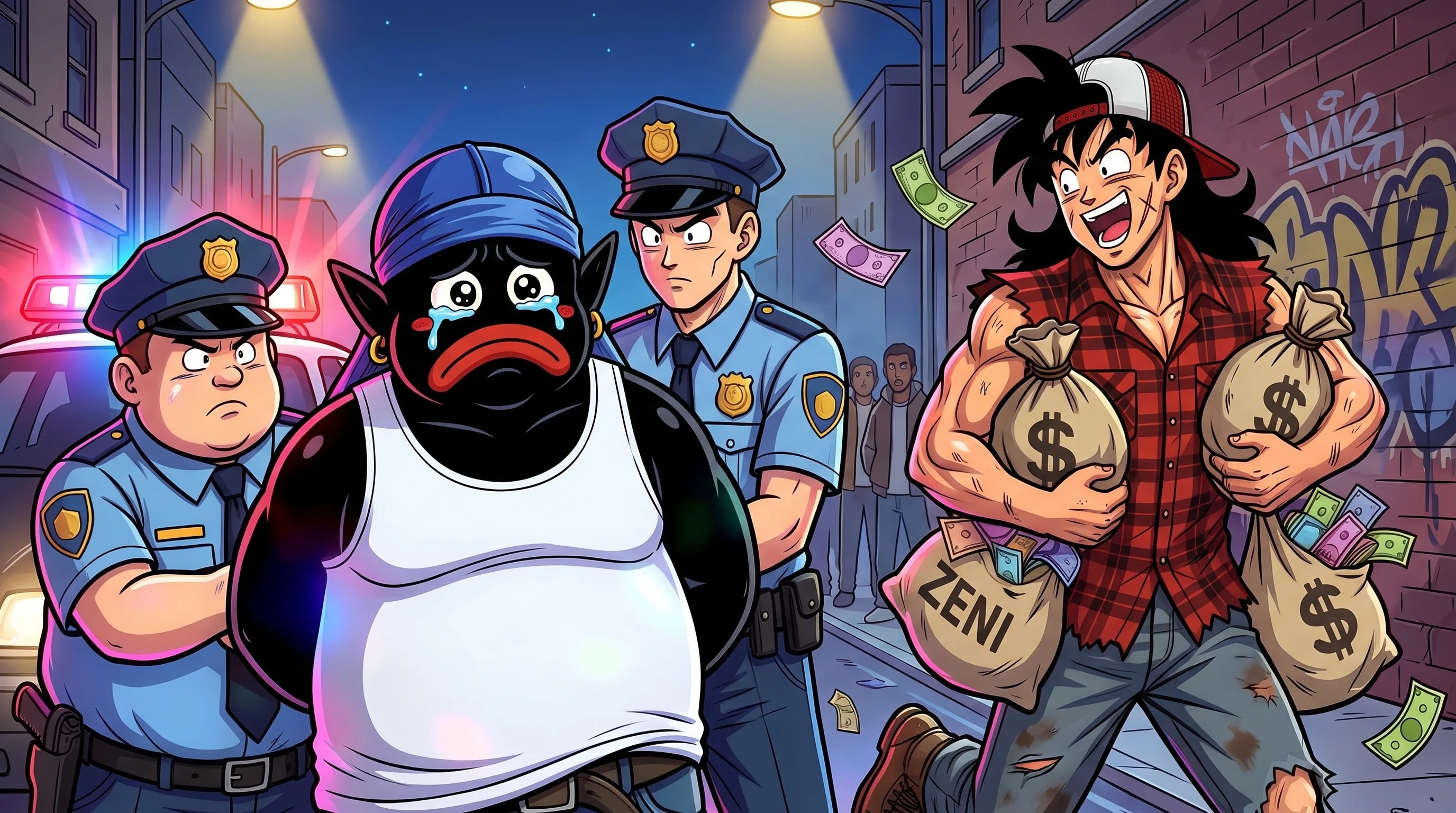
Infinite Zeni Glitch: When Yamcha Never Pays and Mr. Popo Always Does
The internet found an infinite money glitch. So did Yamcha. A smooth R&B track about the easiest money in the Dragon Ball world and the one man who keeps paying for it....
Frequently Asked Questions
What episode of Dragon Ball Z is "His Name is Cell"?
"His Name is Cell" is episode 143 of Dragon Ball Z. It is the 143rd episode in the dub broadcast order.
When did "His Name is Cell" originally air?
The original Japanese broadcast date for "His Name is Cell" is not listed in our records for this Dragon Ball Z episode. Check the parent saga page for the air window that covers this stretch of episodes.
What happens in "His Name is Cell"?
The creature reveals its identity: Cell, an Android created by Dr. Gero's supercomputer using genetic material harvested from Goku, Vegeta, Frieza, and Piccolo. He traveled from the future in a stolen Time Machine to absorb Androids 17 and 18 and achieve his perfect form. Piccolo, having stalled long enough to regenerate his drained arm, prepares to resume the fight.
Which manga chapters does "His Name is Cell" adapt?
Our records do not list a specific manga chapter for "His Name is Cell". This stretch of the anime adapts the Cell Saga arc of Akira Toriyama's original manga, with some episodes containing anime-original material that does not map to a single chapter.
What is the key moment in "His Name is Cell"?
Microscopic drones collected cells from Goku, Vegeta, Frieza, King Cold, and Piccolo himself during their various battles on Earth. The Kamehameha blast rocks Gingertown, but Piccolo dodges it cleanly.
Sources & Information
Looking for more on His Name is Cell? The Dragon Ball Wiki on Fandom has a dedicated page with community notes.
View on FandomThis content is original writing by Daddy Jim Headquarters based on the Dragon Ball anime series, manga, and official materials. Episode and chapter references are cited where applicable.
Character and scene imagery on this site is original artwork by Daddy Jim Headquarters, not screenshots or licensed imagery. Official cover art is used on three types of pages for editorial commentary:
- Movie pages: theatrical posters and key visuals, credited to Toei Animation and Shueisha.
- Game pages: official box art, credited to Bandai Namco, Atari, and other publishers.
- Manga chapter pages: Jump Comics volume covers, credited to Shueisha and Akira Toriyama.
Browse our episode guides:
Official resources:
Help Us Keep This Wiki Accurate
Daddy Jim Headquarters maintains this encyclopedia. If you spot an error, a translation issue, or something that doesn't look right, let us know.