
Goku introduces the concept of Fusion and Mr. Popo suggests Goten and Trunks as candidates. The first Shenron wish revives the tournament dead, and Goku saves the second wish for later use.
New Technique, New Hope
Fully healed and brought up to speed, Goku faces a painful truth: he cannot defeat Majin Buu alone. His reasoning is sound and humbling. If Vegeta, whose power matched Goku's own in their recent clash, could not destroy Buu even by sacrificing his life, then raw strength is not the answer. Something else is needed. Goku reveals a technique he learned in Other World called Fusion, a method that combines two fighters into a single, vastly more powerful being for thirty minutes. Unlike Namekian fusion, this process is temporary and requires careful synchronization between participants.
The problem seems unsolvable at first. Goku is the only one who knows the technique, and he is running out of time on Earth. Then Mr. Popo offers a simple but brilliant suggestion: teach it to Goten and Trunks. The boys are close in age, size, and power level, making them ideal fusion candidates. It is a desperate gamble, placing the planet's survival on two children learning an advanced technique under extreme time pressure.
At Capsule Corporation, Bulma summons Shenron with the gathered Dragon Balls. Yamcha makes the first wish, restoring everyone killed that day back to life, including the tournament spectators and Kibito. Goku arrives just in time to convince Shenron to hold the second wish, buying them four months instead of waiting a full year. He then teleports everyone to the Lookout for safety, laying out the grim reality of their situation to a group that includes a heartbroken Chi-Chi and a stunned Bulma.
Desperation Breeds Innovation
The Fusion concept represents one of Dragon Ball's most creative solutions to the escalating power problem. Rather than simply finding a stronger individual, the series introduces a technique that redefines what a warrior can be. Two separate people becoming one entity raises fascinating questions about identity, cooperation, and the nature of strength itself. These philosophical implications will play out across the coming episodes.
Goku's decision to save the second wish reveals his strategic mind at work. Even in crisis, he is thinking several moves ahead. The heroes will inevitably need Shenron again, and burning both wishes now would leave them without options for an entire year. This foresight proves essential as the saga progresses, though the characters cannot yet know exactly how important that preserved wish will become.
Assembling at the Lookout
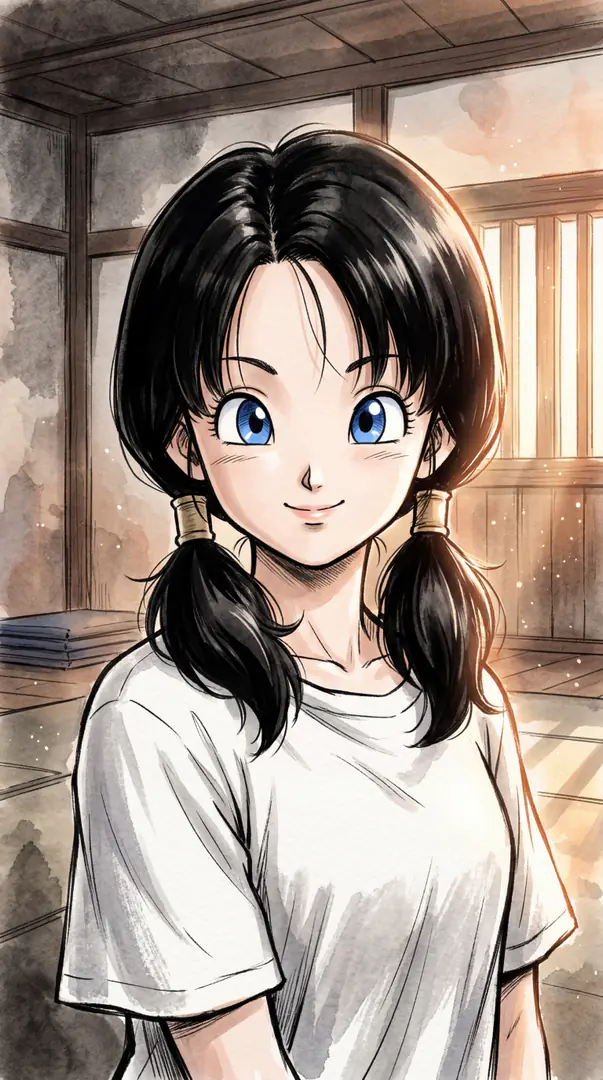
Episode 240 brings nearly every surviving character to the Lookout, transforming it from a quiet guardian post into a crowded command center. This consolidation serves the narrative by creating interpersonal dynamics that drive future episodes: Bulma's protectiveness over Trunks, Chi-Chi's grief, Videl's stubborn hope. Each character processes the crisis differently, adding emotional texture to the strategic discussions.
The first Shenron wish also spawns an interesting consequence that Dragon Ball GT would later explore. The revival of so many souls at once carries karmic weight in the Dragon Ball universe, eventually manifesting as the Shadow Dragon Naturon Shenron. Even in moments of salvation, Toriyama's world insists that every action carries a cost.
Related Reading
See all
Krillin's on the Tinder: How the Ultimate Short King Survived the Height Filter
Tinder built a height filter. Dragon Ball built a five foot legend. What happened when we sent the ultimate short king into the modern dating hellscape....
Infinite Zeni Glitch: When Yamcha Never Pays and Mr. Popo Always Does
The internet found an infinite money glitch. So did Yamcha. A smooth R&B track about the easiest money in the Dragon Ball world and the one man who keeps paying for it....
Frequently Asked Questions
What is the Dragon Ball episode "Revival"?
Goku introduces the concept of Fusion and Mr. Popo suggests Goten and Trunks as candidates. The first Shenron wish revives the tournament dead, and Goku saves the second wish for later use.
Which Dragon Ball series is "Revival" from?
"Revival" is episode 240 of Dragon Ball Z. Goku introduces the concept of Fusion and Mr. Popo suggests Goten and Trunks as candidates.
How does "Revival" begin?
Fully healed and brought up to speed, Goku faces a painful truth: he cannot defeat Majin Buu alone. His reasoning is sound and humbling. If Vegeta, whose power matched Goku's own in their recent clash, could not destroy Buu even by sacrificing his life, then raw strength is not the answer.
What is the middle act of "Revival"?
The Fusion concept represents one of Dragon Ball's most creative solutions to the escalating power problem. Rather than simply finding a stronger individual, the series introduces a technique that redefines what a warrior can be. Two separate people becoming one entity raises fascinating questions about identity, cooperation, and the nature of strength itself.
How does "Revival" end?
The first Shenron wish also spawns an interesting consequence that Dragon Ball GT would later explore. The revival of so many souls at once carries karmic weight in the Dragon Ball universe, eventually manifesting as the Shadow Dragon Naturon Shenron. Even in moments of salvation, Toriyama's world insists that every action carries a cost.
Sources & Information
Looking for more on Revival? The Dragon Ball Wiki on Fandom has a dedicated page with community notes.
View on FandomThis content is original writing by Daddy Jim Headquarters based on the Dragon Ball anime series, manga, and official materials. Episode and chapter references are cited where applicable.
Character and scene imagery on this site is original artwork by Daddy Jim Headquarters, not screenshots or licensed imagery. Official cover art is used on three types of pages for editorial commentary:
- Movie pages: theatrical posters and key visuals, credited to Toei Animation and Shueisha.
- Game pages: official box art, credited to Bandai Namco, Atari, and other publishers.
- Manga chapter pages: Jump Comics volume covers, credited to Shueisha and Akira Toriyama.
Browse our episode guides:
Official resources:
Help Us Keep This Wiki Accurate
Daddy Jim Headquarters maintains this encyclopedia. If you spot an error, a translation issue, or something that doesn't look right, let us know.