Namekian Fusion
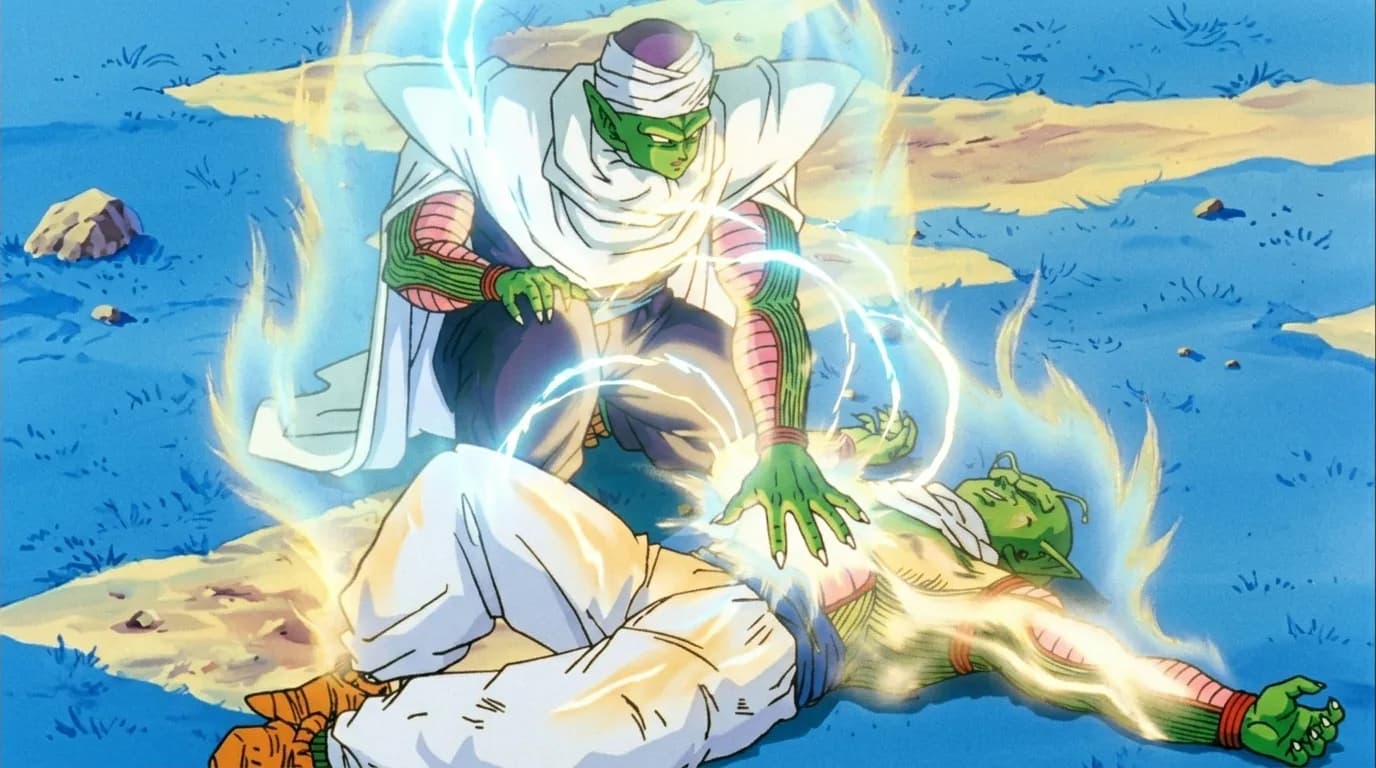
TechniqueThe original fusion technique in Dragon Ball, unique to the Namekian race. One Namekian permanently absorbs another, gaining their power, knowledge, and memories while the absorbing Namekian's body and personality remain dominant.
Becoming More Than One
Namekian Fusion is the oldest form of fusion shown in the Dragon Ball series, predating the Fusion Dance and Potara Earrings by a considerable stretch. The process involves one Namekian placing their hand on another and absorbing them completely. The absorbing Namekian becomes the host: their body, personality, and identity remain, while they gain the other Namekian's power, techniques, knowledge, and memories. Unlike other fusion methods, Namekian Fusion is permanent. There is no time limit and no way to reverse it.
The technique carries emotional weight because the absorbed Namekian essentially ceases to exist as an individual. Their consciousness merges into the host's mind, occasionally surfacing as a voice or instinct, but they will never again act independently. This sacrifice is what makes Namekian Fusion feel so different from the Fusion Dance, which is temporary and creates a new being. Here, one person gives up their existence so another can become stronger.

Piccolo and Nail: The First Fusion
The first Namekian Fusion in the series occurred on Planet Namek during the Frieza Saga. Nail, the sole warrior-class Namekian assigned to protect Grand Elder Guru, had been beaten nearly to death by Frieza. As Piccolo rushed past him on his way to the battlefield, the dying Nail offered to fuse. Piccolo was initially reluctant, but Nail assured him that Piccolo's personality would remain dominant. With no time to argue, Piccolo accepted.
The power boost was enormous. Piccolo went from being completely outclassed by Frieza's lower forms to being able to fight evenly with Frieza's second transformation. Nail's voice occasionally spoke to Piccolo from within, offering guidance and commentary, a touching detail that showed the absorbed warrior lived on in some form. This fusion was the first major power-up Piccolo received and set the stage for an even more significant one years later.
Related Reading
See all
Namek Has No Women, and Piccolo Pulls Anyway
There are no women on Namek. That isn't an oversight, it's the biology. Why we handed Piccolo the one thing his own species rules out, and why it had to be trap soul....
1000 Times Over: Who Is John Dragon Ball Singing To?
Dragon Ball handed us a protagonist with no history and the internet named him John Dragon Ball. So we built him somebody to talk to....
Reuniting with Kami
The second and more dramatic Namekian Fusion came at the start of the Cell Saga. With the Androids threatening Earth and Piccolo's power insufficient to face them, Piccolo made the difficult decision to seek out Kami, Earth's Guardian, and ask him to fuse. Kami and Piccolo were two halves of the same original Namekian, split apart centuries earlier so that Kami could become pure enough to serve as Guardian. Fusing them back together would recreate that original being's full power.
Kami struggled with the decision because it meant the Dragon Balls would cease to function; the Guardian's bond with Shenron would be severed. Eventually, the threat of the Androids convinced him. Their reunion produced one of the strongest fighters on Earth at the time, a Piccolo powerful enough to go toe-to-toe with Imperfect Cell and even Android 17. The fusion came with a bittersweet note: Kami's gentle wisdom now lived inside the body of a warrior, and Earth's Dragon Balls temporarily died with him.
Frequently Asked Questions
What is Namekian Fusion called?
Namekian Fusion is the original fusion technique in Dragon Ball, unique to the Namekian race. The process involves one Namekian placing their hand on another and absorbing them completely, with the absorbing Namekian's body, personality, and identity remaining dominant.
Can Namekian Fusion be undone?
No. Unlike other fusion methods, Namekian Fusion is permanent. There is no time limit and no way to reverse it, and the absorbed Namekian essentially ceases to exist as an individual, with their consciousness merging into the host's mind.
How does Namekian Fusion work?
One Namekian places a hand on another and absorbs them entirely. The host keeps their body and personality, while gaining the absorbed Namekian's power, techniques, knowledge, and memories. The absorbed Namekian's consciousness may occasionally surface as a voice or instinct, but they will never again act independently.
Is Piccolo still fused with Nail and Kami?
Yes. Both fusions are permanent. Piccolo first absorbed the dying Nail on Namek during the Frieza Saga, then fused with Kami before the Cell Saga to recreate the original Namekian's full power. Kami's gentle wisdom now lives inside the body of a warrior, and Earth's Dragon Balls died with him when the Guardian's bond with Shenron was severed.
Why did Kami agree to fuse with Piccolo?
Kami struggled with the decision because fusing meant the Dragon Balls would cease to function. Eventually, the threat of the Androids convinced him, and their reunion produced a Piccolo powerful enough to go toe-to-toe with Imperfect Cell and even Android 17.
Sources & Information
Looking for more on Namekian Fusion? The Dragon Ball Wiki on Fandom has a dedicated page with community notes.
View on FandomThis content is original writing by Daddy Jim Headquarters based on the Dragon Ball anime series, manga, and official materials. Episode and chapter references are cited where applicable.
Rights holders
- Created byAkira Toriyama
- Published byShueisha
- Animated byToei Animation
All rights belong to their respective owners.
Character and scene imagery on this site is original artwork by Daddy Jim Headquarters, not screenshots or licensed imagery. Official cover art is used on three types of pages for editorial commentary:
- Movie pages: theatrical posters and key visuals, credited to Toei Animation and Shueisha.
- Game pages: official box art, credited to Bandai Namco, Atari, and other publishers.
- Manga chapter pages: Jump Comics volume covers, credited to Shueisha and Akira Toriyama.
Browse our episode guides:
Official resources:
Help Us Keep This Wiki Accurate
Daddy Jim Headquarters maintains this encyclopedia. If you spot an error, a translation issue, or something that doesn't look right, let us know.